

Home Blog Page 24

Disability football boom drives plans for new Pollyfield clubhouse

A fast-growing football club says it has outgrown its ageing facilities after councillors approved plans for a new clubhouse and community food pantry despite objections over the loss of green space.

Torridge District Council’s planning committee voted to approve proposals for a new single-storey clubhouse at Pollyfield Playing Fields in East-the-Water, Bideford. The development will include changing rooms, kitchen and toilet facilities, a social area and a base for the East-the-Water Community Pantry.

Planning documents show the building would be constructed on a small section of public open space next to an existing football pitch. Officers said the development would take up around 0.95 per cent of the wider green space and recommended approval.

Speaking at the meeting on Thursday, May 14, Shamwickshire Rovers FC chairman Sam Stevens said the club had expanded rapidly since reforming after the Covid pandemic.

Mr Stevens told councillors the club had grown from two adult teams and 10 members to 14 teams and around 250 members in five years. He said the club now runs five disability teams and seven youth sides, including what he described as the only disability football provision in North Devon.
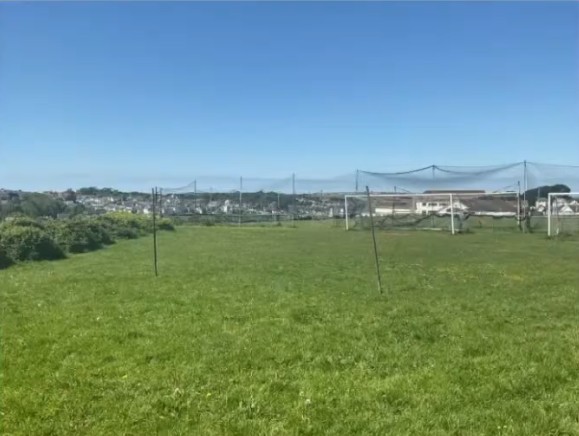
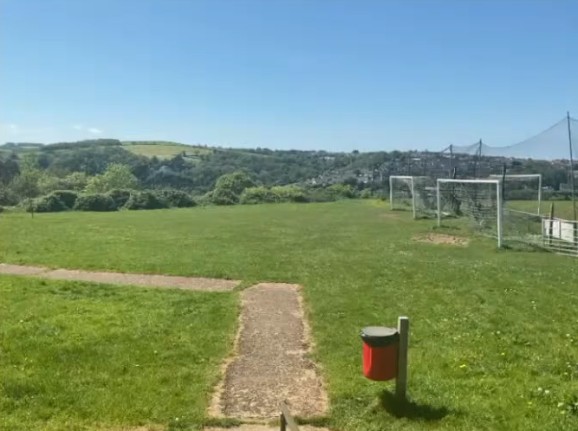
The proposed site for a new Shamwickshire Rovers clubhouse at Pollyfield Playing Fields.

He said: “The infrastructure has not grown with the club. We have got no female toilet, no disability toilets and only one male toilet and two urinals.”

Mr Stevens also said the club had worked with Devon Air Ambulance to create a night landing site at Pollyfield and had organised family holiday clubs and festivals.

The proposed building would also provide a permanent home for the East-the-Water Community Pantry, which Mr Stevens said supports between 50 and 60 families each week.

Project architect Mrs Fearnley Lott told councillors the current facilities were “no longer fit for purpose”.

She said: “This proposal is about supporting a rapidly growing community asset that serves hundreds of local residents each week.”

Mrs Lott said the building would provide accessible toilets, changing facilities, kitchen space and a covered viewing area for families and carers watching matches.

Planning officer Peter Stapley told the committee the site was located within Bideford’s development boundary and close to existing community facilities. He said the proposal would have a “relatively low impact” on the surrounding area.

Mr Stapley acknowledged objections had been raised over the loss of green space, parking and the impact on nearby residents. However, he said the loss of land was minimal and the benefits outweighed concerns.

Three objection letters were submitted during consultation, with residents raising concerns over overdevelopment, parking, wildlife impacts and the loss of open space.

During the meeting, councillors also discussed whether restrictions should be placed on opening hours because of the number of football teams expected to use the site.

Councillor Peter Hames questioned whether the building could include solar panels and rainwater harvesting systems, describing it as a “lost opportunity” if sustainable measures were not considered.

The council granted planning permission subject to conditions, including restrictions on construction hours and limits on external lighting to protect bats and other wildlife.

The approved building will measure about 21 metres wide by 10 metres deep and include a clubhouse social area, kitchen, storage space and toilet facilities.

Planning permission was formally granted by Torridge District Council on Friday, May 15.
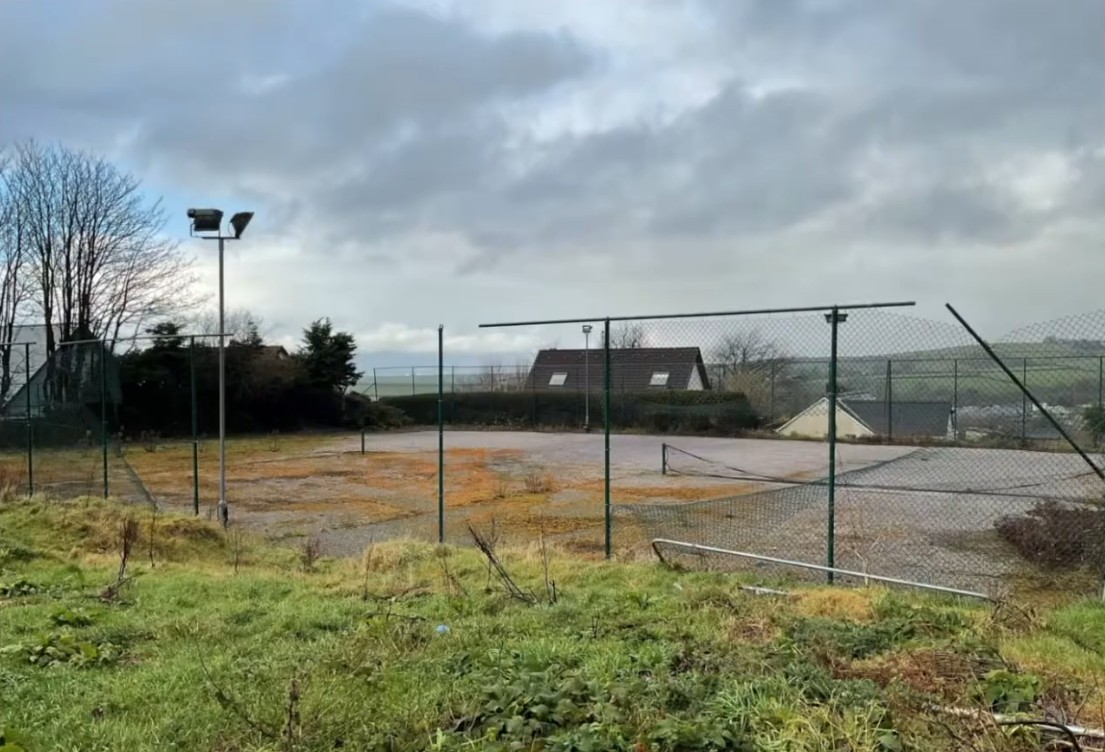
Disused Torrington courts to become new community sports play zone

A long-abandoned set of tennis courts in Torrington could soon be transformed into a new floodlit sports play zone after councillors approved the scheme despite concerns from nearby residents over noise, parking and light pollution.

Torridge District Council’s planning committee backed proposals for the new multi-use games area at the former tennis courts off Bests Lane during a meeting on Thursday, May 14. The application was formally approved on Tuesday, May 19.

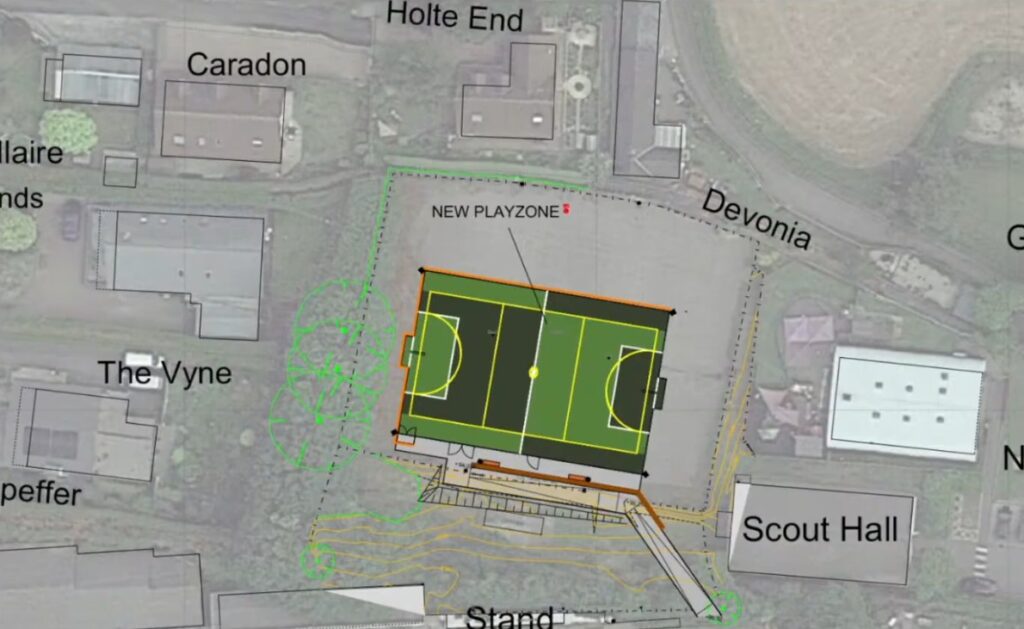
The development will see the disused courts replaced with a sand-dressed floodlit “PlayZone” featuring sports fencing, hardstanding and integrated goals. The facility will measure 30 metres by 20 metres and include four eight-metre floodlight columns.

Planning officers told councillors the site had become rundown and inaccessible.

During the meeting, the committee heard the courts were “a bit of a mess” and had deteriorated significantly, with overgrown areas, damaged fencing and redundant floodlighting remaining on site.

The site sits immediately north of Torrington Football Club and is surrounded by homes, a scout hall and other community facilities. Planning officers said the area already had a strong recreational character.

Five objections were submitted during the planning process, with residents raising concerns about potential anti-social behaviour, noise from evening use, floodlighting and a lack of parking.

Councillor Doug Bushby supported the plans, telling the committee the scheme would provide “an absolutely fantastic addition” for young people in Torrington.

He said: “Here we have a disused tennis court in Torrington that, I have to say, is kind of a bit of a mess.

“What’s proposed is an absolutely fantastic addition to the amenity of things that are available for youngsters in Torrington.”

Councillor Doug Smith also backed the application.

He said: “There’s a huge amount of work gone into this. It’s much needed in Torrington. Anything like that that we do have in town is very well accepted.”

Committee members also questioned whether the facility would be available for children who were not part of organised clubs.

Adrian Avery, Torridge District Council’s community projects officer, said free play sessions would be included alongside the bookable system.

He said: “We’ve done substantial work working with the Football Foundation and recognising that from the town council as well, that it’s essential that there’s elements of free play involved.

“That will also be managed by Active Torridge so there’ll be staff on site to manage all that.”

The PlayZone will operate between 8am and 9pm under planning conditions imposed by the council.

Additional conditions require a detailed lighting assessment, acoustic fencing and a noise management plan to protect neighbouring properties and wildlife.

Planning officers said the scheme would deliver an 11.34 per cent biodiversity net gain, exceeding the mandatory national target of 10 per cent.

The project forms part of the Football Foundation’s PlayZone programme, which aims to improve access to sports facilities in communities identified as having the greatest need.

Bideford Pannier Market roof revamp approved after years of leaks

Long-running leaks and drainage problems at one of north Devon’s best-known market buildings are set to be tackled after councillors approved a major repair scheme for Bideford Pannier Market.

Members of Torridge District Council’s planning committee backed proposals for replacement roofing, drainage repairs and associated works at the Grade II-listed market building during a meeting on Thursday, May 14.

Planning officer Miss Jess Wellington told councillors the work aimed to “improve the condition of the building and resolve issues such as water ingress”.

The scheme includes repairs to slate roofing, brickwork and timber beams, alongside alterations to gutters and rainwater pipes to improve water runoff. New ventilation elements, lead flashings and a roof-level safety restraint system will also be installed.

An updated section of roofing above Butchers Row will use insulated dark grey GRP roofing material to tackle persistent leaking problems affecting retail units below. Torridge District Council’s conservation officer supported the amendment, describing leaks in the area as “an ongoing issue”.

The council report stated the work would result in “less than substantial harm” to the historic fabric of the building, but concluded the improvements were needed to keep the market weatherproof for traders and visitors.

Miss Wellington told the committee the market’s roof structure was “quite complex”, with varying roof heights requiring extensive repair and maintenance work.

The report added that the majority of the work would take place at roof level and would have minimal impact on the appearance of the historic building and surrounding conservation area.

During the debate, Cllr Peter Hames questioned why the project did not include additional solar panels.

Cllr Hames said: “This work is very important to go through. I am a bit dismayed really that Bideford Town Council has not taken an opportunity to add to the solar array on the roof.

“The plans show there is provision for two more solar arrays and this would, I would have thought, been an ideal opportunity.”

Cllr Chris Leather suggested an advisory note could be added encouraging further solar panels.

Planning permission was formally granted on Friday, May 15. An advisory note attached to the approval said the local planning authority “would encourage the installation of additional solar panels on the building”, although separate planning and listed building consent would be required.

The approved plans also require ecological mitigation measures to protect wildlife and nesting birds during the works.

Planning battle erupts over towering Appledore quay wall extension

A heated planning debate broke out over a controversial Appledore quay wall after councillors raised concerns about retrospective works carried out beside a neighbouring home before ultimately approving the scheme.

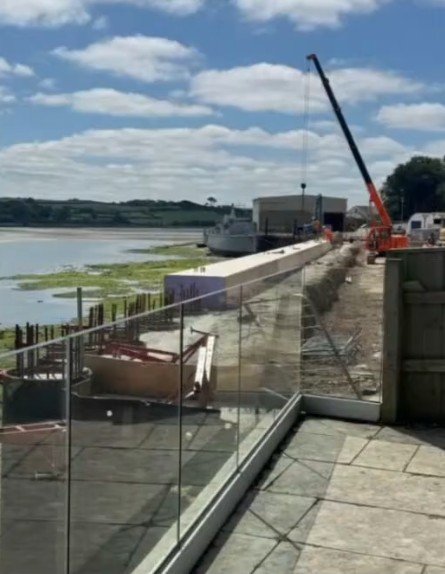
Torridge District Council’s planning committee voted to approve amended plans for works at Middle Dock, New Quay Street, linked to the town’s Clean Maritime Innovation Centre development. The application sought retrospective permission for an extension to the quay wall, clarification of its height and the erection of a new northern boundary treatment.

The plans were considered by councillors on Thursday, May 14.

Case officer Laura Davies told the committee the application involved “three elements” including the retrospective extension of the quay wall, clarification of quay wall heights and proposed boundary treatment works along the northern edge of the site.

Laura said the extension had already partially been constructed, which was why the application had been submitted retrospectively.

She told councillors the wall would extend northwards before reducing in height near neighbouring property The Launches, with a maintenance-only strip left between the two sites.

Laura said: “The proposed development along the northern boundary will be set within the application site, will retain the existing boundary and will be set further into the site on the north-eastern corner.

“The key wall will then be reduced in height at that corner to take account of the relationship to the neighbouring amenity space.”

The officer report stated the proposal related to the wider redevelopment of the Middle Dock site, where planning permission had previously been granted for a Clean Maritime Innovation Centre incorporating office and workshop space.

Objecting to the plans, neighbour Mr Philip Tuite-Dalton said he and his wife owned The Launches next to the development site and argued the wall had been constructed higher than previously approved.

Mr Tuite-Dalton told the committee there was “still no planning approval” for the quay wall at 7.4 metres above ordnance datum and claimed the increase in height should have required a separate planning application.

He said: “The materially different design approach without a wave wall with an increase in height of over 70 centimetres is not non-material and needs a separate planning application.”

Mr Tuite-Dalton also claimed the council should carefully consider the impact on neighbouring residents because it was “the planning authority, landowner and beneficiary of the development”.

Speaking on behalf of the applicant, Ben Wilcox said the application had come before councillors following “an oversight” which led to a “slight deviation” from the previously approved quay wall alignment.

Ben said work on the disputed section stopped once the issue was identified.

He told councillors: “The additional section of quay wall only covers five square metres.

“The extended quay wall capping beam continues at an approved height and then steps down on the return at the north-eastern corner of the site.”

Ben added the revised design would create a triangular buffer zone between the development and neighbouring property, which could also help channel floodwater away from homes if required.

Councillors questioned how the increased quay wall height had been approved and whether neighbouring residents had been given enough opportunity to raise concerns before construction began.

Cllr Peter Hames said it was “a shame” members had not carried out a full site visit and expressed concern about the retrospective nature of the application.

He told the meeting: “The 7.4 height of the wall, that is disturbing because it seems to me it didn’t go through proper planning procedure.

“If it had gone through planning properly as an application to start with, then neighbours and others could have had an opportunity to voice their concerns.”

Cllr Hames also questioned why the section of wall nearest neighbouring property The Launches had not been lowered further if the Environment Agency had already accepted the higher 7.4 metre level elsewhere on the site.

During the debate, councillors discussed the relationship between the development and the neighbouring home, including concerns over overlooking and privacy from the raised quay wall and boundary treatment.

Planning officers told members the revised design stepped away from the neighbouring boundary and reduced in height towards the north-eastern corner to lessen the impact on the adjacent garden and patio area.

Councillors were also reminded a condition would restrict the narrow strip between the two sites to maintenance access only.

Planning documents submitted to the council stated the proposed fencing and maintenance area between the site and The Launches would only be accessible for essential maintenance purposes.

The Environment Agency raised no objections to the proposal and said the design was within previously agreed flood risk measures.

Planning officers recommended approval, concluding the development would not result in harmful impacts on residential amenity, the nearby conservation area or surrounding heritage assets.

Despite reservations raised during the discussion, members accepted officers’ advice that the scheme would not cause significant harm to residential amenity or the surrounding conservation area and voted to approve the application.

The permission, formally granted on Tuesday, May 19, included conditions requiring the maintenance strip beside The Launches to only be used for essential maintenance access.

Emotional reunion as stolen car and vital kit returned to owner

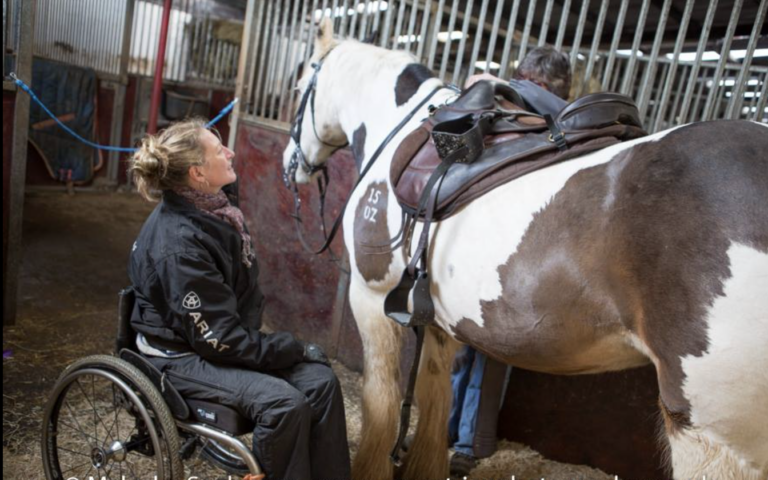
A woman who was left devastated after her car and vital specialist equipment were stolen over the weekend in Buckfastleigh has now been successfully reunited with her property.

The theft, which occurred between Saturday 16 May and Sunday 17 May, saw the woman’s vehicle taken along with equipment essential to her. The incident caused significant disruption and concern, particularly due to the specialist nature of the items involved.

Following swift enquiries and coordinated efforts, the stolen car was located and has since been returned to the owner, along with the missing equipment, which was located by a member of the public.

The recovery marks a positive outcome after what had been a distressing experience for the victim.

Sector Inspector James Johnson said: “Both the police and the victim are incredibly thankful to everyone involved in helping recover the car and her equipment. It’s such a relief to the owner to have these important items back.

“Efforts to establish the full circumstances surrounding the theft remain ongoing, and enquiries continue.”

Anyone with further information relating to this incident is encouraged to come forward quoting 50260124473.

Heartbreaking new clue emerges in hunt for missing Devon teenager

A large-scale police investigation is continuing alongside searches to find missing 14-year-old Taylor Charlton in Barnstaple.

Detectives have reviewed a significant amount of CCTV as well as carrying out house-to-house, digital and witness enquiries to locate Taylor, who was last seen 11 days ago.

Targeted searches utilising specialist teams, drones and the police helicopter have covered an extensive area of the River Taw and estuary.

The community can expect to see further search activity on and by the water in the coming days.

Taylor was last seen in the Tesco Extra car park, in Station Road, at around 10.30pm on Friday 8 May. He was reported as missing at around 5.15pm on Saturday 9 May.

Sector Inspector Andy Wills said: “While a highly visible search operation has been taking place to find Taylor, a substantial number of detectives, officers and staff have also been continuing enquiries to establish the circumstances surrounding his disappearance.

“All avenues of enquiry remain open.

“A hypothesis that Taylor may have entered the water has resulted in searches being concentrated on the River Taw area.    

“Currently, the last confirmed sighting we have of Taylor was captured on CCTV showing him heading in the direction of the river.

“Shoes we believe belong to Taylor were found on two consecutive days on the high tide line of the riverbank, some 480m apart, between Sticklepath and Bickington.

“Our search teams have covered a vast area of the river and estuary. This is a challenging location with a significant movement of water on each tide.

“We are extremely grateful for the public response to our appeal so far, and we still urge anyone with information to contact us.

“If you are out searching, please help us by keeping yourselves safe.

“We are aware of continued speculation on social media and would remind people to avoid sharing any unconfirmed information online as this can make our investigation more challenging.”

Taylor is around 5ft 8ins tall, of muscular build, with dark brown hair and a moustache. He was last seen wearing a bright blue fitted top, jeans and bright blue Nike shoes.

Anyone with information is asked to call police on 999, quoting reference number 50260117084.

Devon pre-school praised after Ofsted says children “flourish and thrive”

A Devon pre-school has been praised by inspectors after an Ofsted report found children were “flourishing, thriving and progressing” while building “loving and caring relationships” with staff and classmates.

Inspectors visited Abbotsham and Alwington Pre-School in Abbotsham, near Bideford, on Friday, January 30, and found the setting was meeting safeguarding standards while achieving a “strong standard” in several areas.

The report said all children were making progress from their starting points, with staff praised for quickly identifying barriers to learning and supporting children with additional needs. Inspectors found children with speech and language delays were making “excellent progress”, while those with English as an additional language were able to communicate their needs confidently.

Inspectors also highlighted the setting’s focus on communication and social development, saying children were becoming “highly confident communicators” who enjoyed books, singing and independent play.

The report praised staff for helping children develop independence and healthy habits. Inspectors said children confidently poured drinks at snack time, practised good hygiene independently and learned about healthy eating and oral health.

Ofsted also noted the pre-school’s support for children’s emotional wellbeing. Children were encouraged to express how they felt using “emotion boards” and picture cards to support communication.

Leaders and staff were commended for closely monitoring children’s learning and working with outside specialists, including speech and language therapists and health visitors, to support development. Inspectors said staff were “extremely thorough and consistent” in their approach to inclusion.

The report also described staff as positive role models who taught children kindness, sharing and respect for others. Children were seen inviting classmates to join games and activities both indoors and outside.

Inspectors found the pre-school had an ambitious curriculum and high expectations for all children. However, the report said outdoor learning opportunities were not always planned as precisely as indoor activities and some larger group sessions lacked consistent routines.

Despite these recommendations, inspectors said staff had built warm and caring relationships with children and families, with children showing excitement about attending pre-school and reuniting with friends.

The report concluded: “All children flourish, thrive and progress at the pre-school.” Inspectors added that children built “key skills that will support them on their next stages of development”.

Abbotsham and Alwington Pre-School is registered for 26 children aged between two and four and operates Monday to Friday from 8am until 4pm.

Devon school praised for turnaround despite major attendance concerns

“A school where ‘leaders have stabilised the school following a period of turbulence’ but where attendance remains ‘generally well below the national average’ has been assessed as meeting the expected standard overall.”

Okehampton College in Devon, which has 1,137 pupils on roll, was inspected on Tuesday, January 27, and found to be meeting safeguarding and overall standards, although inspectors highlighted several areas requiring further attention.

Inspectors noted that “leaders have stabilised the school following a period of turbulence. They have identified and prioritised the right actions for improvement.” The report adds: “They have raised their expectations of pupils’ behaviour and started to reduce absence. Leaders are taking quick and effective action to bring about the necessary improvements, acting in the best interests of pupils. However, there is further work to do.”

Safeguarding was found to be effective, with inspectors concluding that “leaders and/or those responsible for governance and oversight fulfil their specific responsibilities and have established an open culture in which safeguarding is everyone’s responsibility and concerns are actively identified, acted upon and managed. As a result, pupils are made safer and feel safe.”

In terms of achievement, the school was judged to be at the expected standard overall. “Pupils, including those who are disadvantaged, typically build their knowledge and skills well as they progress through the school,” inspectors said, noting that GCSE outcomes are “consistently in line with national averages for most pupils.” However, the report highlights that “students do not achieve as well” in the sixth form, where “achievement at post-16 is consistently below national averages in examinations.”

Inspectors also raised concerns about attendance and behaviour, both graded as “needs attention”. The report states: “Pupils’ attendance is generally well below the national average, and rates of persistent absence are high. This includes for pupils who are disadvantaged or have special educational needs and/or disabilities.” While leaders are taking action, including working closely with families, “it is too soon to determine the impact over time.”

On behaviour, inspectors said: “Leaders have taken prompt action to raise expectations of pupils’ behaviour and to strengthen the school’s approach. This work is at an early stage. Consequently, some disruption to learning continues. This is reflected in the school’s high rates of suspension.”

The quality of teaching and the curriculum was also identified as an area for improvement. Inspectors found that “teaching is not adapted effectively enough for some pupils with special educational needs and/or disabilities,” adding that “there are inconsistencies in how well strategies and support for these pupils are put in place.”

They added that a small number of pupils have gaps in basic skills, and while leaders have made this a priority, “they have not ensured that staff have the expertise they need to close these gaps.”

Despite these concerns, inspectors recognised positive aspects of school life. “Most pupils enjoy their learning. They achieve well, including in their GCSE examinations at the end of key stage 4,” the report states. Pupils benefit from a range of opportunities beyond the classroom, including trips abroad and participation in activities such as the Duke of Edinburgh’s Award and Ten Tors.

Relationships were also highlighted as a strength: “Pupils generally have positive relationships with their peers and staff. Most feel that staff support them with their learning and provide valuable experiences beyond the classroom.”

The personal development programme was judged to meet expectations, with inspectors noting that “leaders have designed a suitable and coherent personal development programme,” covering themes such as diversity, safety and healthy relationships.

However, inspectors pointed out that while there is a wide range of extracurricular opportunities, “leaders do not always use this information precisely enough to make further improvements” in participation.

The report sets out clear next steps, including reducing absence further, improving behaviour, ensuring effective support for pupils with SEND, and equipping teachers with the expertise needed to address gaps in basic skills.

New Plymouth Conservative leader vows to rebuild trust across the city

Plymouth Conservatives have elected a new leadership team as the group looks to rebuild and present what it describes as a “viable alternative” to the current city administration.

Cllr Chris Wood, who represents Eggbuckland Ward, has been elected leader of the Plymouth Conservative Group, while Cllr Dr John Mahony, councillor for Plymstock Radford Ward, has been elected deputy leader.

Cllr Wood said he was “delighted” to have been elected and praised Dr Mahony following the appointment.

He said: “I am delighted to have been elected as the Leader of the Plymouth Conservatives and enormously grateful that the excellent Cllr Dr John Mahony will serve as my Deputy.

“Plymouth is one of Britain’s greatest cities, we Conservatives are going to take our time to review our current policies and ensure we can present a genuine, decent and viable alternative to the current administration.

“Our plans will be based on sound economic management and proper service delivery. It is important we get this right and work with the public to generate proposals worthy of our city.

“The hard work starts today, we want to work with people right across the city, from small and large businesses to our community groups, to ensure we can create something which we can all be proud.”

Dr Mahony said he was “honoured” to take on the deputy leader role.

He said: “I am honoured to be elected as Deputy Leader of the Conservative Group on the City Council.

“Having been elected as the Conservative Councillor for Plymstock Radford I will be working with Cllr Chris Wood and Cllr Kathy Watkin in the Chamber, sitting on committees including the Health & Social Care Scrutiny panel and campaigning on issues affecting Plymstock Radford and the City generally.”

Cllr Wood was elected to Plymouth City Council in 2024 to represent Eggbuckland Ward. According to the group, he has previously served as a councillor on Hampshire County Council, Fareham Borough Council, South Gloucester District Council and Filton Town Council over the past 13 years.

The press release said he moved to Plymouth in 2020 after previously living in the Portsmouth and Bristol areas while working as a project manager for the Ministry of Defence.

DEVON VOICES: ‘The Armed Forces must do more to protect abuse victims’

The recent move by the Ministry of Defence (MOD) to deploy a specialist civilian taskforce to tackle sexual violence and harassment at HM Naval Base (HMNB) Devonport in Plymouth (as well as Catterick Garrison in Yorkshire), is a positive development.

HMNB Devonport has already introduced initiatives to tackle such behaviour amongst personnel, and this is another important step in their fight. The specialist team will help root out the causes and improve organisational structures to prevent sexual violence and enhance victim support.

Recent data, investigations and sadly, coroners’ inquests, which have dominated national headlines, have exposed the large-scale issue of sexual offences across our armed forces, and the MOD’s failure to address it.

The MOD’s taskforce reflects a recognition that such behaviour is not isolated to a few bad apples, it is systemic and therefore requires a unique and robust approach involving civilian experts.

There are, however, reasons to be cautiously optimistic. The recent Naval Servicewomen’s Network Conference at HMS Drake in Devonport was an important example of the Naval Service confronting these issues more openly. Bringing together serving women, senior leaders and advocates to discuss lived experience, accountability and practical reform, sent a clear signal that culture change is now firmly on the agenda. Crucially, attendees were encouraged to take a male ally – an acknowledgement that this cannot be treated simply as a women’s issue for women to navigate. If behaviour is shaped by the wider culture, then responsibility for changing that culture must be shared across the whole service. That willingness to widen the conversation should be seen as a positive and necessary step.

This initiative above to encourage a cultural change and also the work of the taskforce, would also benefit from reform in the military legal system. If we are to permanently change cultural attitudes, behaviours, and reporting processes to protect victims, it is essential the military legal process that deals with these allegations is fit for purpose – i.e. is able to appropriately investigate, escalate and prosecute perpetrators of sexual crimes, and that victims are supported throughout, and are able to continue in their service career, if they wish. It is important that the Service Complaints Process and Service Justice System in particular instils confidence in victims and the chains of command that allegations will be dealt with in the same way they will be dealing with it on the ground, with objectivity, care and sensitivity – that has historically been lacking in this part of the system. 

The Service Complaints Process has been deemed not fit for purpose. This is the internal workplace grievance procedure for all serving and former members of the Armed Forces who feel they have been wronged at some point during their service, i.e. if they are the victim of bullying, sexual harassment or violence. Personnel have reported they do not have confidence in the process, and there are barriers in getting complaints heard. It has been found by both the Defence Committee and the Service Complaints Ombudsman that the process is inefficient, ineffective and unfair.

However, there is hope for reform under the Armed Forces Bill, with the introduction of an Armed Forces Commissioner, which would monitor the service and hold it accountable, to improve the process experience of complainants, and outcomes.

There are similar concerns about the Service Justice System, which hears criminal behaviour involving military personnel. It has long been criticised for not being robust or independent enough to decide on sexual offence cases. There have been accusations of the military police not being adequately trained to deal with sexual offences, and many of those who sit on the juries of the Court Martial are serving personnel (which increases the risk of bias). The Lyons Review, the Wigston Review and the Atherton Report, all found that survivors are not confident in the process and conviction rates remain lower than in the civilian courts, and that it is not the appropriate forum for investigating and prosecuting sexual crimes.

A better approach would be to allow all sexual offence cases to be transferred to the civilian police and court system which has a more established, familiar and importantly, independent approach, as well as higher conviction rates.

In addition, a criminalisation of relationships between trainees and instructors would provide vital protection for recruits, acting as a strong deterrent against abuse of authority, and in support of the work being done by the taskforce and HMNB Devonport.

Reform in the military legal system, would provide the appropriate backing to the important initiatives being introduced at HM Devonport to prevent sexual violence and harassment, and protect survivors. We are more likely to see the positive changes being permanently integrated, which is required if we are to stamp out this criminal behaviour entirely in the military.