



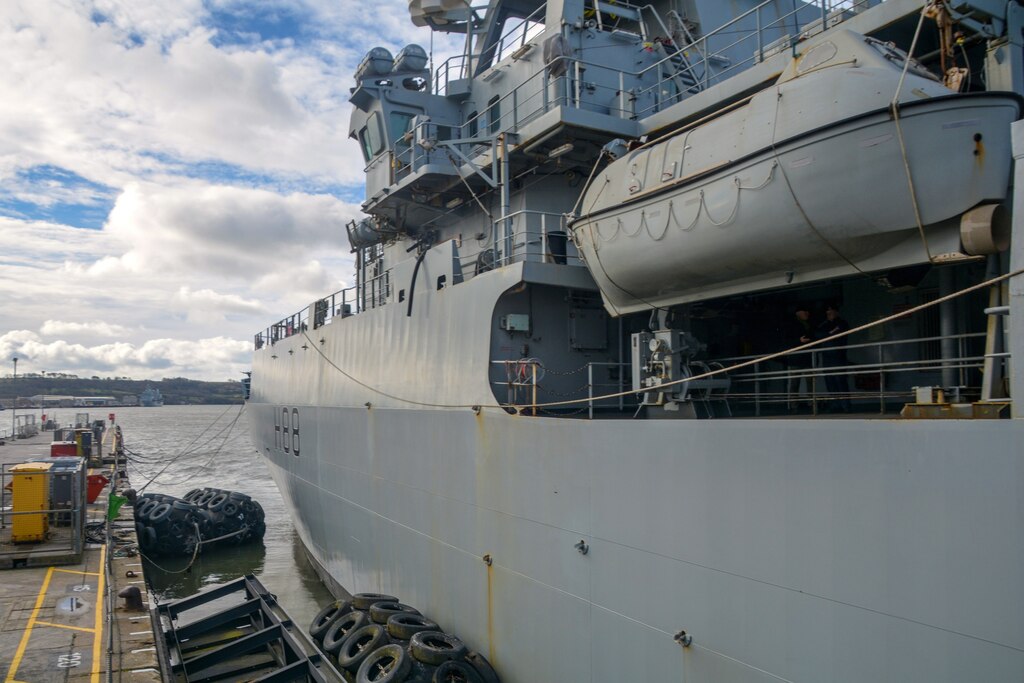
The recent move by the Ministry of Defence (MOD) to deploy a specialist civilian taskforce to tackle sexual violence and harassment at HM Naval Base (HMNB) Devonport in Plymouth (as well as Catterick Garrison in Yorkshire), is a positive development.
HMNB Devonport has already introduced initiatives to tackle such behaviour amongst personnel, and this is another important step in their fight. The specialist team will help root out the causes and improve organisational structures to prevent sexual violence and enhance victim support.
Recent data, investigations and sadly, coroners’ inquests, which have dominated national headlines, have exposed the large-scale issue of sexual offences across our armed forces, and the MOD’s failure to address it.
The MOD’s taskforce reflects a recognition that such behaviour is not isolated to a few bad apples, it is systemic and therefore requires a unique and robust approach involving civilian experts.
There are, however, reasons to be cautiously optimistic. The recent Naval Servicewomen’s Network Conference at HMS Drake in Devonport was an important example of the Naval Service confronting these issues more openly. Bringing together serving women, senior leaders and advocates to discuss lived experience, accountability and practical reform, sent a clear signal that culture change is now firmly on the agenda. Crucially, attendees were encouraged to take a male ally – an acknowledgement that this cannot be treated simply as a women’s issue for women to navigate. If behaviour is shaped by the wider culture, then responsibility for changing that culture must be shared across the whole service. That willingness to widen the conversation should be seen as a positive and necessary step.
This initiative above to encourage a cultural change and also the work of the taskforce, would also benefit from reform in the military legal system. If we are to permanently change cultural attitudes, behaviours, and reporting processes to protect victims, it is essential the military legal process that deals with these allegations is fit for purpose – i.e. is able to appropriately investigate, escalate and prosecute perpetrators of sexual crimes, and that victims are supported throughout, and are able to continue in their service career, if they wish. It is important that the Service Complaints Process and Service Justice System in particular instils confidence in victims and the chains of command that allegations will be dealt with in the same way they will be dealing with it on the ground, with objectivity, care and sensitivity – that has historically been lacking in this part of the system.
The Service Complaints Process has been deemed not fit for purpose. This is the internal workplace grievance procedure for all serving and former members of the Armed Forces who feel they have been wronged at some point during their service, i.e. if they are the victim of bullying, sexual harassment or violence. Personnel have reported they do not have confidence in the process, and there are barriers in getting complaints heard. It has been found by both the Defence Committee and the Service Complaints Ombudsman that the process is inefficient, ineffective and unfair.
However, there is hope for reform under the Armed Forces Bill, with the introduction of an Armed Forces Commissioner, which would monitor the service and hold it accountable, to improve the process experience of complainants, and outcomes.
There are similar concerns about the Service Justice System, which hears criminal behaviour involving military personnel. It has long been criticised for not being robust or independent enough to decide on sexual offence cases. There have been accusations of the military police not being adequately trained to deal with sexual offences, and many of those who sit on the juries of the Court Martial are serving personnel (which increases the risk of bias). The Lyons Review, the Wigston Review and the Atherton Report, all found that survivors are not confident in the process and conviction rates remain lower than in the civilian courts, and that it is not the appropriate forum for investigating and prosecuting sexual crimes.
A better approach would be to allow all sexual offence cases to be transferred to the civilian police and court system which has a more established, familiar and importantly, independent approach, as well as higher conviction rates.
In addition, a criminalisation of relationships between trainees and instructors would provide vital protection for recruits, acting as a strong deterrent against abuse of authority, and in support of the work being done by the taskforce and HMNB Devonport.
Reform in the military legal system, would provide the appropriate backing to the important initiatives being introduced at HM Devonport to prevent sexual violence and harassment, and protect survivors. We are more likely to see the positive changes being permanently integrated, which is required if we are to stamp out this criminal behaviour entirely in the military.