



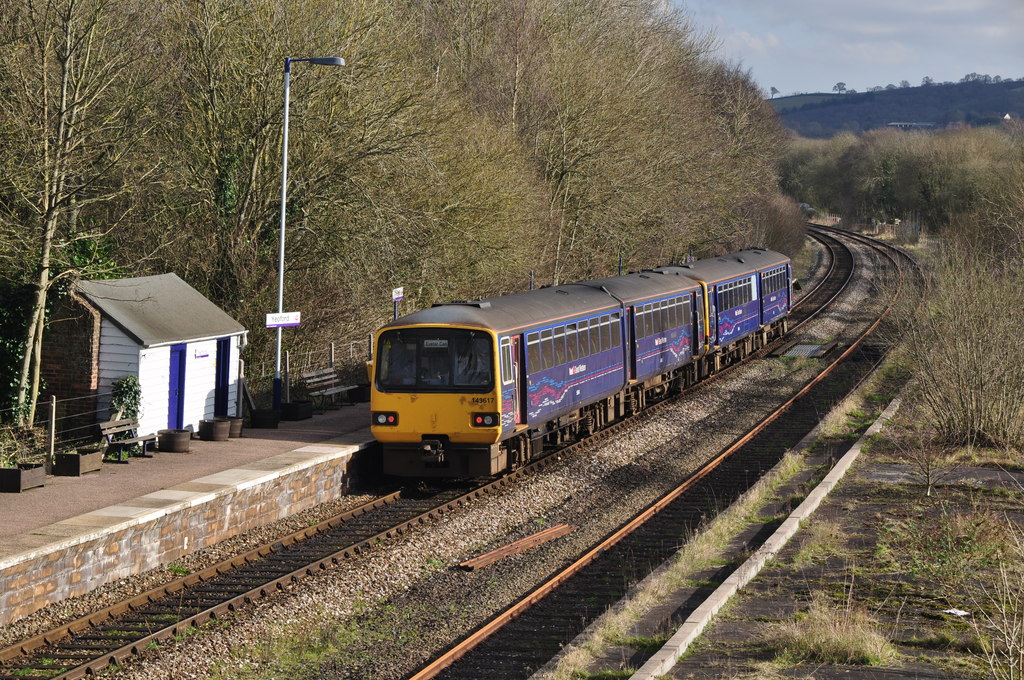
Rail passenger numbers are climbing, trains are ageing, and on some services – particularly the morning run from Barnstaple into Exeter – demand has simply outgrown the available space.
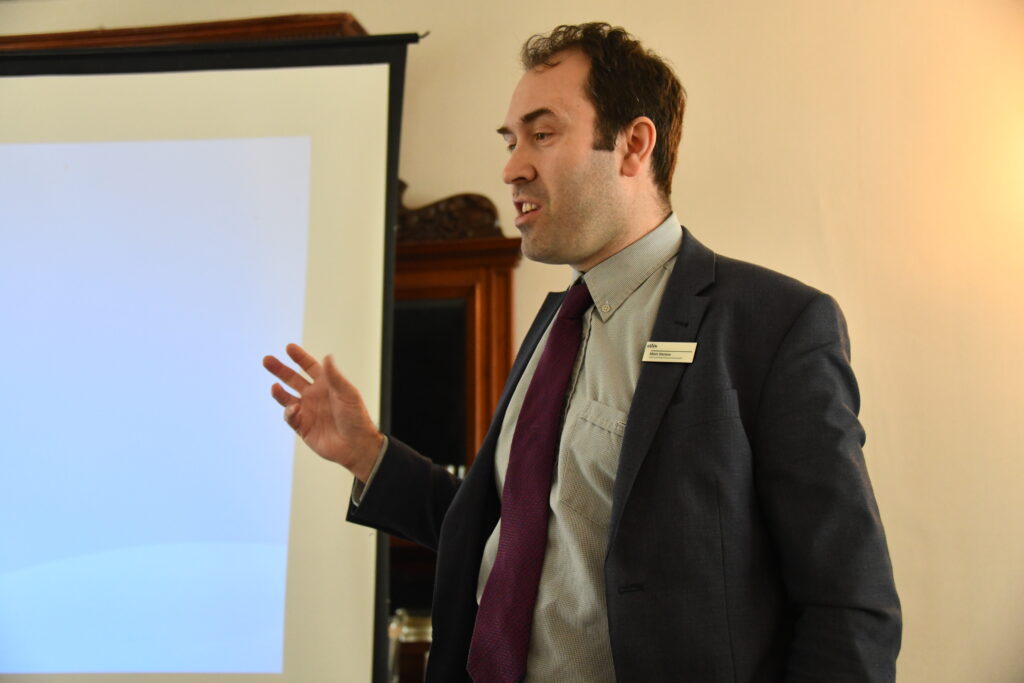
Matt Barnes, head of strategic service at Great Western Railway, has spent much of his career watching that change unfold. Having previously worked at Devon County Council before moving to GWR, he has been closely involved in many of the region’s major rail upgrades.
“I’ve been around Devon for a long time,” Matt says. “I used to work for Devon County Council and done the vast majority of upgrade type projects that we’ve done in this area for example, leading the Dartmoor line a few years ago.”
The reopening of the Dartmoor Line in 2021 was widely hailed as a success story, restoring passenger trains between Exeter and Okehampton for the first time in nearly half a century. Yet its success is also part of a wider trend; rail travel across Devon is booming. According to Matt, the transformation over the past decade has been dramatic.
“Since I got involved in rail travel in Devon, there are twice as many people travelling on our services,” he says. “There are 40% more people on local trains around Exeter than there were pre-COVID.”
That surge in demand has brought new opportunities – but also new pressures. One of the most immediate challenges facing the network is the condition of the trains themselves. Much of the diesel fleet serving the west of England is now decades old.
“The average age of our DMU fleet across the west services is more than 30 years old,” Matt explains. “Some of the units will hit 40 this year.”
At the same time, previous efficiency measures reduced the number of trains available. GWR’s High Speed Train sets, which once helped support regional services, have now been withdrawn. The result is a system that is busier than ever but operating with limited rolling stock.
“Several years ago we realised that the situation couldn’t carry on like it was,” Matt says. “We needed to get some more units into the fleet.”
The solution emerged in the form of Class 175 trains-diesel multiple units built between 1999 and 2001 that had been operating in Wales before being replaced. For GWR, they represented the quickest realistic option for strengthening services.
“At the time, there was only one option really that appeared to be relatively quick to act,” Matt says. “These were the Class 175s. They’re much younger trains. They were in service in Wales, and they’ve just been replaced there, and they were available to take straight on.”

GWR is acquiring 26 of the units. Once fully introduced, they will operate on the main line between Exeter and Penzance, as well as on regional services, including routes to Okehampton and Barnstaple. A handful will also appear on trains on Cornwall’s Newquay branch.
The aim is not simply to replace older trains but to strengthen the resilience and capacity of the network.
“We’ve taken them on because they allow us to address resilience issues in the west DMU fleet,” Matt explains. “They also help address some capacity issues.”
One of the clearest examples of that demand is the 7.22am service from Barnstaple, where the daily rush includes hundreds of students travelling to Exeter.
“Specifically, the Barnstaple 7.22am challenge of over 400 students,” Matt says.
Longer trains are planned to ease that pressure. On the busiest services, the Class 175 units will run as five-car formations, significantly increasing the number of seats available.
Yet introducing new trains to an existing railway is rarely as simple as moving them from one place to another. When the Class 175s arrived from Wales, they were not ready to enter passenger service immediately.
“The challenge we faced is those trains effectively had gone into storage after they were taken out of use in Wales,” Matt says. “The condition of them was not basically suitable for immediately deploying into traffic.”

The 1613 Exeter Central to Barnstaple (2B81) formed of 158798 arriving into Barnstaple and will immediately form the 1733 Barnstaple to Exeter Central (2R91)
Before passengers could board them, the trains needed substantial engineering work. The first stage is an overhaul carried out at Wolverton Works, north of Milton Keynes, by the trains’ owners. Only after that process is complete can GWR carry out its own inspections.
“The second stage is we then do an exam to assure ourselves from an engineering perspective that they’re ready for use,” Matt explains.
That work has taken longer than originally anticipated.
“It’s been more of a challenge than perhaps we were expecting,” Matt says. “Frankly the units have degraded more than we expected.”
Even once the engineering work is complete, there are further hurdles. Drivers must be trained to operate the new trains, and the infrastructure across the network must be confirmed as compatible.
“When you introduce the train into the business, there’s two things you need to do apart from getting the train physically ready,” Matt says. “One is to train people and prepare our bit of the business. And the other piece is to modify and ensure the infrastructure is compatible.”
Driver training alone takes around two weeks for each driver.
“A week of classroom, if you like, and a week of driving them up and down, just getting used to how they handle,” Matt says.
The process is already underway. Several of the trains are now in the GWR system, with some used for training and others undergoing final checks. Passenger services using the trains have already begun in Cornwall.
“We have got trains in use in Cornwall,” Matt says. “We have one of them we use for passenger service in Cornwall and we have several more that we are using for driver training.”
At present, nine units are within the business, with more gradually joining as engineering work progresses.
However, geography adds another complication. The new trains are based at GWR’s depot in Plymouth, meaning driver training must begin there before expanding further across the network.
“We had to train our drivers at Plymouth and Par in Cornwall first before we can come to Exeter,” Matt explains. “Effectively Exeter is the latter part of the training.”
That sequence means that the lines serving North Devon – where extra capacity is urgently needed – must wait until later in the rollout.
“While we really, really want to deliver the extra capacity on the Barnstaple line to address the crowding… we physically can’t get there because we’ve got to train other people first,” Matt says.
Even so, progress is steadily being made. The expectation is that the first Class 175 services will appear in the Exeter area before the end of the year.
“We are working towards, by the end of the year, having the first trains in use in this area,” Matt says.
For passengers, the wait should ultimately be worthwhile. While Devon’s current Class 158 trains represented an improvement when they were introduced, the Class 175 units promise a noticeable step up in comfort.
“Interior-wise… these are very nice trains,” Matt says. “From a customer perspective, they will go down really well.”
The delays, however, have not been easy.
“The unfortunate thing is it’s been frustrating that we haven’t been able to make as much progress as we’d like as soon as we’d like,” he admits.
For Matt, the story of the new trains sits within a much bigger narrative about rail in Devon. Over the past decade, the region’s railway has shifted from a useful transport option into something far more central to everyday life.
“It is fair to say that the transformation that we have seen in that time is quite enormous,” he says.
Part of that change has been driven by new stations and reopened routes. The return of trains to Okehampton created new journeys and new opportunities. But it also demonstrated how rail can connect communities far beyond the immediate line.
“The Dartmoor line actually makes money,” Matt says. “And the reason it makes money is that there’s a huge amount of travel off it… that then uses Exeter as an interchange point to travel long distances.”
That network effect is key. A railway line is rarely just about the towns directly along its tracks; it connects to a much wider system of journeys.
“The benefit of the railway is it’s a network,” Matt explains. “It doesn’t just get you on a short segment. It allows you to access places all over.”
That idea sits at the heart of the next phase of planning for Devon’s railways. Earlier versions of the Devon Metro concept focused largely on adding stations and improving services on existing lines. Now, Matt says, the conversation is shifting.
“When I was involved, 16 years ago, the original Devon Metro iteration, it was all about new stations and service enhancements,” he says. “Now we need more infrastructure.”
The work now under discussion concerns shaping the railway to support the region’s future growth. That includes looking at how different lines fit together to support travel across Exeter, North Devon, East Devon and beyond.
“The work that we’re starting to think about is what’s next for Devon Metro,” Matt says.
That could involve further service improvements, new connections between lines, or increased frequencies. Among the aspirations is a half-hourly service on the North Devon line, as well as ideas linking places such as Axminster, Digby and the Exmouth branch.
Ultimately, the goal is to ensure the railway continues to support the region’s expanding economy and population.
“The important thing from a sub-regional perspective is that we have a vision,” Matt says, “for how the railway slots together to deliver growth in the Exeter, North Devon, East Devon, South Devon area rather than just any one route.”