The Terminally Ill Adult (End of Life) Bill has today run out of time.
This means it will not progress any further and will not become law.
I have been open about the fact I do not support the principle of assisted dying/ assisted suicide. This is why I chose to vote against it at every opportunity. Many of my constituents supported my position. However, I am very aware that many people desperately wanted this bill to become law and want the option of assisted dying. I appreciate that they will be bitterly disappointed.
It is important to note that supporters of assisted dying chose to use a Private Members Bill as the mechanism to pursue a change in the law. The challenge with taking this route is that there is no pre-legislative scrutiny and limited time in the House of Commons for scrutiny on the floor of the House or in Committee. MPs from across the House of Commons worked to highlight the flaws in the draft bill and sought to improve it at every turn.
During the Commons Report Stage debate, I was able to raise only one of the concerns I, and colleagues, had about the bill.
Since the vote in the House of Commons, the House of Lords has spent a considerable amount of time debating it. Many amendments have been tabled from both sides of the argument, as they were in the House of Commons. It is important to note that whilst there were a significant number of amendments in the Lords for this Bill, other legislation such as the Police, Crime, Sentencing and Courts Bill also had a high number of amendments. To claim that members of the House of Lords sought to kill the bill contradict the role that the House of Lords plays. It is a refining Chamber and this is exactly what Peers sought to do.
Moving forward, there are those who have said they will seek to bring another Assisted Dying Bill forward after the Kings Speech. There are others who are determined to bring forward legislation to improve palliative care instead. A bill to ensure everyone has access to well-funded and quality palliative or end of life care, regardless of where they live. It is my hope that we see something like this come forward.
Rail revival hopes gather pace as long-awaited link edges closer to scrutiny, with campaigners warning the journey is only just beginning.
Infrastructure director for Railfuture Roger Blake told councillors that proposals to reconnect Bideford to the rail network remain at an early stage, despite growing collaboration and mounting local interest. Speaking to the Torridge and North Devon Joint Planning Policy Committee, he said the scheme would need to pass through a series of formal assessments before any construction could be considered.
Roger, who is also acting convener for the Northern Devon Railway Development Alliance (NDRDA), said the group was established in December 2023 to bring together organisations and stakeholders to explore the possibility of reinstating services.
He reminded members that a previous committee meeting in July 2022 had resolved that the Bideford to Barnstaple rail link should be considered as part of the People and Place project.
Roger said: “We do not have a timetable, but we do have a scheme development programme.”
He added that both the council and the alliance shared a “common destination” in reaching independent examination, either through the emerging North Devon and Torridge Local Plan or a future Development Consent Order application.
The alliance has published a preliminary strategic business case and is now aiming to progress to a strategic outline business case, subject to funding. Roger said this stage would ideally be completed by Saturday, March 29, to align with the Local Plan timetable. Government approval would then be required before further development work could continue.
He said: “We each have to work through a sequence of processes to present evidence and test assumptions before reaching any conclusions rather than speculate about a product.”
Roger also highlighted the scale of the potential project, noting that any new rail link could be delivered decades after major infrastructure such as the North Devon Link Road, Torridge Bridge and the Tarka Trail.
He said the alliance’s role was to act as a “mediating” body, bringing together around four dozen partners and stakeholders to examine options and evidence.
Roger added: “There is no commitment to anything other than the gathering and testing of evidence and options against addressing problems and meeting objectives.”
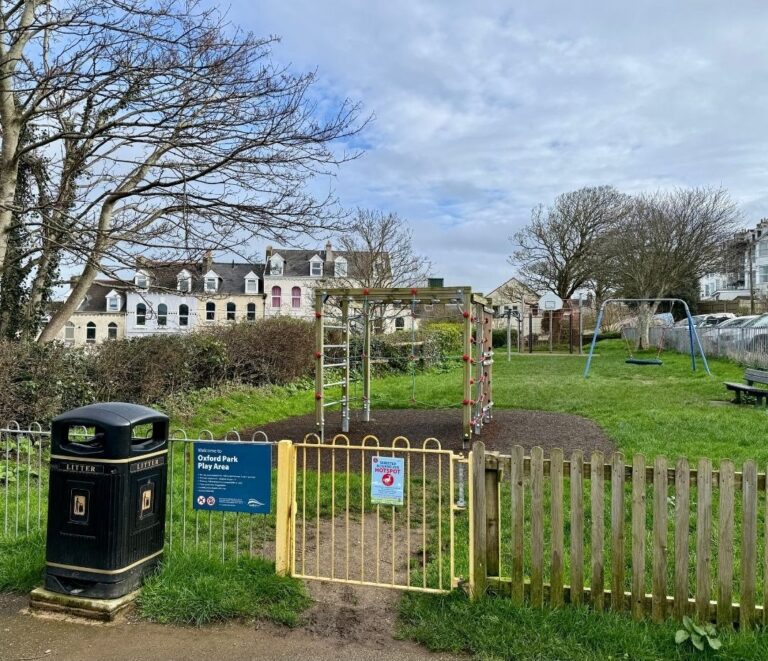
A crackdown on irresponsible dog owners has been stepped up after repeated incidents of fouling were discovered in a popular public park, with officials warning that tougher measures could soon follow.
North Devon Council said its officers have continued to find dog waste left behind in Oxford Road Park, in Ilfracombe including in areas where dogs are not permitted.
The authority described the behaviour as “completely unacceptable” and confirmed that regular patrols are ongoing to address the issue.
The council thanked residents who have already reported problems, saying their support is helping investigations and making a difference.
Dog waste can carry harmful bacteria and parasites, posing a risk to children and families using the park. The council said everyone should be able to enjoy the space safely.
Officers warned that those ignoring the rules could be identified, adding that CCTV may be introduced if the problem persists.
Dog fouling offences can result in a £100 fixed penalty notice, rising to as much as £1,000 if prosecuted through the courts.
Residents are being encouraged to report incidents online. The council said clear photographs of the waste and its location are essential, and that details of the dog, owner or any vehicle involved can also help, provided it is safe to obtain them.
A major shake-up of tenant rights could soon reshape the private rental market, as councillors backed plans to strengthen enforcement powers while insisting they will avoid a heavy-handed approach.
Members of the Community and Resources committee discussed proposals to adopt an updated housing enforcement policy in response to sweeping legislative changes brought in under the Renters’ Rights Act 2025.
The meeting, held on Monday, April 20, heard how the new law introduces significant reforms to the private rented sector, including the abolition of so-called “no fault” evictions and stronger protections for tenants challenging rent increases.
Staci Dorey, director of legal and governance, told councillors the changes would give local authorities “a lot more power” to deal with standards in privately rented homes.
She said: “The new Act abolishes no fault evictions. It gives tenants more rights to challenge unreasonable rent increases. It bans landlords from taking any rent before the tenancy is signed and limits advance rent to one month.
“It gives tenants rights to request pets and makes it unlawful to discriminate against tenants with children or those on benefits. It also strengthens the enforcement powers that we as councils have.”
However, she stressed the council would prioritise working with landlords rather than immediately resorting to penalties.
She said: “We do not want to jump straight to enforcement action. We want to work with landlords to make accommodation acceptable and bring it up to a good standard.
“We would only look to prosecute those with repeated breaches or blatant breaches.”
The updated policy also outlines how civil penalties could be imposed in more serious cases, with fines set according to statutory guidance.
Councillor Chris Leather raised concerns the legislation could discourage landlords from remaining in the sector.
He said: “This Act has already driven a lot of landlords out of the private sector nationwide. There are one or two beneficial things in it, but there are also some severe financial penalties that can be imposed.
“I am pleased we are not going to go with a big stick right away because that could drive people out of renting and they will sell up.”
Councillor David Brenton said responsible landlords would have little to fear.
He said: “Good landlords have got nothing to fear. Bad ones, not so good.
“It has been a buyer’s market because more properties are coming onto the market, which has helped people get onto the property ladder.”
Councillors also discussed the importance of maintaining strong relationships with landlords, particularly given the reliance on the private rented sector for temporary accommodation.
Ms Dorey said: “Most of our people in temporary accommodation rely on the private rented market, so we have to develop those relationships.
“If landlords are working with us, there is no reason to take formal enforcement action unless it is a blatant disregard or repeated issue.”
The committee heard that while the council would receive around £60,000 in funding to help implement the changes, there are expectations that enforcement activity could partially fund itself through civil penalties.
Councillor Teresa Tinsley questioned whether the additional responsibilities would place pressure on resources, but was told the authority had already expanded its housing team and was not anticipating a surge in complaints.
The updated policy is intended to ensure the council is prepared for new duties and powers coming into force from May 2026, while aligning with wider housing strategy goals.
A major plan to reverse nature loss across Devon has edged closer to adoption after councillors were told it would guide – not block – future development.
Members of Torridge District Council’s Community and Resources Committee debated the Devon Local Nature Recovery Strategy on Monday, April 20, hearing it could influence a wide range of council decisions, from planning to land use, once formally adopted.
Planning policy team leader Ian Rowland told the committee the strategy was a statutory requirement designed to help reverse biodiversity decline and would need to be considered in future council decisions.
Mr Rowland said: “Public bodies have a duty to conserve and enhance biodiversity… and in doing so, legislation requires public bodies to have regard to the local nature recovery strategy in exercising our functions.”
He explained the strategy, coordinated nationally by Defra and prepared locally by Devon County Council, would set priorities for habitats and species while mapping areas for improvement.
Mr Rowland said: “It will have an influence potentially on a wide range of our services and our functions.”
The council is acting as a supporting authority in the process and had been involved throughout its development, including workshops and consultation stages.
More than 200 responses and over 700 comments were submitted during a public consultation in late 2025, alongside input from workshops and webinars.
Following that feedback, Devon County Council produced a final draft earlier this year, which Torridge councillors were asked to consider.
Under legislation, the authority can only object if the strategy is unjustified by consultation responses or is “materially deficient”.
Officers recommended no objection.
Mr Rowland said: “There is no basis to consider that the final strategy cannot be justified nor that it is likely to be materially deficient.”
He added the strategy was intended to guide positive environmental action rather than restrict development.
Mr Rowland said: “It’s not meant to be a barrier to development, it’s about providing you with actions and objectives of things that can direct in a positive way.”
Councillor Teresa Tinsley questioned how much scrutiny members had been given, noting the document appeared focused on process.
Cllr Tinsley said she would have liked to see more localised examples and asked whether the strategy had previously come before a committee.
Mr Rowland confirmed it had not, but said members had been kept informed and invited to engage during earlier stages.
Concerns were also raised about the potential impact on planning and economic growth.
Councillor Jane Whittaker asked whether developers might find it harder to build.
Mr Rowland said the strategy should instead help shape development more strategically.
He said: “It could help us shape and steer where we would put things… and where we may improve habitats.”
Cllr Whittaker said: “I would see it as a positive. I’m just wondering if your developers would see it as a positive.”
Mr Rowland said: “Hopefully they will, it’s not meant to prevent them from being able to develop an individual site.”
Rural concerns were raised by Councillor Philip Pennington, who warned businesses in the countryside could be affected.
Cllr Pennington said: “My fear is we adopt too much biodiversity net gain, then we lose the primary industry that supports the secondary industry.”
He asked for assurances that agriculture and rural enterprises would not be restricted.
Mr Rowland said the strategy would not impose restrictions on land use.
He said: “It is not going to decree any of that, it’s not intended to hamstring.”
The Devon strategy forms part of a nationwide framework introduced under the Environment Act 2021, aiming to create around 50 local strategies across England to restore nature.
Councillors were advised that once adopted, the strategy would need to be considered in council decision-making, including planning and environmental policies.
The committee was recommended to support publication without objection.
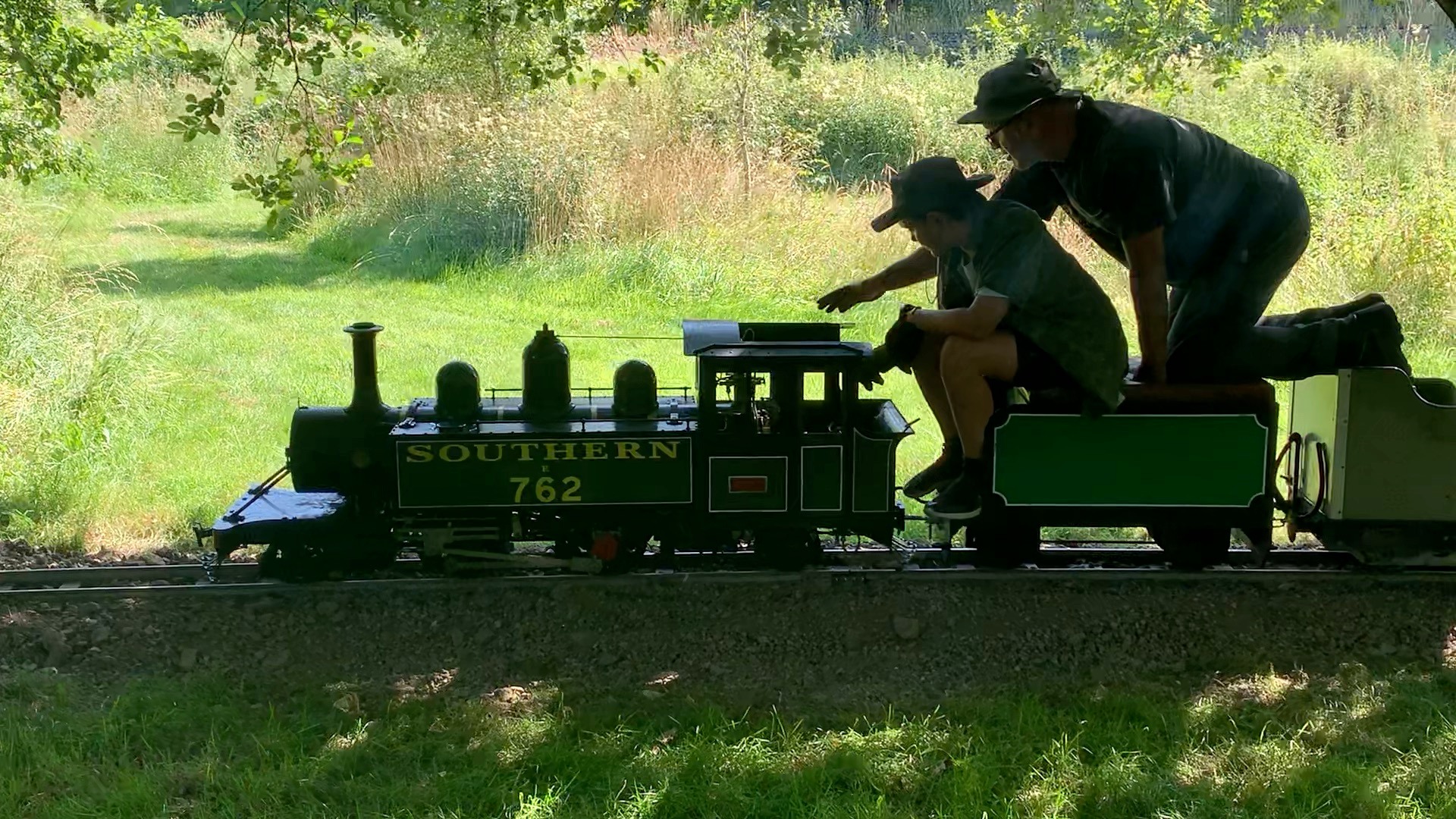
A volunteer-powered railway is gathering steam as its backers seek a final push of funding to keep expansion plans on track.
Lapford Mill Steam Railway, based within the grounds of Lapford Mill, is aiming to raise £2,000 to extend its line and complete the next stage of development. The attraction forms part of a wider effort to revive the historic site as a hub for arts, entertainment and community events.
The mill, a private family home with more than 700 years of industrial heritage, has hosted village and arts activities for many years. Since 2015, owner Alex Gater has led efforts to increase community engagement, drawing on family roots at the site that date back to the early 15th century.
Plans are now in place for the venue to reopen on selected dates in early summer 2026, featuring live music, outdoor theatre and family-focused events. Steam-Up Days are also scheduled to begin in May, offering demonstrations and rides on a 7 1/4-inch gauge steam locomotive and carriages.
The railway itself has been constructed entirely by volunteers, with recent work carried out across late winter and early spring. Participants have ranged from experienced engineers to newcomers.
So far, the project has secured £1,500 in private donations, logged more than 370 volunteer hours and laid over 200 metres of track, alongside what organisers describe as more than 220 cups of tea.
Organisers say the latest funding will cover essential materials and groundwork, including 16 tonnes of ballast and further earthworks needed to complete the next section of line.
They are also encouraging new volunteers to get involved as the project continues to grow.
A gentle older mare with failing sight has become an unlikely pillar of strength for a recovering herd, as newly released updates reveal how dozens of once semi-feral horses are learning to trust again.
One year after a major multi-agency welfare operation involving around 70 Icelandic horses, The Mare and Foal Sanctuary has shared details of the progress made by animals now in its care.
Concerns raised by members of the public about several semi-feral herds across Devon prompted a coordinated response involving the Sanctuary, RSPCA and World Horse Welfare. A joint statement outlining the complex operation was released in October last year.
Following the intervention, the Sanctuary took in eight horses and five foals at its specialist facilities in the South West. Staff have since been carrying out ongoing rehabilitation, veterinary treatment and handling training.
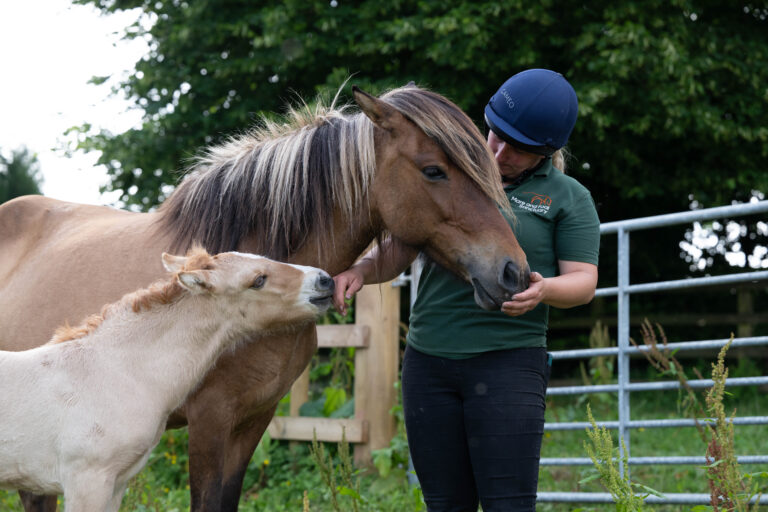
At the centre of the charity’s spring appeal is Granny, a 20-year-old Icelandic mare described as a calm and steady presence within the group. Blind in her right eye and living with locking stifles, a painful joint condition, she now receives daily pain relief and lives outdoors to support her mobility.
Four of the 13 Icelandic horses being cared for at The Mare and Foal Sanctuary in Devon.
Despite these challenges, staff say her temperament has made her an important influence on younger horses, including her foal Sherlock.
Jenna Goldby, head of welfare and rehoming at the Sanctuary, said: “Granny is at the heart of our spring appeal because she shows what ongoing care really looks like. The initial welfare operation was just the beginning of a long journey of recovery for the herd.
“Since then, our team has been caring for them around the clock, making sure Granny and her herd mates are comfortable, safe and learning to trust people.
“She is an older mare with complex needs, but she is also a calming presence for the younger horses.”
Jenna added: “Before she came to us, she suffered the trauma of losing a foal, and soon after became pregnant again with Sherlock, who is now 10 months old.
“Sherlock looks to her for reassurance, and other horses in the herd often follow her lead.
“When people support our appeal, they are helping us provide that long-term, patient care that cannot be delivered in a single week or month.”
Last year’s welfare operation brought equine charities together in a coordinated effort.
Sherlock is said to be thriving, showing a curious and playful nature. He is progressing with training, including grooming and learning to pick up his feet. Staff have adapted their approach to suit his behaviour, rewarding him with scratches rather than treats when he becomes overexcited around food.
Elsewhere in the group, other horses are also making steady progress. Hilda and her foal Spirit are building confidence through careful handling, while young foals Flint and Wurzel, along with Bowie who was born shortly after arrival, are adjusting to routine care and life at the Sanctuary.
Jenna said: “This has been a real team effort. Our welfare team and Sanctuary care staff, vets, specialist handlers and volunteers have all played a part in helping these horses adapt from semi-feral life to one where they can be safely handled, receive veterinary treatment and begin basic training.
“We also continue to work in a supportive way with horse owners who may be struggling. Our aim is always to prevent welfare problems wherever possible by offering no-shame advice and support at an early stage.”
The Sanctuary’s spring appeal aims to raise funds to cover the ongoing costs of caring for the Icelandic herd and other vulnerable equines. This includes feed, bedding, veterinary treatment, farriery and staffing.
Dawn Vincent, director of fundraising and communications at the Sanctuary, said: “We are so grateful to everyone who has supported The Mare and Foal Sanctuary so far, including those who responded to last year’s coverage of the Icelandic horses.
“Their generosity has already made a real difference to Granny and her herd.
“In reality, the work does not stop when horses arrive with us. Many will need months or years of care, training and veterinary support.
“Regular donations mean we can plan ahead and step in when horses and ponies urgently need our help.”
Two women, one name, and one extraordinary goal: to run 26.2 miles for the same cause close to their hearts. In a remarkable coincidence, Daisy French from Newton Abbot in Devon and Daisy Greville Williams from Midlothian in Scotland, who have never met, are both running the 2026 London Marathon on Sunday 26 April for the charity Farm Africa, inspired by the same deeply personal motivation: to honour their beloved grandfathers.
Living 447 miles apart, their stories are uniquely their own, yet powerfully connected by shared values, family legacy and a commitment to supporting smallholder farmers in eastern Africa.
In April 2025, two women with the same name, living at opposite ends of the UK, both applied to run the 2026 London Marathon for Farm Africa.
Daisy and Daisy had never met. Yet both were inspired by their beloved grandfathers.
Daisy French, from Newton Abbot, had applied for the London Marathon ballot for several years without success. Determined to secure a place in 2026, she decided to run for a charity close to her heart. The choice was simple: Farm Africa, a charity that supports farmers in eastern Africa to improve the quality, quantity and value of their produce, so that they can support their families with more resilient livelihoods.
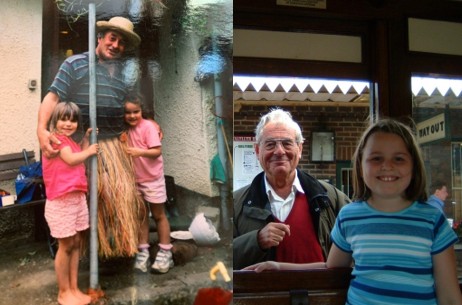
“My grandfather Brian Marnham spent years campaigning and spreading awareness about Farm Africa and even went on a trip to Ethiopia to see the work the charity does first-hand,” Daisy explained. “Now, after my parents have taken over the family farm and we are more present in the farming community, I want to continue his legacy.” she continued.
Meanwhile, 447 miles north, Daisy Greville Williams from Midlothian had her own deeply personal reason for applying to run.
Last year, her much-loved grandpa sadly passed away. “Farm Africa was a cause incredibly close to his heart – he donated every month and was a long-time supporter. He spent many years living in sub-Saharan Africa and had a deep love for the continent, its people and its animals. Supporting Farm Africa was his way of staying connected to a place he cared for so deeply.” explained Daisy.
When he passed away, Daisy and her family chose to collect donations for Farm Africa at his funeral, honouring his memory and ensuring his legacy of generosity would live on. Now, Daisy is taking that tribute one step further by running the London Marathon in his name.
Two women. The same name. The same race. The same charity. And the same motivation – to honour their grandads and support smallholder farmers in eastern Africa.
It’s a remarkable coincidence, and a powerful reminder that no matter where you are in the world, shared values and shared love can bring people together for an extraordinary cause.
“A warm and welcoming environment, where children feel safe, included and valued” has been highlighted in a positive inspection of a small Devon childcare setting where inspectors found youngsters thriving through sensory play, outdoor exploration and close relationships with staff.
Early Worlies, based at East Worlington Primary School in East Worlington, cares for babies and toddlers aged from 0 to 2. The setting, which has nine places and is run by Chulmleigh Academy Trust, was inspected on Monday, January 19 after registering with Ofsted in December 2024. Inspectors found the provision meets the expected standard across all areas, with safeguarding requirements also met.
The report highlights how children are developing key early skills through carefully planned activities and strong support from staff.
Inspectors said: “Children acquire age- and stage-appropriate skills across all areas of learning and development, ensuring they are well prepared for subsequent educational phases, including transitions to nursery rooms for older children. Effective collaboration between staff and external professionals supports well planned and carefully managed transitions.”
Language and communication development was also noted as a strength. According to the report: “Children build strong language, communication and physical skills that prepare them well for the future. Babies smile and babble confidently, while young toddlers begin using single words with ease. All children make progress from where they started, including those who need extra support or have special educational needs and/or disabilities.”
Inspectors observed staff supporting children as they reach key developmental milestones. “Staff give individual support to help children reach important milestones. Babies build strength as they learn to sit independently and enjoy playing with balls alongside others. Toddlers show creativity as they make marks with chalk and explore music by listening and responding to different sounds.”
Behaviour and attitudes were also praised, with staff creating a calm and nurturing learning environment. The report notes that leaders and staff maintain high expectations, helping children to develop curiosity and enthusiasm for learning from a very young age.
Inspectors wrote: “Leaders and staff have high expectations for children’s behaviour and attitudes to learning. This helps create a calm, caring and positive environment. Because of this, children are curious, interested and enjoy learning from an early age.”
Staff also help children understand kindness and respect through everyday interactions. The report explains: “Staff clearly teach children about kindness and respect. For example, when children find it hard to share, adults calmly explain why sharing and taking turns matter. This support helps children learn positive behaviour and toddlers are often seen sharing toys, such as sticks found outdoors, with their friends.”
Children’s wellbeing is central to the setting’s approach, with routines and policies designed to support their emotional and physical development. Inspectors said: “Staff create a warm and welcoming environment, where children feel safe, included and valued. This helps children feel confident, calm and happy as they play and learn each day.”
Outdoor learning also plays an important role in the nursery’s daily routine. According to the report: “Children have daily opportunities to play and learn outdoors. Outdoor learning supports children’s physical development, helps them build resilience and improves their overall wellbeing.”
The curriculum was described as ambitious and carefully planned, with staff demonstrating strong knowledge of early years development. Inspectors highlighted how teaching supports all children, including those with additional needs.
The report states: “Teaching is of a high quality and supports all children, including those with special educational needs and/or disabilities, children involved with social care, and those who face barriers to learning. For example, children with speech delays receive targeted support that helps them grow in confidence when speaking.”
Strong partnerships with parents and carers were also emphasised. Inspectors noted that staff work closely with families to ensure routines such as sleep schedules, introducing solid foods and personal care are consistent between home and the setting.
Leaders and staff were praised for their commitment to maintaining high standards and supporting one another through ongoing training and supervision. The report says: “There is a strong culture of reflection and learning, and staff are encouraged to develop their skills and knowledge through ongoing training.”
Inspectors identified areas where the setting could improve further. Leaders were advised to enhance opportunities for babies and toddlers to practise physical skills such as walking, and to expand the teaching of mathematics so that children develop a deeper understanding of early number concepts.
A spokesperson for Worlies said: “We are delighted by our recent OFSTED report, the setting continues to grow and flourish. We are grateful for the continued support of our families and we are looking forward to meeting new families on our upcoming open day this term, please look out for the date.”
“A welcoming start to the school day” where pupils “are kind and respectful towards one another” has been highlighted in a positive inspection of a Devon primary school.
Inspectors said Witheridge Church of England Primary Academy has built a calm and inclusive environment where pupils feel safe, behave well and benefit from a wide range of opportunities both inside and outside the classroom. The small rural school, in Fore Street, has 127 pupils on roll.
In their report following an inspection on Tuesday, January 13, inspectors said safeguarding standards are met and leaders have created “an open and positive culture of safeguarding”.
The report notes: “Staff greet pupils and their families warmly each morning, helping to create a welcoming start to the school day. School and trust leaders set high expectations for every pupil and foster a strongly inclusive culture. Staff know each pupil’s needs well.”
As a result, inspectors found that pupils who face barriers to learning are quickly identified and supported.
The report says: “Pupils are kept safe. They behave well, and the school has a calm, purposeful atmosphere. Attendance is high, reflecting pupils’ enjoyment of school and their commitment to learning. There are no incidents of bullying.”
Inspectors praised the school’s approach to inclusion, highlighting how leaders work closely with families and the wider community. Staff hold “high expectations for what all pupils can achieve, regardless of their background or starting point”.
Leaders also run initiatives such as coffee mornings for parents and baby and toddler sessions to build relationships with families and identify potential barriers to learning early. Support for pupils with special educational needs and disabilities was also highlighted as a strength.
The report states: “With support from the trust’s experienced special educational needs team and external agencies, staff are trained to identify pupils’ needs swiftly. Staff use a clear, step-by-step approach to identifying and meeting pupils’ needs effectively.”
Inspectors said vulnerable pupils benefit from tailored activities designed to build confidence and resilience, including outdoor initiatives and residential experiences.
“Vulnerable pupils benefit from tailored initiatives such as confidence-building outdoor activities, including surfing, and specialised overnight residentials,” the report says. “These opportunities help pupils who are vulnerable or who have social, emotional and mental health needs to develop confidence and resilience.”
Personal development at the school was also rated highly, with inspectors pointing to a wide range of enrichment opportunities.
These include residential visits, cultural trips and trust-wide activities that encourage collaboration between pupils from different schools. Inspectors noted that experiences such as visiting the Houses of Parliament and taking part in moorland navigation challenges broaden pupils’ horizons and help prepare them for life beyond primary school.
The report says: “Events such as UK Parliament Week and a partnership with a primary school in Mumbai widen pupils’ horizons and deepen their understanding of different countries and cultures.”
Inspectors also highlighted the role of the school’s outdoor environment in supporting pupils’ wellbeing.
“Playtimes contribute positively to pupils’ wellbeing,” the report states. “Pupils can walk a mile and play collaboratively at lunch, building dens, using sandpits and creating swings with tyres. Peer mediators support other pupils to get involved.”
Academically, inspectors said pupils achieve well overall. Attainment in national tests at the end of Year 6 is “generally above national averages, including for disadvantaged pupils”.
The inspection also highlighted the school’s broad curriculum, which reflects its rural setting while preparing pupils for the wider world.
“This small school has benefited from collaboration across the trust to design an ambitious and broad curriculum,” inspectors said. “The curriculum reflects and celebrates the local rural environment. For example, pupils learn about farming and agriculture using subject-specific vocabulary.”
Inspectors said leaders have a clear vision for the school and are ambitious for pupils in the rural community, aiming to ensure children value their surroundings while developing “a strong sense of belonging to a wider, global community”.