A shop in Bideford has been ordered to close for three months for selling illegal tobacco.
Devon Mini Market, on Mill Street, was first visited by officers from Heart of the South West Trading Standards and Devon and Cornwall Police in October last year following concerns that illegal tobacco was being sold.
It’s the fourth shop closed by Heart of the South West Trading Standards this month for selling illegal tobbaco – since July at least 25 shops have been shut.
There were also reports of tobacco and vapes being sold to under 18s, and that two children had become unwell after vaping.
It’s suspected that the vapes contained Spice, a Class B synthetic cannabinoid drug.
During the investigation, £3,000 worth of illegal tobacco and vapes were found in car linked to the shop,
However, despite the illegal products and car being seized, the illegal trade continued, and last month (February) a test purchase confirmed that illegal tobacco was still being sold.
On Sunday 22 March, Trading Standards officers and Police served a 48‑hour closure notice and found more illegal tobacco products in a storeroom.
On Tuesday 24 March, Barnstaple Magistrates’ Court granted a three‑month closure order for Devon Mini Market,
Magistrates said they were ‘satisfied’ that the closure was necessary to prevent further criminal activity linked to the sale of illegal tobacco and underage sales.
Councillor Simon Clist, Devon County Council’s Cabinet Member for Trading Standards, said:
“This was a serious and persistent case, and the court agreed that closing the premises was necessary to protect the public.
“Illegal tobacco and dangerous vapes pose real risks, particularly to young people. In this case children were physically ill because of the additives which we suspect was Spice which can cause mental health issues.
“We will not hesitate to take firm action against retailers who repeatedly break the law and put communities at risk.”
Alex Fry Operations Manager for Heart of the South West Trading Standards said; “This closure sends a clear message that this kind of criminal activity will not be tolerated in Devon.
“We continue to work closely with Police to target illegal tobacco and vape sales, protect public health and support legitimate businesses that trade responsibly.”
Policing teams carrying out proactive patrols in Torquay, Paignton, Newton Abbot and Kingsbridge last week arrested five people on suspicion of driving while impaired in just one night, including one person who crashed a vehicle containing children.
On the evening of Friday 20 March, South Devon officers carried out proactive policing patrols across Torquay, Paignton, Newton Abbot and Kingsbridge.
The teams arrested a total of five people suspected of drink or drug driving offences:
1 x arrested on suspicion of drink driving in Torquay
1 x arrested on suspicion of drink driving and child neglect, following a collision involving children in Torquay
1 x arrested on suspicion of drink driving in Paignton. Officers also discovered this person had no licence and no insurance
1 x arrested on suspicion of drug driving, driving without insurance and obstructing police in Newton Abbot. This person attempted to provide false details and was later found to be wanted for a series of harassment and public order offences.
1 arrested on suspicion of drink driving in Kingsbridge
Inspector Wes Watkins leads policing teams in South Devon. He said “I want to stress that the arrests made last Friday were not part of a targeted operation, but results of standard, proactive patrols carried out by our teams.
“Drugs and alcohol severely impair a driver’s ability to control a vehicle, slow reaction times, affect judgement, and dramatically increase the likelihood of a serious or fatal collision.
“Whilst we know the majority of road users drive safely and abide by laws, it’s disappointing to see this many people breaking the law and taking unnecessary risks in one night.”
Driving under the influence of drugs and/or alcohol is one of the ‘Fatal Five’ causes of death and serious injuries on our roads; alongside not wearing a seatbelt, travelling at inappropriate speeds, distraction (including using a mobile phone) and not being physically or medically fit to drive.
Inspector Watkins concluded “Every year, we see families’ lives torn apart by the selfish minority who get behind the wheel with drugs or alcohol in their system; with zero regard for their own safety or the safety of others.
“We will continue to work with our partners to target offenders and reduce the number of people killed and seriously injured on our roads.”
Anyone who suspects someone is driving – or is about to drive – under the influence of drink or drugs should call 999 immediately.
Information can also be shared anonymously with CrimeStoppers by calling 0800 555 111.
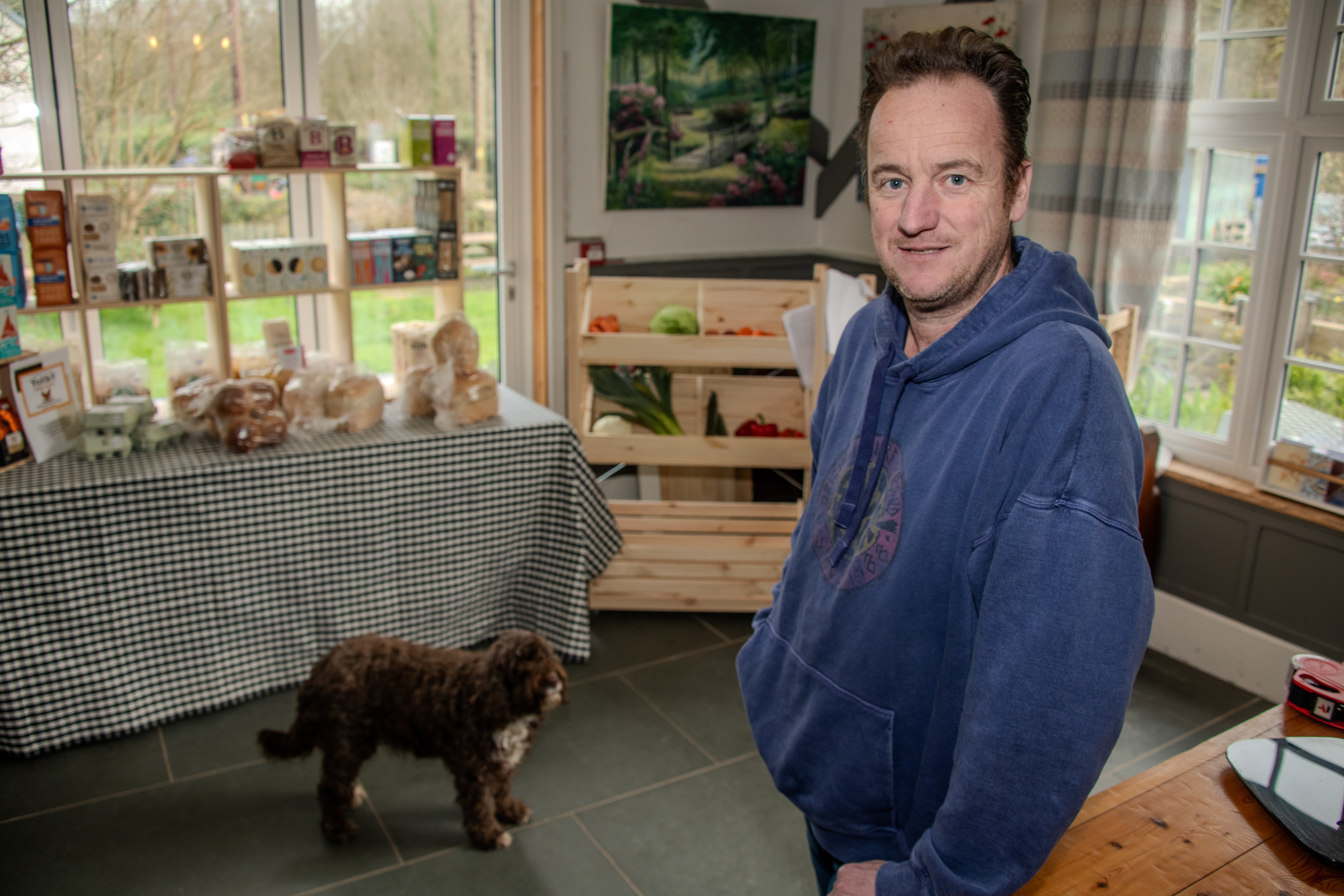
A year in, the Muddiford Inn has a Dalek at the door, a newly opened farm shop inside, and the unmistakable feel of a village that has found its way back to its pub.
For Tanya Tilley and Richard Tilley, that sense of momentum has been hard-earned. What now looks like a settled, thriving hub in North Devon began with a leap of faith, shaped by years in hospitality and a determination to do things on their own terms.
Tanya’s route into the trade was long established. “I’ve worked in hospitality my whole life,” she says, having managed a golf club in Somerset before circumstances pushed them towards something bigger. Richard’s health issues became a turning point. “We decided that we were going to come off the rat race working for someone else and take on our first pub.”
The Muddiford Inn
That first venture came in Wiltshire, under conditions that tested even seasoned operators. They moved in on Friday 13 November, only to enter lockdown days later. “I was also eight months pregnant with our youngest child,” Tanya says. “Which always seems like a winning idea.”
They spent four years there, building the business as tenants and learning what worked – and what didn’t. When their contract came up for renewal, they made a call. “We decided that we weren’t going to renew, but we still wanted to be in this crazy trade,” Tanya explains. Their search led them south, and eventually to Muddiford.
For Richard, the appeal was immediate. “I always, always wanted to come more towards the south west… it’s obviously beautiful and lovely.” The pub itself, though, needed attention. “It just needed a little bit of love… well, quite a lot of love to be fair.”
They moved in at the beginning of February and opened within weeks. “We never looked back, really,” he says.
What they stepped into was a pub that hadn’t quite aligned with its surroundings. Previous tenants had leaned towards fine dining, but as Tanya puts it, “the locals just want good pub food.” That realisation has shaped everything since.
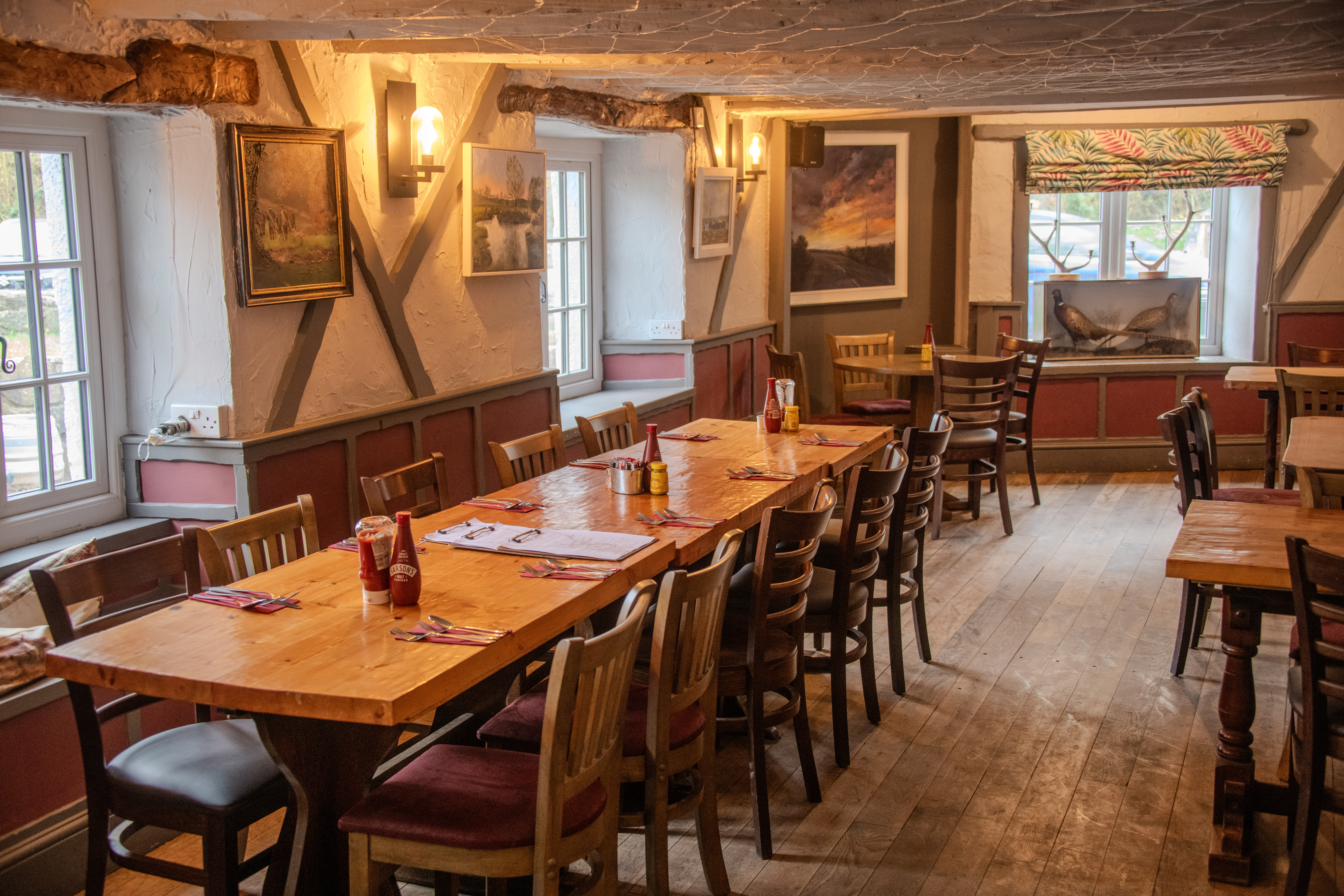
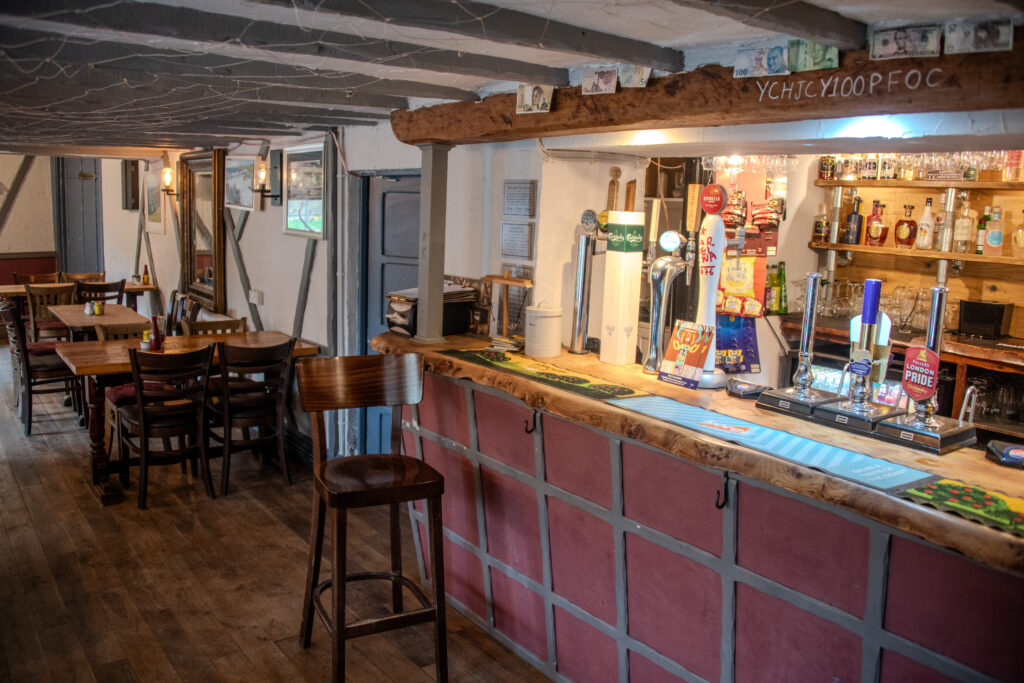
Within months, it became clear the pub needed to be more than a place to eat. “The village was calling out for something communal,” Tanya says. With no shop and no village hall, the Muddiford Inn had to fill the gap. “We set it upon ourselves to turn our bar area into the local’s front room, somewhere everybody feels welcome and safe.”
The Muddiford Inn
That idea runs through the business. The layout allows for flexibility – small groups, community gatherings, or larger events – and the couple have leaned into it. From tractor rallies with young farmers to live music and fireworks night, the pub has become a focal point again.
“The local community have been fantastically supportive,” Richard says. “If we can help, we can.”
Food remains deliberately straightforward. Tanya runs the kitchen herself, serving “traditional home-cooked food, pub meals” using locally sourced ingredients. A midweek deal – two meals for £25 – was introduced with a clear purpose. “That was for the community… so people can afford to come out without breaking the bank.”
They are clear about what they offer. “We are a pub for tea,” Tanya says. It’s not about fine dining or formality, but about consistency and comfort.
Running the pub alongside raising four children might seem a stretch, but both see it as a gain rather than a compromise. “We’re lucky,” Richard says. “We can take them to school, pick them up… and still spend more time with them than if we were working for somebody else.” Tanya agrees: “The quality of life actually works better as a family.”
That sense of practicality carries through to how they’re navigating a difficult climate for hospitality. “It’s not easy,” Richard says. “You just have to control what you can control.” For them, that means consistency and presence – being visible, talking to customers, building relationships.
The latest addition, the farm shop, is a direct response to village life. “There’s nothing here… apart from the pub and the chapel,” Richard says. The idea was simple: offer essentials and local produce without requiring a trip into town.
Tanya describes it as both practical and thoughtful. “If you’ve forgotten your loaf of bread… or you want something local to take home, we’ve got that.” It also broadens how people use the space. Morning coffee, light snacks, and a monthly breakfast bring in different rhythms and different crowds. “We try to do something for everybody,” she says.
And then there is the Dalek.
A dalek outside the pub
Stationed outside the pub, it has become something of a landmark. “It’s a bit of a village treasure,” Richard says. Tanya wasn’t convinced at first. “What on earth are we doing having this monstrosity?” she recalls. But its impact is undeniable. People stop, take photos, and often come inside. “The amount of joy that it’s brought people… I can’t now necessarily say anything bad about it.”
It’s an odd detail, but a fitting one. The Muddiford Inn is not trying to be polished or predictable. It reflects the people who run it and the community around it – practical, open, and quietly characterful.
Asked what they would say to someone who hasn’t yet visited, Richard keeps it simple: “Come and try the pie.”
Tanya adds something broader. “We will welcome anybody here… we’ve got something for everybody.”
And if the past year is anything to go by, that’s exactly the point.
A Devon cider celebration is set to take over a popular city pub this Easter weekend, promising free samples, live music and prize giveaways for visitors looking to raise a glass to the season.
The Cider Press will host a Hunts Cider takeover, bringing a range of locally produced drinks to customers alongside entertainment throughout the day.
The event will take place on Saturday, April 4, running from 2pm into the evening, with organisers promising a lively atmosphere supported by local musicians and DJs.
Hunts Cider, a family-run producer based near Totnes, has more than 200 years of heritage and is known for crafting cider using locally sourced Devon apples. The takeover will showcase both classic and seasonal varieties.
Visitors will be able to try free samples during the event, while every pint purchased will be entered into a prize draw.
Guests are also being encouraged to download The Cider Press app ahead of attending, which offers a 2-for-1 deal on Hunts Cider bottles. The app can be accessed via https://download.eposbuddy.com/ciderpress
A spokesperson for The Cider Press said: “We’re excited to be hosting Hunts Cider here at The Cider Press this Easter weekend.
“We’ve got live music and DJs running all day and a fantastic range of Hunts’ famous local ciders to come and try.
“Don’t forget to download our app and you’ll get 2-for-1 on Hunts Cider bottles.
“It’s going to be a brilliant day, we can’t wait to see you all here.”
Entry to the event is free and open to all, with organisers inviting both cider enthusiasts and those simply looking for an Easter outing to attend.
Roads across Devon are set for a long-overdue overhaul as part of a multi-billion-pound investment aiming to smooth journeys and tackle years of wear and tear.
Millions of motorists in the South West – including those travelling daily across Devon – are expected to benefit from more than £1.5 billion in funding to upgrade and future-proof key routes over the next five years.
The funding forms part of the Government’s Road Investment Strategy (RIS3), which will prioritise repairing ageing infrastructure, resurfacing major routes and fixing potholes to improve reliability for drivers, businesses and freight operators.
In Devon, the investment includes significant backing for improvements to Junction 28 of the M5 and upgrades to the A379 over the River Exe in Exeter. The latter scheme, which could not be delivered by local authorities alone, is expected to support the development of thousands of new homes and jobs in the area.
Across the wider programme, National Highways will resurface more than 9,000 kilometres of motorway and major A-road lanes – almost a quarter of the national network – alongside targeted upgrades to ease congestion and improve connectivity.
The Government has also committed a record £8.4 billion nationally to repair and renew England’s motorways and major A-roads, alongside a further £7.3 billion previously pledged to local authorities for pothole repairs and long-term road maintenance.
Transport Secretary Heidi Alexander said: “For too long this country has failed to tackle and fix our crumbling infrastructure, but this investment in our roads will secure the future of our road network in the South West for years to come.
“Not only are we investing in renewing our roads, meaning smoother and faster journeys for drivers, we are getting on with investing into brand new projects which will deliver benefits across the region, from Southampton all the way to Exeter.”
Roads and buses minister Simon Lightwood said: “This Government is firmly putting its money where its mouth is, and this new funding will be transformational for the millions of drivers and thousands of businesses that rely on our motorways and A roads every day.
“By investing in existing infrastructure and new schemes, such as vital upgrades to the A417, we are giving everyone the confidence they can get from A to B faster and smoother than ever before.”
National Highways executive director Elliot Shaw said the investment would help boost economic growth while maintaining critical infrastructure.
He said: “This major investment will help boost economic growth by improving and maintaining motorways and major A roads which keep the country moving.
“Our focus on renewing vital infrastructure will keep people connected to their loved ones, support the delivery of new homes and jobs, and give industry the confidence to plan and invest in the UK.”
The programme also sets targets for National Highways on safety, journey reliability, network condition and environmental performance, allowing the Government to monitor delivery over the five-year period.
Alongside motorway and A-road improvements, councils in the South West – including Devon – are set to benefit from £1.5 billion over the next four years to tackle potholes on local roads. A new public rating system has also been introduced to show how effectively councils are using the funding.
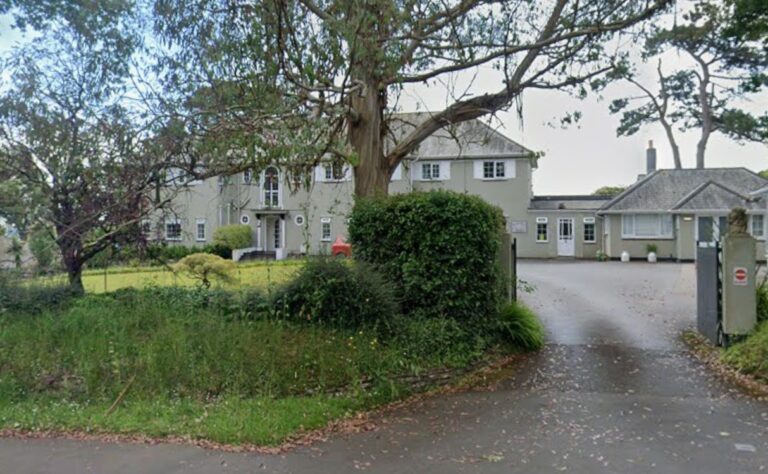
The Care Quality Commission (CQC) has downgraded the overall rating for Burrow Down Residential Home in Paignton, Devon, from good to inadequate. It has placed the home into special measures to protect people following an inspection in November and December.
Burrow Down Residential Home is a care home for autistic people and people with a learning disability run by Burrow Down Support Services. There were 13 people living there at the time of this inspection, which was carried out in response to safeguarding concerns and issues identified at other services operated by Burrow Down Support Services.
Inspectors found nine breaches of regulations relating to providing people with person-centred care, safeguarding people from abuse and improper treatment, consent, safe care and treatment, safe recruitment, staffing, notification of incidents, dignity and the overall management of the service.
CQC has downgraded the areas of safe, effective and well-led from good to inadequate. Caring and responsive were not inspected and remain rated as good.
CQC has placed the service into special measures which involves close monitoring to ensure people are safe while they make improvements. Special measures also provides a structured timeframe so services understand when they need to make improvements by, and what action CQC will take if this doesn’t happen.
CQC has also begun the process of taking further regulatory action to address the concerns, which Burrow Down Support Services has the right to appeal.
Stefan Kallee, CQC’s deputy director of adult social care for the South West, said: “When we inspected Burrow Down Residential Home, we found a poor culture where leaders didn’t ensure people were safe or consistently treated with dignity and respect. Leaders also hadn’t ensured staff understood the importance of choice, control, independence and inclusion for improving people’s quality of life.
“It was clear that staff at all levels didn’t understand how to deliver high-quality support for autistic people or people with a learning disability.
“As a result of this, people weren’t being cared for in line with regulations and best practice guidance. For example, the service was restricting some people’s freedom by not allowing them to leave the home without staff, and by using door alarms and audio monitors to keep track of their movements.
“Staff hadn’t assessed whether people had mental capacity to consent to these restrictions, or whether they were in their best interests, which they should have done to comply with the Mental Capacity Act 2005. This means people’s rights may have been unlawfully restricted.
“Inspectors were equally concerned by the service’s failure to manage risk and the safety implications this could have for people living at the home. For example, one person with diabetes had it detailed in their care plan that staff should seek medical advice if their blood sugar levels went above or below a specific range. Records showed this had happened on 29 occasions when staff hadn’t raised concerns, placing that person at risk of rapid health deterioration.
“We’ve told Burrow Down’s leaders exactly where they must make immediate and significant improvements and we’re monitoring the home closely to keep people safe in the meantime.”
Inspectors found:
Senior managers weren’t recognising safeguarding concerns or taking action to keep people safe and uphold their human rights. Eight incidents should have been referred to the local authority and CQC, including concerns about financial abuse and degrading treatment.
Leaders didn’t provide enough staff or ensure staff had the skills and experience to meet people’s needs. One person who was funded for 2-to-1 staff support didn’t consistently receive this level of care.
The service didn’t keep families informed or address their concerns. One relative was told there had been an incident involving their loved one and a member of staff but wasn’t given a clear explanation.
The service didn’t provide a safe environment for people. There weren’t tamper-proof restrictors on upstairs windows, even though someone’s care plan stated they had a known risk of leaving premises through a window.
Leaders didn’t ensure people’s care and support plans were kept up to date or that agency staff read them. This meant staff weren’t always aware of people’s health conditions or risks and could be providing care that was unsafe or didn’t meet people’s specific needs.
Leaders were responsible for a culture where staff didn’t feel supported and didn’t feel listened to when they raised concerns. The service didn’t consistently investigate concerns or act on them, which meant opportunities to identify learning and improve the quality of care were missed.
The report will be published on CQC’s website in the coming days.
The developer behind the Abbotsham Park development in Bideford has been confirmed as one of the sponsors of the town’s prime summer event.
Persimmon Homes Cornwall & West Devon has donated £1,000 to the Regatta as part of its Community Champions initiative, which seeks to support good causes and much-valued organisations and events across Britain. £700,000 is donated each year.
The housebuilder and Regatta Carnival Committee, including its president, Mike Harper, and Chair, Andy Cox, marked the donation at Abbotsham Park last month. This year’s Regatta will take place on Saturday 20th June with the Carnival to follow on Saturday 12th September.
Bideford Regatta is an annual event held on the River Torridge and has been an established part of the town’s history for over 125 years. Supported by the West of England Amateur Rowing Association, the Regatta forms part of the West of England Championship season.
The Mayor of Bideford and other local dignitaries from the town are regular attendees at the Regatta and, together with Mayors from other towns in the South West, come to watch and enjoy the spectacle.
Persimmon has two, three, and four-homes for sale from £242,995 at its Abbotsham Park site in the west of Bideford. The accredited five-star housebuilder is bringing 200 new homes to the town alongside active travel routes, green spaces, play areas, and a community orchard.
Persimmon donates £24,000 across Cornwall & West Devon to good causes and much-valued organisations each year as part of its Community Champions programme. Recent local recipients include Bideford’s own Shammy Rovers FC and Bideford AFC.
Jane Cartwright, Persimmon Homes Cornwall & West Devon’s sales director, said: “We are very delighted to be a prime sponsor of the Bideford Regatta Carnival this year and it is an honour to be part of a staple event for the town this summer.
“As a local developer, we are committed to leaving a positive and lasting legacy wherever we build – and this includes supporting much-cherished anchors in the local calendar like the Regatta. We wish everyone the best of this year’s event and cannot wait for it to get underway.”
Abbie Vickery, Secretary of the Bideford Regatta Carnival, added: “On behalf of the Port of Bideford Regatta Committee, I would like to extend our sincere thanks to Persimmon Homes for their generous donation. This support is invaluable to the continued success of the regatta and will enable us to deliver a competitive, enjoyable and, most importantly, entertaining day of racing for the people of Bideford and visitors from further afield.
“The committee is extremely grateful for the backing of organisations such as Persimmon, whose contribution helps ensure that this much-loved local event can continue to thrive.”
“A safe, welcoming and inclusive environment where children feel valued and secure” – that is how inspectors have described life at a Cullompton preschool following its latest Ofsted inspection.
Noah’s Ark Preschool, based at Cullompton Baptist Church on the High Street, was inspected on 4 December 2025. The setting, which is registered for 34 children aged two to four, was found to be meeting the expected standard across all areas, with safeguarding arrangements judged to be effective.
Inspectors reported that “the safeguarding standards are met”, meaning that “leaders and/or those responsible for governance and oversight fulfil their specific responsibilities and have established an open culture in which safeguarding is everyone’s responsibility and concerns are actively identified, acted upon and managed. As a result, children are made safer and feel safe” .
Achievement was also found to be at the expected standard. The report states: “Children typically make good progress from their starting points, including those who are disadvantaged and those with special educational needs and/or disabilities. They benefit from effective one-to-one and small-group interventions, which support their access to and engagement with the curriculum. Practitioners prompt positive interactions between children and adults, modelling conversations and introducing new vocabulary”.
Inspectors observed children demonstrating focus and determination in their play. “Children are motivated by the activities on offer and demonstrate perseverance and resilience when challenges arise. For example, they use a range of scissors and glue to cut and stick small gems and jewels when making Christmas baubles for friends and family. Most children sustain concentration and show curiosity, which reflects their positive attitudes towards learning”.
Behaviour and attitudes were also praised. According to the report, “Children form secure and positive attachments with their key persons, which strongly supports their emotional wellbeing and readiness to learn. Most children, regardless of their age, are highly engaged in activities and consistently demonstrate positive attitudes towards learning”.
Leaders and staff were commended for the culture they have created. “Leaders and staff have high expectations for children’s behaviour and attitudes. This creates a culture of patience, respect, resilience and curiosity. Staff demonstrate a clear understanding of the importance of developing children’s personal, social and emotional skills. They support children to manage their own feelings and behaviour through sensitive and purposeful interactions”.
Children’s welfare and wellbeing are said to be central to the setting’s work. Inspectors found: “The setting places a strong emphasis on supporting children’s welfare, mental health and wellbeing, especially for those children who are disadvantaged and those with special educational needs and/or disabilities. Staff are responsive to the needs of young children, offering comfort, reassurance and encouragement when required. They build warm and trusting relationships that promote children’s confidence and independence, helping children to develop essential self-care skills”.
The curriculum was described as “carefully planned and sequenced to ensure that children make progress in their communication, physical development and independence. Staff’s interactions are purposeful, enabling children to develop the skills they need to transition into the next stage of their learning”.
Inclusion is another strength. The report notes: “Parents and carers speak positively about the setting’s effectiveness in identifying and supporting their children’s individual needs. This includes securing additional funding and working collaboratively with external agencies to support children with special educational needs and/or disabilities (SEND)”.
Leadership and governance were also found to meet the expected standard. “Leaders have a secure understanding of the setting’s context. They place the best interests of children at the heart of all decision-making. Leaders maintain strong partnerships with parents and carers and professionals, enabling children to settle quickly when they join the setting”.
Overall, inspectors concluded that children at Noah’s Ark Preschool “settle quickly into their day, supported by well-established routines and knowledgeable staff” and that “staff, parents and carers and children feel a strong sense of community and belonging”.
From April, the way our Special Educational Needs and Disabilities (SEND) Operations service works is changing.
A new locality model is being introduced so that families receive clearer, quicker and more joined‑up support at the key points of the Education, Health and Care Plan (EHCP) process.
Families tell us the process can still feel slow and confusing. The locality model aims to make support more responsive at the moments that matter most.
One of the biggest differences families should notice is how and when contact happens. Instead of relying on one named officer, a local team will work together during assessments and plan updates. This should mean information arrives sooner, with fewer delays and a clearer sense of next steps.
There will be three SEND Operations localities: North and Mid Devon, Exeter and East Devon, and South and West Devon.
Working more locally brings teams closer to schools and partner services, helping the service respond more quickly when a new assessment begins or a plan needs updating.
We will measure the impact of this change through the communication and relationship standards, which check whether families feel listened to, whether information is clear and whether support is timely. Feedback from families, including through the Four Cornerstones, continues to guide ongoing improvements.
Claire Merchant‑Jones, Head of SEND Operations at Devon County Council, said: “We know the EHCP process has been frustrating for many families, and we have listened carefully to what parents and carers have been telling us. This change is about being more responsive at the moments that matter most – when an assessment is underway or when a plan is being updated. By working locally with schools and colleagues, we are creating a more joined‑up approach that will help us provide clearer and more timely support.”
Councillor Denise Bickley, Cabinet Member for SEND, said: “I welcome the openness from families about the challenges they face, and we are determined to improve their experience.
This new locality model is part of our commitment to building a SEND system that better meets the needs of children and young people across Devon, and their families. It is one of many jigsaw pieces involved in the transformation of the service.
We know there is still more to do, and we will continue working closely with families as these changes take effect and begin to be felt.”
We want to talk honestly about potholes. We’re seeing more and more comments, particularly on social media, about the condition of our roads – some people even saying we don’t repair them at all. And we get why it can feel that way. Plymouth is a big place. With nearly 1,000km of roads, it’s perfectly possible to go about your day and never see a crew working, even though we’re out there, every single day.
So let’s start with some truth.
Yes – we absolutely do repair the roads.
Last year alone we repaired over 8,000 potholes and once our “find and fix” work is fully counted, the real number is probably closer to 9,000. And that’s on top of resurfacing, patching, surface dressing and dozens of other improvements across the city.
But before we go any further, let’s get something straight about the scale of what we’re looking after here. Our highway network is enormous and it’s ageing. We’re responsible for:
882km of roads
1,198km of footways
80km of cycleways
Over 40,000 gullies
45 bridges, 28 footbridges, 48 subways and 4 tunnels
31,676 streetlights, thousands of signs, 120 traffic‑signal junctions and 196 cameras
It’s the city’s most valuable physical asset – by a long way (it’s worth about £2.5B). And like anything that’s old, exposed to the elements, and used constantly by thousands of people every day, there will always be works to do. We don’t have a bottomless pot of money. No council does. So we have to make choices. We have to prioritise.
We don’t pick streets at random and we don’t work on a “shout the loudest” basis. Every Plymouth street is inspected regularly – some monthly, some every three, six or twelve months – depending on their classification and how they’re used. This is set out in our Highway Inspection Manual and helps us make sure we’re checking the right roads at the right intervals.
We also inspect every reported pothole within three working days, wherever it is in the city. Our inspectors check the size, depth and risk to road users to decide how urgently it needs repairing. For bigger jobs, we use independent condition surveys carried out every two years, which help us plan long-term resurfacing and protect the city from bigger, more expensive problems later on.
We now need to discuss the weather. Weather is an important factor in highway maintenance. Let’s be honest – the last 12 months has been brutal on our roads. Not only does bad weather stop play, sometimes, the weather simply undoes work we’ve just done. That’s not an excuse. It’s not bad workmanship. It’s simply how roads behave when you mix age, water, freezing temperatures and heavy use. This winter alone we’ve had heavy rain, storms, freeze-thaw cycles and saturated, shifting ground.
Water gets into tiny cracks. Frost expands them. Rain weakens the layers underneath. And before you know it, a defect forms.
Sometimes we fix a pothole on a Wednesday and the following week a new one appears a few metres away. Sometimes the stretch we repaired last month gets hit by another freeze–thaw cycle and breaks again.
And yes – that’s demoralising. For you, as road users. And for us and for our crews.
They’re out in all weathers trying to stay ahead. They take pride in doing a good job. It’s tough to see fresh defects appear after a full day of repairing others. But the weather doesn’t care about effort.
But we managing the condition of our roads – in small, steady, daily ways that add up over time.
Just in the last year, we have:
Surface dressed 31 roads (nearly 96,000m²)
Carried out patching on 43 roads (7,890m²)
Completed 2,815 traditional pothole repairs
Repaired 4,044 defects using spray-patch technology
Delivered “find and fix” work on 42 streets, covering 7,800m²
Resurfaced 9 roads (around 14,000m²)
Improved grip on 3 roads (10,700m²)
Potholes aren’t a sign that we’re not investing, infact over the next four years, we are looking to invest around £55m on our highway network. They’re a sign that the network is old, the climate is changing and that we’re repairing as fast as conditions allow.
We’re working hard. Our crews are working hard. And we’ll keep at it – because Plymouth’s roads matter to all of us.