


Home Blog Page 69

New firefighter faces first emergency during countryside blaze

A blaze involving a caravan and a nearby van was tackled by firefighters after flames broke out in the open countryside – with a newly trained firefighter attending his first ever emergency call.

A crew from Newton Abbot fire station was mobilised to reports of a fire in the open near Abbotskerswell.

When firefighters arrived at the scene, they discovered a caravan and a variety of miscellaneous items well alight, with the fire beginning to spread to a nearby van.

The incident commander tasked two firefighters with hose reel jets to tackle the blaze while assessing the risk of the fire spreading further.

A second fire appliance was requested to provide additional water supplies as crews worked to bring the incident under control.

Additional firefighters used drag forks and a thermal imaging camera (TIC) to turn over the remaining debris and cool down any remaining hot spots.

The incident took place on Monday, March 9.

It also marked the first call out for firefighter Billy Whalley, who recently completed his basic training with the service.

Billy joined colleagues in tackling the blaze and gaining his first experience of an operational incident.

A post from Newton Abbot fire station said Billy “performed well whilst tackling the fire and was more than happy to throw himself into his new firefighting role”.

The message added: “Welcome to the team Billy, we look forward to seeing how you will progress through your training.”

Colleagues also encouraged members of the public to wish Billy well as he continues his remaining courses and development on his route to becoming a fully competent firefighter

Bideford students learn how local council works during placement

Torridge District Council recently welcomed six students from Bideford College to take part in a week‑long work experience programme. The placements are designed to help students gain a clearer understanding of the council’s roles and operations, while building their confidence and developing valuable skills through real-life workplace experience.

During the week, students spent time across a wide range of departments including Environmental Protection & Community Safety, Planning, Economic Development, Revenues & Benefits, Food & Safety, Northam Burrows, Customer Services and Legal, giving them the opportunity to experience many different aspects of local government in action. The council also tailored placements to match students’ personal interests and career aspirations, ensuring they could spend part of their time in the areas that most inspired them.

The students had a fantastic week working alongside officers across the council, gaining insight into day‑to‑day operations and the responsibilities of each team. Reflecting on the experience, one of the students said: “My Week at Torridge District Council was really fun. Everyone was really friendly and I loved working with Environmental Protection and Economic Development because I found it really interesting and learnt a lot.” Another student added: “It gave me a good idea on what a real life working week would feel like and helped me realise what I would like about working in a place like the Council.”.

Sarah Ayres, Head of People and Customer Focus at Torridge District Council, said: “We were delighted to welcome students from Bideford College and support them as they take their first steps toward exploring future career options. We know that thinking about the future can feel daunting, which is why we encourage students to spend time with several different teams, helping them discover what interests them most and gain a clearer understanding of the opportunities within local government. Our ongoing relationship with the college is important to us, and through these placements we hope to inspire local young people and highlight the council as an employer of choice. We look forward to welcoming more students in the near future.”

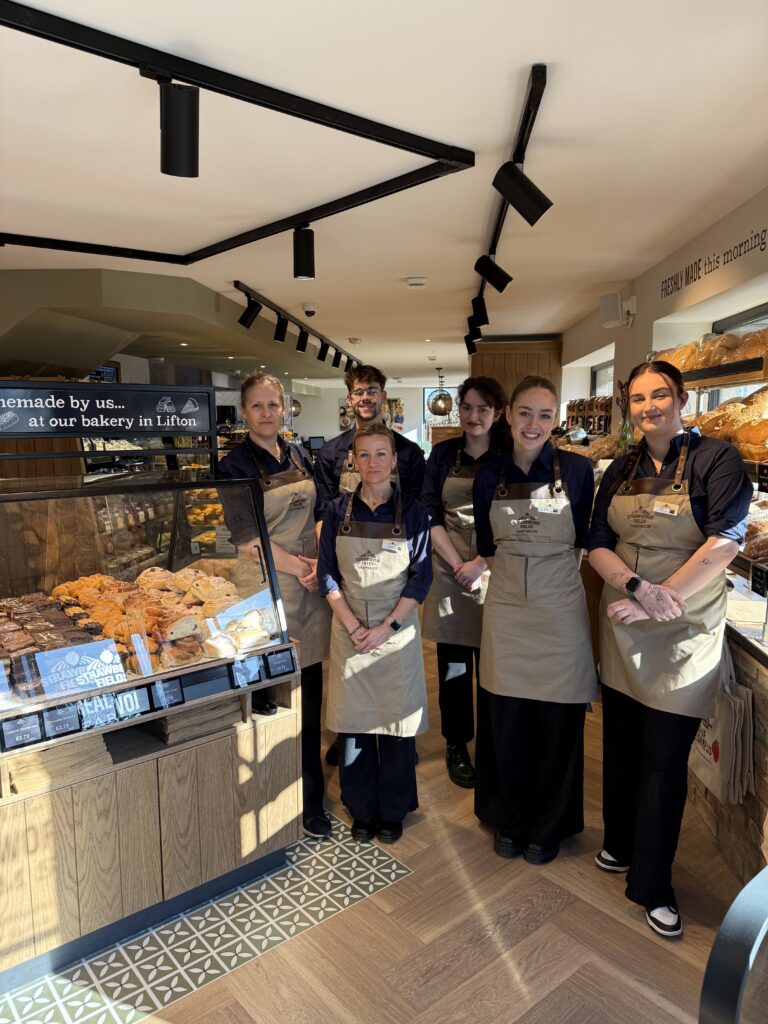
New Strawberry Fields shop planned near South Molton this summer

A Devon farm shop brand that began on a working family farm more than three decades ago is continuing its expansion — with plans to open another location as it celebrates national recognition.

Strawberry Fields has announced it will open its fifth shop at Aller Cross, just outside South Molton, with the site set to undergo a full refurbishment ahead of a planned launch in summer 2026.

The new location will follow the same smaller satellite-shop model as the company’s sites in Buckfastleigh and Exeter, as well as a forthcoming shop on Dartmoor.

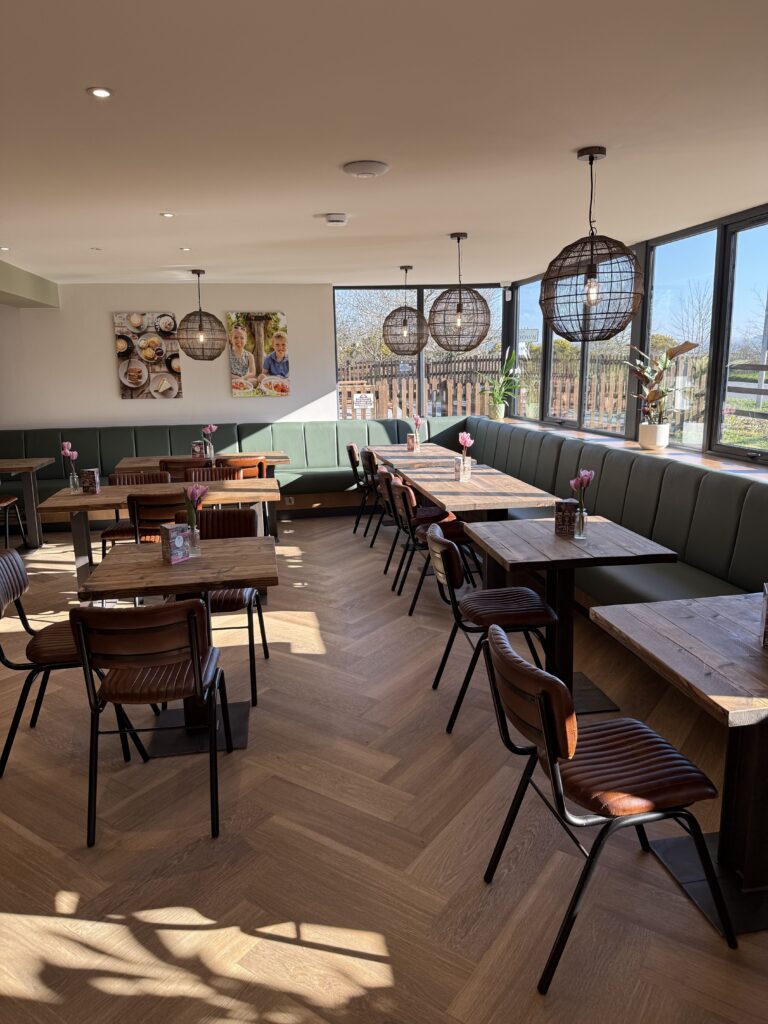
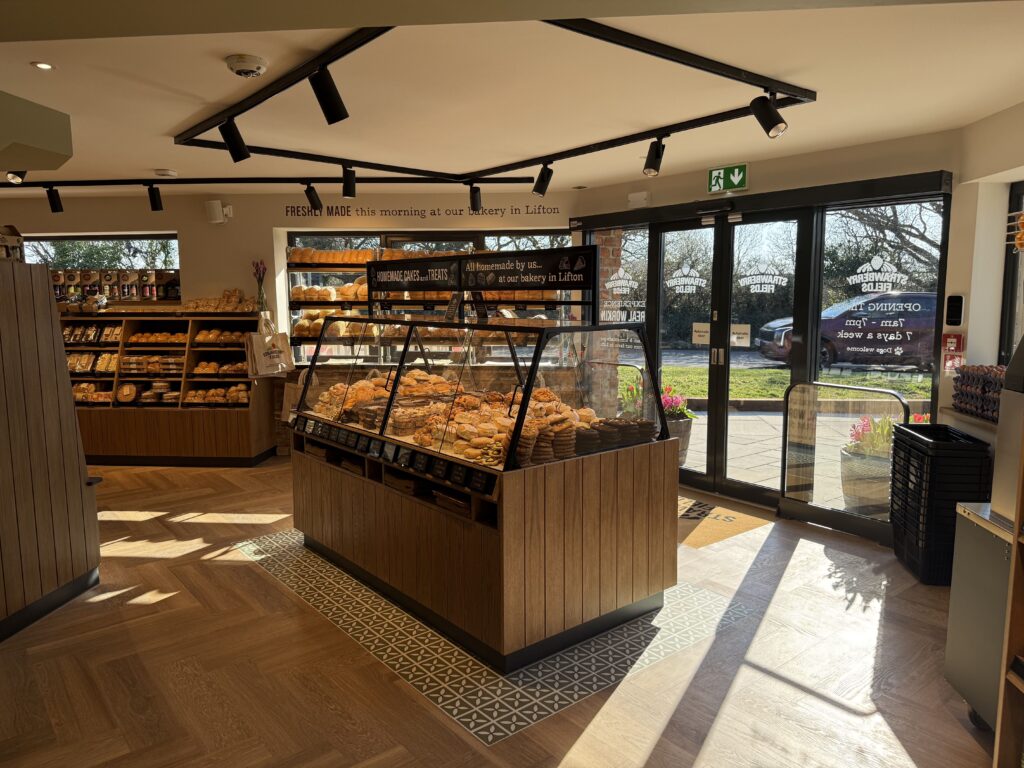
Customers will be able to visit a coffee shop and food-to-go counter while also browsing a range of Strawberry Fields’ homemade produce.

The shelves will feature items including pies, pasties, freshly baked bread, cakes, jams and chutneys, alongside fresh fruit and vegetables, free-range eggs and a selection of butchery products.

The expansion follows continued growth for the business since its flagship farm shop and restaurant at Lifton was crowned National Best Large Farm Shop of the Year in 2023.

Its satellite locations in Buckfastleigh and Exeter have since proved popular, helping bring the Strawberry Fields brand to more customers across Devon.

The Aller Cross shop will also include a coffee shop serving food to go and a daily selection of baked goods prepared by the company’s bakery team.

Products expected to be available include freshly baked bread, saffron buns, scones, teacakes, rock cakes and lemon drizzle cake, made using recipes passed down through generations.

The business, run by the Mounce family, said the brand has been built over more than 30 years and remains rooted in its farming heritage.

Alongside the new shop announcement, Strawberry Fields has also been shortlisted in the top three for Best UK Large Farm Shop of the Year 2026.

Further details about the refurbishment and the opening date for the Aller Cross site are expected to be announced closer to summer 2026.

Devon plans new support strategy for disabled children and families

Devon County Council has set out proposals to improve short breaks support for disabled children and young people, in a report to be discussed by its Cabinet next week.

Short breaks provide opportunities for disabled children and young people to take part in activities, build independence and social skills, while giving families a break from caring responsibilities.

The report asks Cabinet to consider endorsing a new Devon Local Area Short Breaks Strategy for 2026 to 2030, alongside a new approach to commissioning services across the county.

The proposed strategy responds to feedback from children, young people and families, which highlights challenges with the current system.

These include limited choice, gaps in provision in rural areas, inconsistent accessibility, and a heavy reliance on individual assessments and direct payments.

If approved, the new approach would mean more local activities that are open to more families, with extra support available when it’s needed.

More specialist short breaks would be delivered by approved providers, helping to make sure families get good‑quality support wherever they live in Devon.

The report also sets out plans to improve information and advice for families, so they can more easily understand what support is available and how to access it.

The changes would be introduced gradually over several years and would be delivered within the Council’s existing short breaks budget. No additional funding is being sought.

Councillor Richard Jefferies, lead Member for Children’s Service, said: “This report looks at how we could improve short breaks for disabled children and young people in Devon. We will be discussing the proposal at the meeting, but the focus is on making support easier to access, more inclusive, and better suited to families across the county.”

Cabinet will consider the report at its meeting on Wednesday 11 March 2026.

Care leavers in Devon gain job skills through recycling centre scheme

Care‑experienced young people in Devon are being given valuable opportunities to build confidence, gain real‑world experience and take their first steps into employment.

Recently, through a partnership between Devon County Council (DCC) SUEZ recycling and recovery UK and the Department for Work and Pensions (DWP) an initiative at the Pinbrook Road Household Waste Recycling Centre in Exeter brought together local young adults aged 18 to 25 who have left the care system or who are unemployed and not in education or training.

The centre is managed by SUEZ on behalf of DCC and the event, was one of a series of employability skills sessions delivered by the company to support care leavers and long‑term unemployed people across Devon. Further work placements, careers events and behind‑the‑scenes site tours are planned throughout 2026.

During the day, participants were given a rare opportunity to explore workplace options in a supportive environment tailored to their needs. They heard directly from staff about their own career journeys and the wide range of roles available within the waste and recycling sector. Site tours and mock interviews gave practical experience designed to build confidence and prepare young people for real‑world recruitment, with participants also encouraged to apply for live vacancies within the company.

The initiative builds on SUEZ’s ongoing involvement in the national Care Leaver Covenant, created as part of the Government’s Keep on Caring policy, which aims to help young people leaving care succeed in the world of work. Supporting care leavers forms a key part of the company’s commitment to social mobility and inclusive recruitment.

Emily Bussey, Recruitment Manager for Social Mobility and Inclusion at SUEZ, said:

“It was a real pleasure to work with the group, showcasing what SUEZ has to offer and helping them consider career paths they may not have thought about before. By collaborating with DWP, we aim to create meaningful opportunities that will have a lasting impact and potentially lead to employment.”

The work with SUEZ complements DCC’s wider commitment as a corporate parent to support care‑experienced young people into education, employment and training.

The Council has created and ring‑fenced several roles specifically for care‑experienced people and employs dedicated Education, Employment and Training Personal Advisers who work closely with young people leaving care to help them find and sustain positive opportunities.

They have also partnered with Exeter College to develop the Positive About Care Experience (PACE) programme, which supports employers to recruit, retain and support care‑experienced people in the workplace.

Councillor Jacqi Hodgson, Devon County Council Cabinet Member for Waste Services, said: “Corporate parenting is rightly a high priority for Devon County Council, and I’m delighted that through our recycling centres and our partnership with SUEZ we are engaging with care leavers and other young people to offer meaningful employment opportunities.”

Councillor Richard Jefferies, Cabinet Member for Children’s Services, added: “Supporting young people who are not in education, employment or training is vital. By giving them the confidence, skills and encouragement they need, we help remove barriers and open up opportunities that can shape their future.

“When organisations like SUEZ and Devon County Council work together to provide practical experience and positive guidance, it makes a real difference to the lives of those who need it most.

“We are keen to hear from other businesses interested in working together to develop work experience, apprenticeships and ring‑fenced roles, and to support both employers and care‑experienced young people as they begin their employment journeys together.”

Businesses that are interested in providing opportunities for care leavers can email: careleaveropportunities@devon.gov.uk

Devon council plans new £8.4m fund to help people in financial crisis

Devon County Council has published a report setting out how a new national Crisis and Resilience Fund (CaRF) could be delivered in Devon from April 2026, subject to approval by the council’s Cabinet next week.

The new fund, provided by Government, will replace the current Household Support Fund, which is due to end in 2026.

CaRF is designed to offer more targeted help to people facing sudden financial difficulties, while also supporting longer‑term financial resilience.

If agreed by Cabinet, Devon County Council would receive £8.4 million a year for three years, from 2026/27 to 2028/29.

The funding would be used to help people on low incomes who experience an unexpected financial shock, such as a sudden loss of income or an essential cost they cannot afford.

The report proposes that support would focus on four main areas:

  • Crisis payments to help people in immediate financial difficulty
  • Housing support, replacing existing discretionary housing payments
  • Wraparound financial resilience services, such as advice and support to help people manage their money and avoid future crises
  • Community funding to strengthen local advice and support networks across Devon

The approach set out in the report would build on Devon’s experience of delivering previous cost‑of‑living support, working closely with district councils and voluntary and community organisations.

A partnership board would be created to oversee delivery and to review and refine the approach over the life of the programme.

The report also highlights that the new fund is not a direct replacement for the Household Support Fund. Rather than broad or automatic payments, the emphasis would be on targeted, needs‑based support for people facing genuine financial crisis.

Councillor Cheryl Cottle‑Hunkin, Cabinet Member for Rural Affairs and Broadband, said: “This report sets out how the Council could deliver the new Crisis and Resilience Fund in Devon, working with partners to support people who are facing sudden financial difficulties.

“Any decisions will be for Cabinet to consider, but the intention is to focus help where it is most needed, while also strengthening local advice and support so people are better able to cope in the future.”

Cabinet will discuss the report and decide whether to approve the proposed approach at its meeting on Wednesday 11 March 2026.

If approved, the Council would aim to have the new arrangements in place in late Spring, in line with Government timescales.

Shortlist revealed for Northern Devon Flourishing Culture Awards

The shortlist for the Northern Devon Flourishing Culture Awards has been announced ahead of the 2026 ceremony.

The awards ceremony will take place on Friday, 13 March, at The Barnstaple Hotel, where the winners will be announced.

The awards celebrate the people, groups and organisations who make a significant impact on the cultural life of the communities across North Devon and Torridge. Event organisers North Devon Council and Torridge District Council received a total of 200 nominations across 11 categories, with the shortlisted nominees selected by an independent panel. 

The nominations for the Northern Devon Flourishing Culture Awards are:

Flourishing Culture Award for Arts in Education, sponsored by North Devon College: Pilton Community Farm Project; Magical Tots; Centre Stage School

Flourishing Culture Award for Crafts: Amanda Muddimer of The Creative Hub-Barnstaple; Ceramics Academy CIC; Jennie Lamb

Flourishing Culture Award for Digital, Film and Moving Image, sponsored by Devon Film Logistics: North Devon Moving Image CIC; Switchframe; Josh Tucker

Flourishing Culture Award for Diversity and Inclusion: SEND The Help CIC; The Pickwell Foundation; Ilfracombe Musical Memories

Flourishing Culture Award for Heritage, sponsored by Pearce Construction: Mike Teare for the Bideford and River Torridge Heritage Harbour Project; Ilfracombe Museum; South Molton Museum.

Flourishing Culture Award for Innovation, sponsored by Devon Film Logistics: Mrs Animation; Ecotribo

Flourishing Culture Award for Sport: Ilfracombe Rugby Club; The SMART Action Project CIC; Skate Molton CIC

Flourishing Culture Award for Literature: Barnstaple Library; Jane Lovell

Flourishing Culture Award for Performing Arts, sponsored by Landmark Theatres: Barnstaple Ladies Choir; Kook Ensemble; Harrison Wallace

Flourishing Culture Award for Rural and Community: Melissa Turnbull for hand:plant; Lucy Clark; Irene Jones for Games Galore Ilfracombe

Flourishing Culture Award for Visual Arts: Daniel Kehily-Jones for Silk Crystal; North Devon Arts; Olga Vynnyk

Councillor Mark Haworth-Booth, Cultural Partnership Board representative for North Devon Council, said:

“I would like to congratulate all of our shortlisted nominees, which truly show the outstanding creativity, commitment and community spirit which makes up the cultural scene across North Devon and Torridge. The sheer number and quality of this year’s nominations shows just how much local talent we have.

“We are looking forward to shining a spotlight on those who are contributing so passionately and to celebrating their achievements at this year’s ceremony. Thank you to our sponsors for their help in making this happen.”

Councillor Cheryl Cottle-Hunkin, Lead Member for Culture & Community, Torridge District Council, said: “Congratulations to all of this year’s finalists. These awards are a fantastic opportunity to recognise the talented artists, makers and cultural organisations who contribute so much to the creative life of Northern Devon.

This is only the second time we have held a Culture Awards ceremony celebrating the region’s creative talent, and it highlights just how much there is to celebrate. From artists and writers to heritage champions and creative innovators, the diversity and quality of creativity here is remarkable.

Creativity and culture play a vital role in bringing communities together and celebrating the character of this special place. Northern Devon has an incredible wealth of talent, and it deserves to be recognised not only locally, but on a national stage.”

The event is part of North Devon Council and Torridge District Council’s Flourishing Culture Strategy(opens in new tab), which aims to raise the profile of northern Devon’s vibrant cultural landscape.

Plans approved to turn former Bideford library into fitness centre

Torridge District Council announced today that it has been granted planning permission to undertake the necessary works to change the use of the former Bideford Library to create a multifunctional sport and fitness facility.

The proposed development also includes further internal works to the wider building to provide a co-working facility, consisting of three open plan co-working spaces, a meeting room, a manager’s office, and ancillary facilities, including a break-out space, staff room, and toilet/shower facilities.

As part of the refurbishment programme, significant renovation works will take place to improve the energy efficiency of the building.  This will include:

  • Replacement of the building’s roof in its entirety, to include upgraded levels of insulation to the wider roofscape.
  • Replacement of single-storey extension to the rear of the former Library building.
  • Rebuilding of the existing dormers.
  • Upgrades to the existing windows, through the provision of secondary glazing.
  • Upgrades of internal doors to provide additional fire safety and accessibility improvements systems.
  • Upgrades to the heating, power, lighting, and ventilation systems.
  • Rebuilding of the rear retaining boundary wall, adjoining Nunnery Walk.

In addition, there will be general conservation, repair and maintenance work to the Listed Building, including masonry repairs, to ensure the development retains the existing character of the façade, albeit with minor additional signage areas.

Work is expected to start on-site Summer 2026 and will take around 14 months to complete.

Councillor Ken James, Leader of Torridge District Council, said: “I am delighted that planning permission has been granted for this new fitness hub and the associated improvements that this prominent and well-loved building so deserves. There is very much a need for creating more spaces that support improving health and wellbeing in Torridge and this is a fantastic opportunity for us to do so using a building that is desperately in need of renovation. The recent Active Lives survey still suggests that Torridge is the most inactive area of Devon so we hope this development will help support combating this issue locally.”

MPs warn crumbling hospitals and ageing equipment threaten care

A debate over the future of NHS infrastructure has laid bare the growing strain on hospitals across the south-west, where ageing buildings, failing equipment and years of underinvestment are now colliding with rising demand for care.

Speaking during a parliamentary debate on NHS capital spending, Liberal Democrat MPs warned that hospitals in Devon are struggling with deteriorating estates and outdated equipment – while ministers argued that new funding commitments will begin to reverse the trend.

Caroline Voaden, Liberal Democrat MP for South Devon, said hospitals are increasingly forced to choose between replacing worn-out equipment and investing in new technology that could transform patient care.

“Medical devices and equipment are increasingly becoming pressure points as trusts rely on ageing, life-expired kit,” Ms Voaden said.

She pointed to the experience of Torbay and South Devon NHS foundation trust, which had been able to trial cutting-edge surgical technology but could not afford to adopt it permanently.

“Torbay and South Devon NHS foundation trust has had fantastic results in bowel surgery from a free trial of a robotic surgery system that it was offered, but it cannot afford to buy the system because it has to replace other equipment that is on its last legs,” she said.

Ms Voaden urged ministers to clarify how future capital funding would support innovation as well as maintaining existing hospital estates.

“The Minister should set out how the Government will ensure that NHS capital policy supports not just buildings and maintenance backlogs, but clinical equipment and the technology needed to deliver safe, high-quality, innovative care for patients.”

The debate also heard stark warnings about the condition of Torbay hospital itself, with Steve Darling, Liberal Democrat MP for Torbay, describing the state of the site as one of his top priorities since entering Parliament.

“Sorting out Torbay hospital, the hospital that serves my constituency as well as the constituents of my hon. Friends the Members for South Devon (Caroline Voaden) and for Newton Abbot (Martin Wrigley), is my No. 1 priority as the Member of Parliament for Torbay,” he said.

Mr Darling told MPs he had been shocked by the scale of the problems he encountered.

“I knew that the hospital was in a difficult place prior to my election, but as I began to immerse myself in the challenges facing it, I was shocked,” he said.

“I was shocked by what was effectively wanton vandalism – corporate vandalism, even -undertaken by the previous Conservative Government by making promises that they just could not keep.”

He argued that years of underinvestment had left the health service facing far greater costs now.

“The vandalism – the fact that they chose not to invest – made it much harder to invest in the longer term and actually made it more costly. It is that old proverb: a stitch in time saves nine.”

Among the most striking examples cited was the condition of Torbay hospital’s infrastructure.

“In Torbay we face some massive challenges,” Darling said. “We have seen more than 700 sewage leaks at our hospital.”

“These sewage leaks do not just happen in the corridors; they happen in clinical areas and affect wards where patients are.”

He added that the consequences were directly affecting patient care.

“There have to be deep cleans, and there are delays for patients in getting on to lists and, most importantly, delays in supporting people who need medical interventions.”

Even visible construction work at the hospital, he said, was misleading.

“Approaching the hospital, someone might think that the seventh cavalry was coming over the horizon – the tower block is wrapped in scaffolding, so it must be being sorted,” Mr Darling said.

“However, the reality is that the £1 million scaffolding is there purely to stop bits of the building falling off and braining staff and members of the public as they go past.”

Despite those challenges, Darling acknowledged areas of progress within the hospital.

“I also want to reflect on what works well in Torbay hospital,” he said, highlighting investment in the emergency department and improvements to endoscopy services.

“We have seen investment in the endoscopy unit, and 90% of patients are being seen within five weeks, which is a massive improvement.”

However, he warned that the scale of the estate problems remained significant.

“Looking at the estate of Torbay hospital as a whole, 85% of it is not up to standard,” he said.

“The £350 million investment supports only half of the hospital.”

Darling also argued that broader economic factors had eroded the real value of hospital building programmes.

“We have also seen a toxic change to the spending power of this capital programme,” he said.

“We have seen Brexit, we have seen the pandemic, which has impacted on the spending power of capital programmes, and we have seen the war in Ukraine, which has seen building prices spiral.”

“Some of the management in the hospital field say that, since the pandemic, the spending power of capital programmes has halved.”

He warned that the consequences were felt most sharply in poorer communities.

“In conclusion, Torbay is one of the most deprived communities in the country and the NHS often picks up the rough end of that,” Mr Darling said.

“Only recently, a director told me she has patients who believe that living to their 60s is a good span of life.”

“I am sure the Minister agrees that is not the aspiration we should have for our communities.”

Similar concerns were raised about the future of North Devon district hospital by Ian Roome, Liberal Democrat MP for North Devon.

Mr Roome said the hospital faced a decade-long wait for major rebuilding work.

“The hospital is now the third of nine hospitals in wave three of the new hospital programme and faces a further 10-year wait for the capital funding it needs,” he said.

“That investment is desperately needed to replace an ancient intensive care unit and operating theatres that are nearly 50 years old.”

While welcoming an initial phase to build new staff accommodation, he warned the main redevelopment could still be many years away.

“On paper, however, phase two is unlikely to begin before 2035.”

Maintaining ageing buildings until then, he said, could become increasingly expensive.

“Our hospital has a maintenance backlog of ‘high’ and ‘critical’ grade work of over £40 million, the most per square metre of any hospital in the south-west,” Mr Roome said.

“Our NHS trust worries, as I expect many people in this Chamber worry, that that is simply throwing good money after bad.”

Responding for the Government, minister for secondary care Karin Smith acknowledged the scale of the infrastructure challenge facing the health service.

Quoting Lord Darzi’s review, Smith told MPs: “The NHS has been starved of capital and the capital budget was repeatedly raided to plug holes in day-to-day spending…Some £4.3 billion was raided from capital budgets between 2014-2015 and 2018-2019.”

“The result has been crumbling buildings,” she added.

Ms Smith said the Government had already committed to significantly increasing capital investment in the health service.

“The Chancellor has made her key decision to put us back on track, announcing in the Budget that capital health spending would increase by £15.2 billion by the end of the spending review period in 2029-30,” she said.

She added that new rules had been introduced to ensure capital budgets are no longer diverted into day-to-day spending.

“As a result, capital funding will now be fully focused on repairing, upgrading and expanding NHS buildings and facilities to support long-term productivity.”

Ms Smith also confirmed long-term funding commitments aimed at giving hospitals more certainty.

“That change means there is a £30 billion commitment in capital funding over five years to support the day-to-day maintenance and repair of the estate,” she said.

For the first time, she added, NHS organisations would receive multi-year capital allocations to help them plan major projects.

“This is an unprecedented opportunity for local health systems to plan with confidence over a nine-year period.”

But she acknowledged that rebuilding NHS infrastructure would take time.

“Of course, rebuilding NHS infrastructure cannot happen overnight,” she said.

“I assure hon. Members that the Government do understand that long-term certainty over capital funding is needed for the NHS to move from these short-term fixes to more strategic investment.”

Couples flock to Rosemoor wedding fayre to plan their big day

0

Brides and grooms-to-be were given the chance to gather ideas and meet local suppliers as a two-day wedding fayre brought together dozens of businesses offering everything needed for a big day.

More than 50 wedding suppliers took part in the event at RHS Garden Rosemoor, offering couples the opportunity to explore services ranging from flowers and cakes to entertainment, photography and venue styling.

The fayre was held in the venue’s Exhibition Hall and showcased a wide range of local businesses connected to the wedding industry. Visitors were able to meet suppliers providing dresses, stationery, DJs, magicians, celebrants and wedding cars, as well as caterers, hair stylists and first dance instructors.

Other services on offer included favours, bar options, childcare and crèche services, along with honeymoon and holiday packages.

Organisers said the event aimed to bring together high-quality suppliers from across the region, giving couples planning their weddings the chance to speak directly with businesses and gather ideas in one place.

The event also gave visitors the opportunity to explore the surrounding gardens and enjoy refreshments in the tearooms during their visit.

The two-day wedding fayre took place on Saturday, March 1 and Sunday, March 2. The gardens were open from 10am to 5pm, while the exhibition ran from 10am to 4pm on both days.

Organisers have said there are still a small number of spaces available for suppliers interested in taking part in future events, particularly musicians, entertainers, hair stylists and make-up artists.

More information about supplier opportunities can be requested by emailing lucyloweevents@outlook.com