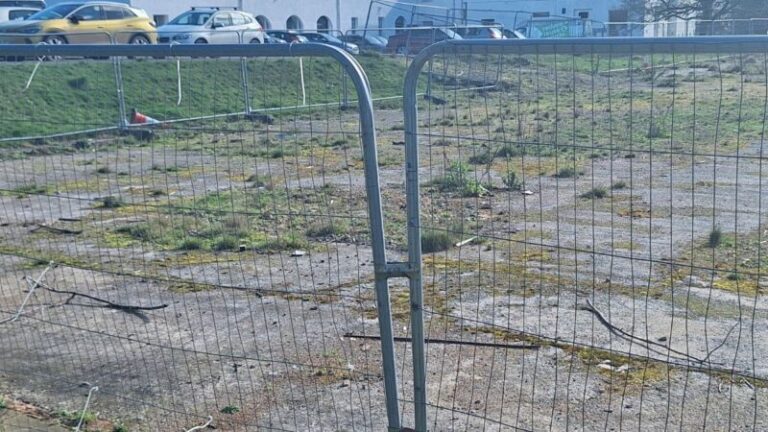
Devon County Council’s Cabinet has agreed to ensure that safeguards are in place to protect the future use of the Matford Offices site at County Hall, Exeter.
Councillors supported a motion on Wednesday, 11 March, recognising that the site has already been declared surplus, while committing to further work to explore development options that align with the Council’s strategic priorities and aspirations.
As part of the decision, a report will return to Cabinet setting out potential development options, alongside proposals for future guarantees on how the site could be used. These could include legal covenants and contractual obligations to ensure any development meets the authority’s strategic priorities and have a high environmental specification.
The Matford site, formerly used as council offices, includes public open space. Previous proposals highlighted the opportunity to use the site to support the Council’s priorities, including addressing Devon’s shortage of affordable, good‑quality housing, while safeguarding trees, a green corridor between the site and Matford Lane, and key walking routes.
Deputy Leader Councillor Paul Arnott thanked residents and stakeholders for their input and stressed the importance of safeguards in the process and said: “Thank you to all who have contributed to this debate and to members of the public for their representations,” he said.
“Many of us came into local politics to prevent poor outcomes in planning in local government.
“As well as the process agreed to here, we have a backstop in place. Exeter City Council, as the planning authority, will have the ability to place any conditions that they feel are necessary on any future development, or of course to say no.”
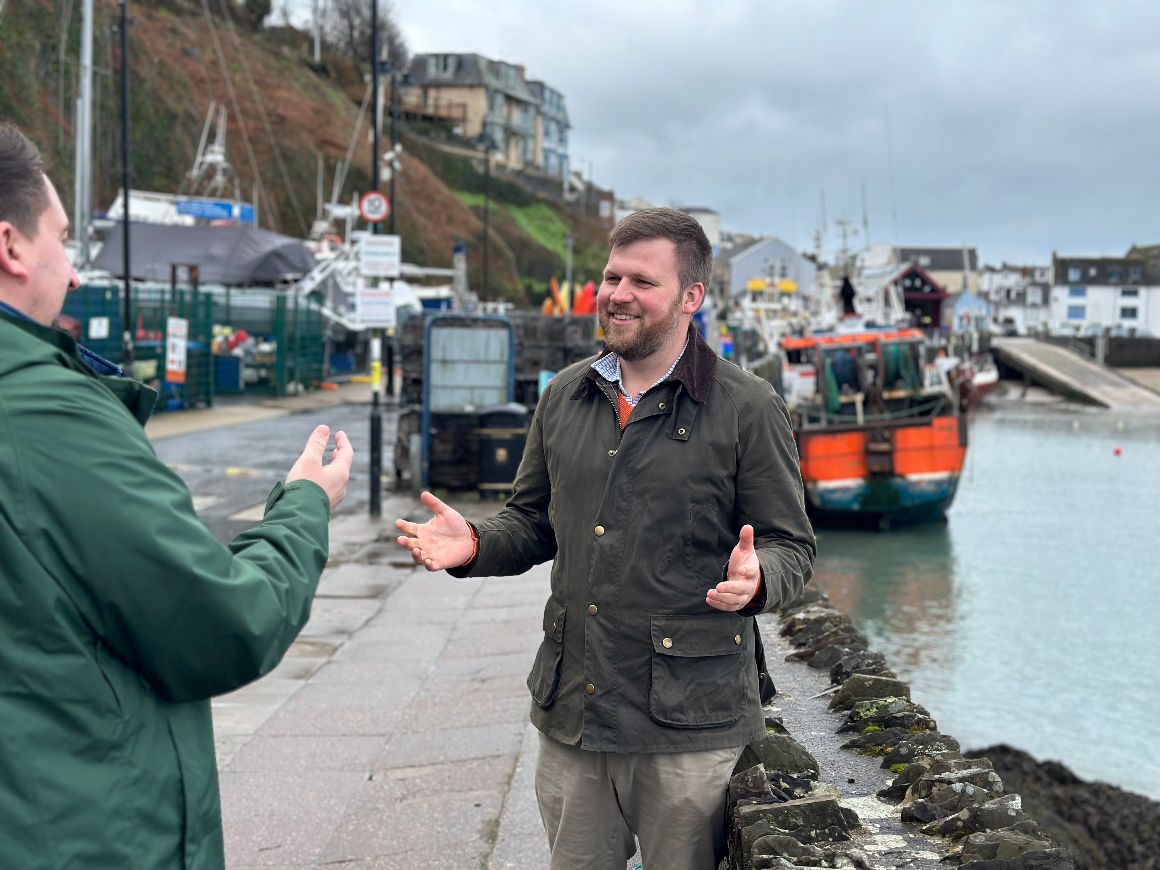
The Government has been accused of leaving Tiverton and Minehead “out in the cold” by Conservative campaigner James Wright after a Freedom of Information (FOI) request revealed that the area was passed over for a major £20 million investment fund without a single local person being consulted.
The Pride in Place programme, a multi-billion-pound initiative aimed at rejuvenating the UK’s towns, expanded its reach in late 2025 to include 169 new locations. However, the new Tiverton and Minehead constituency was missing from the list, prompting local campaigners to demand answers as to why the area was ignored.
In a formal response to the FOI request, the Ministry of Housing, Communities & Local Government (MHCLG) admitted it had “no recorded representations or correspondence” from anyone in Tiverton or Minehead during the design of the funding phase. More controversially, the Department refused to release the scores that determined which towns got the cash and which did not.
The response also confirmed that the Government did not perform any impact assessments on why specific places, like Tiverton and Minehead, were excluded, stating the process was “undertaken entirely through quantitative assessment”.
James Wright, a local farmer and campaigner who spearheaded the investigation, said the findings prove that rural communities are being governed by “faceless spreadsheets.”
“Government by spreadsheet is leaving areas like ours behind” Mr. Wright said. “Imagine the impact in towns like Minehead, Tiverton, Watchet or Wiveliscombe this money would have had? “
“It a rigged game. While we are told to wait, billions are being funnelled into urban areas where the Labour is more worried about the vote. We don’t want secret scores; we need the investment we were promised for our high streets and communities.”
The “Pride in Place” funding is designed to support areas suffering from high deprivation and weak social infrastructure. While towns like Bridgwater and parts of Plymouth have secured 10-year investment deals worth up to £20 million, Tiverton and Minehead remain ineligible for the current round of support.
The Government maintains that its methodology identifies the “most in need” neighbourhoods using national data. However, critics argue this approach systematically overlooks the unique challenges of rural poverty and the “hidden” deprivation found in market and coastal towns.
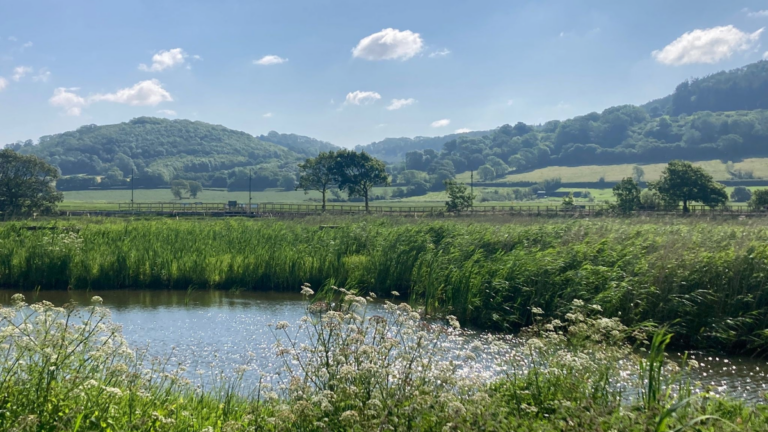
East Devon District Council’s Countryside team are celebrating a vibrant start to Spring, launching a packed programme of events and stepping up preparations for the busy bird‑breeding season.
Despite a challenging winter of heavy rains, flooding, and storm‑damaged trees, the team’s enthusiasm for getting “Spring Ready” has never wavered. They are delighted to unveil a diverse events programme featuring much‑loved favourites such as Willow Weaving, the return of Guided Bat and Nightjar Walks, and Spring Crafts sessions which are already close to being sell-outs. Families can also enjoy the ever‑popular Spring Nature Trail at Seaton Wetlands, offering a fun and engaging way to explore the outdoors. Seasonal highlights that are set to draw crowds once again, include the Seaton Wetlands Mother’s Day Cream Tea; an event which proved a major success last year and the bustling annual Cake and Tea Bluebell Afternoon at Holyford Woods Local Nature Reserve. Alongside community events, vital conservation work is well underway in anticipation of Spring bird migration and breeding. The team has been clearing out Kestrel and Sand Martin nest boxes, ensuring safe and welcoming spaces for returning birds. Over the winter, the artificial cliff nesting site received essential maintenance to ensure it is ready for what is hoped to be another excellent breeding year. With nearly 90 breeding pairs successfully raising more than 500 chicks last spring, the team is looking forward to another remarkable season for this charismatic species. Councillor Richard Jefferies, Portfolio Holder for Environment – Nature & Climate, said “It’s wonderful to see such energy and preparation going into the start of Spring. The Countryside Team’s work not only supports our valuable wildlife during the crucial breeding season but also strengthens the connection our communities have with the natural spaces around them. Events like these bring people together, encourage wellbeing, and showcase the incredible landscapes we are fortunate to have here in East Devon. We’re delighted to see so many opportunities for residents and visitors to enjoy, learn, and appreciate the importance of conserving these special habitats for future generations.” Countryside Manager, James Chubb, added: “Spring is always one of the most exciting times of the year for the Countryside Team. Our events programme is packed with opportunities for people of all ages to connect with nature, and we’re thrilled to welcome visitors back for another vibrant season. Equally important is the work happening behind the scenes. From preparing and maintaining specialist habitats like the Sand Martin cliff or creating water vole lawns on the bankside of ponds, these efforts ensure that our wildlife gets the best possible start to the breeding season. The results speak for themselves each year, and we’re hopeful that this spring will be our most successful yet.” Members of the public are invited to explore East Devon Countryside’s full Spring Events Programme by visiting the Wild East Devon website. This season is also the perfect time to experience the award‑winning Seaton Wetlands nature reserve, where visitors can enjoy live nest‑camera footage at the Discovery Hut and unwind in the peaceful surroundings with a refreshing drink.
More than £1 million has been invested in improving facilities at the city’s play areas over the last six years, new figures have revealed.
The city council funds a rolling programme of repairs and improvements for play areas right across the city.
Between 2019 and 2025, more than 60 sites in Exeter have undergone improvements as part of the programme.
The figures show:
A total of £1.2m total investment in play across the city since 2019
£557,000 has been spent on item replacements, repairs and minor refurbishments
£611,000 has been delivered through the Play Area Capital Programme for new installations and improvements
63 sites have received improvements to equipment in the last six years
£41,000 has been spent maintaining the St Thomas Splash Pad
Among the major improvements that took place last year was Exwick Station Road play area.
Funding is already in place to continue the programme over the next two years for improvements at a number of sites across the city.
And further funding has been set aside to support future enhancement of the Heavitree paddling pool and play area.
The city council is responsible for maining more than 80 play facilities in the city.
Cllr Ruth Williams, Lead Councillor for City Development, said: “These play areas are really important to our residents.
“They provide great entertainment for children and are perfect for healthy, outdoor activities for a range of ages.
“They are also much-loved by parents because they provide free and fun play equipment close to where families live.”
Cllr Williams said she welcomed the investment the council has made in improving play equipment and facilities over recent years.
She said: “We have brilliant parks and green spaces in Exeter which are home to some fantastic play equipment. There are also a large number of smaller play areas right across the city which are maintained by the council. They are part of what makes Exeter special.
“Our rolling programme of repairs and improvements helps to ensure that the city’s play areas will continue to be enjoyed for generations to come.”
Exeter has more than 250 acres of public open space. Together with the valley parks, public open space makes up 9.5% of the total area of the city.
Exeter parks and open spaces provide some of the most widely used social and recreational facilities for residents and visitors.
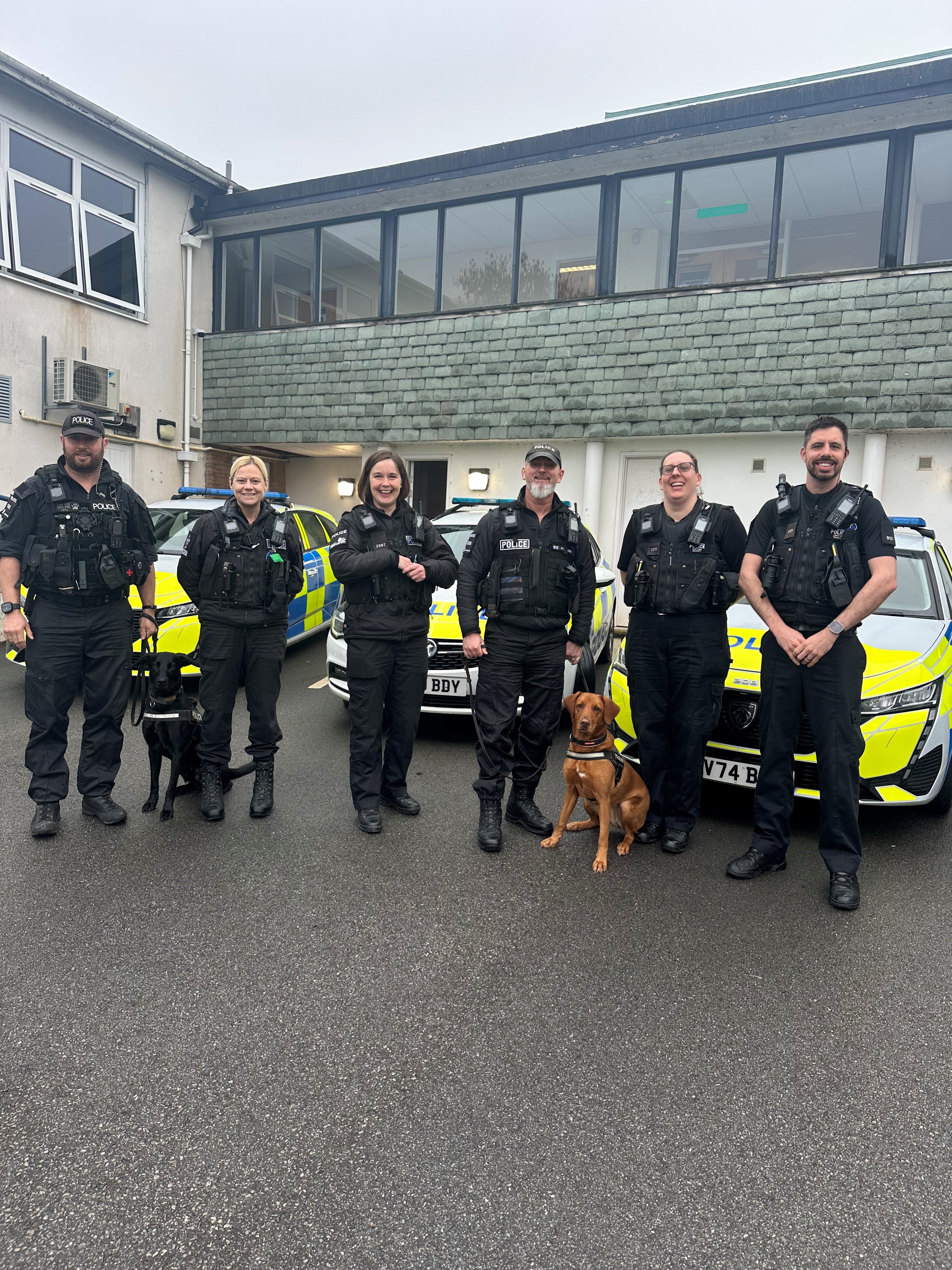
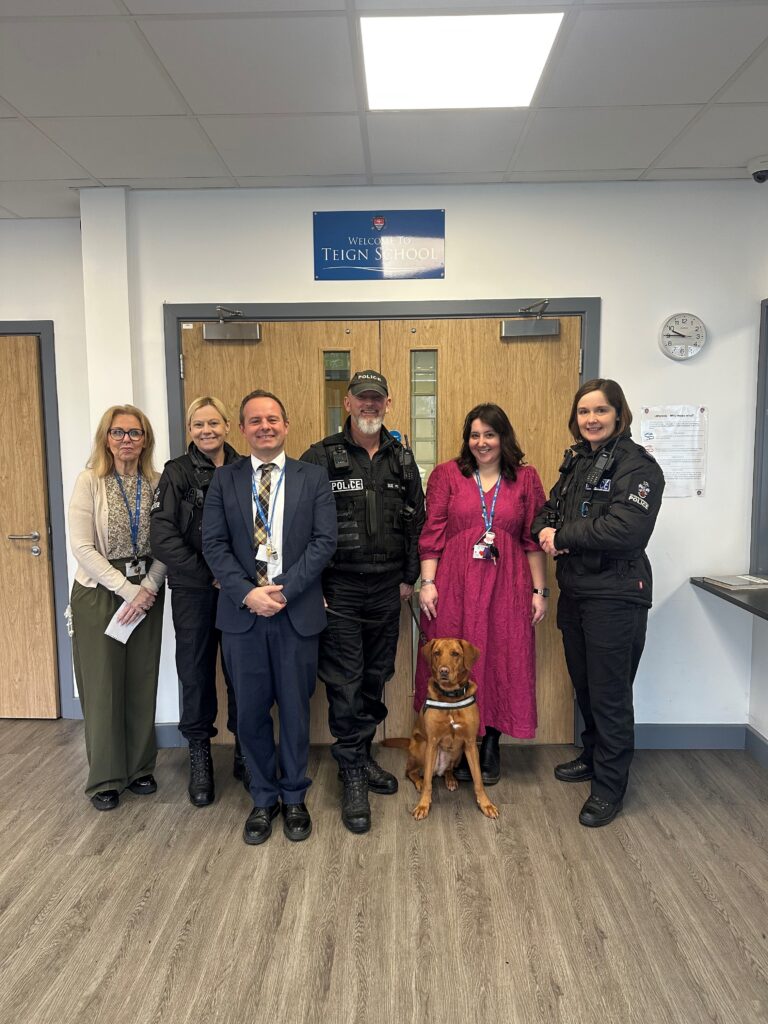
Staff and students at secondary schools in Newton Abbot and Ashburton had two special canine visitors this week and learned more about police dogs and their work in the community.
Passive drugs dogs Jasper and Skye, along with their handlers and the Ashburton & Chudleigh Neighbourhood Policing Team, visited Newton Abbot College, Coombeshead Academy, Teign School, South Dartmoor Community College and South Devon University Technical College.
The visits, which took place on Monday 9 March, were purely educational, giving students the chance to see the dogs in action and learn about the important role the canines play in keeping our residents of all ages safe.
PC Jo Gilbrook explained: “We want to reassure parents this was about sharing knowledge and not a targeted search operation. Schools have their own behaviour policies meaning that staff can search students bags, if required. Our aim this week was simply to engage with young people, build understanding around policing, and showcase the important work of our police dogs.
“A big thank you to the staff and students who welcomed us into their schools, it was a pleasure to meet them.”
Drugs dogs across Devon & Cornwall Police Force area assist officers in specialist operations. One of the initiatives they take part in are Pubs Against Drugs (PAD) operations which happen take place across licensed premises to make checks and keep customers safe.
For updates from the local policing teams please follow Ashburton & Chudleigh Police on Facebook.
A senior officer with 20 years’ experience in a policing has returned to neighbourhood policing; setting new priorities and leading local teams in North Devon.
Last month, Inspector Joey Lester stepped into her new role as neighbourhood policing Inspector for South Molton, Lynton, Ilfracombe and Braunton and will be using a variety of policing tactics – including increased proactive patrols, utilising plain-clothed officers, working with partner organisations and empowering communities through education – to tackle new policing priorities set for the area.
Insp. Lester’s priorities have been carefully outlines to respond to the needs of communities in North Devon, and include:
Addressing anti-social behaviour and persistent low-level offending in town centres.
Tackling the supply, misuse and possession of drugs and controlled substances
Reducing violence against women and girls
Building stronger relationships with rural communities to tackle rural crime
Working with the Road Casualty Reduction team and Vision Zero South West to reduce the number of people killed or seriously injured on roads in North Devon
Increasing police visibility and public engagement events in areas without an accessible public enquiry office
Insp. Joey Lester said, “I believe strong relationships with our communities are key in achieving successful outcomes and I know the previous Inspector – Rich Preston – worked tirelessly to build strong relationships between police and people living in North Devon. This is something I admire and am determined to continue.”
Joey joined Devon & Cornwall Police in 2006, as a Special Constable. After three years volunteering her time to make a difference in her community, Joey joined as a Police Officer and has spent time in many roles, including response, investigation, neighbourhood policing, specialist operations, and learning and development.
In most recent years, Insp. Lester worked as an Emergency Response Inspector covering North, East, West and Mid-Devon, including Exeter, and she continues to carry out her secondary role as a Public Order Public Safety Commander; responsible for organising the police response to planned public events and spontaneous disorder.
Joey is passionate about policing and is committed to reducing crime and anti-social behaviour, bringing offenders to justice and safeguarding vulnerable people in the North Devon community.
Inspector Lester continued, “Having spent time in many different areas of policing, I have built a strong understanding of policing and the challenges we face, and have adjusted our policing priorities to ensure policing is not only visible, but genuinely connected to the people it serves.
“We have three new Police Community Support Officers joining the teams in Ilfracombe, Lynton and South Molton which will help to provide a more visible policing presence and optimise opportunities to engage with people living locally.
Inspector Lester concluded, “When you see officers out on patrol, please stop and have a chat with them; tell them what’s going well and if there’s anything we might need to be aware of.
“We are committed to keeping our communities safe and ask that any concerns are reported to us. As always, please call 999 in an emergency. Otherwise, information can be shared with us by filling in a form on our website or calling 101.”
For the latest updates and crime prevention advice, follow your local team on Facebook.
Police Firearms Amnesty success: potentially lethal weapons taken out of circulation
A total of 58 top venting blank‑firer (TVBF) guns were handed in to police stations across Devon and Cornwall, during a Firearms Amnesty which took place across the counties throughout February.
The amnesty period was designed to enable those who purchased one of the models legally for their intended use to dispose of them safely. It also prevents potentially lethal weapons falling into the hands of criminals who may seek to convert them and pose a risk to the public.
Possession of one of the guns could now result in a prison sentence of 10 years.
Chief Inspector Rob Curtis of Devon & Cornwall Police said, “We’re delighted to see that 58 guns have been taken out of circulation, making our communities safer. This demonstrates the public’s commitment to reducing the risks associated with imitation firearms.
“We urge anyone who is concerned about any weapons in their communities to report to us.
“A single report could prove vital in solving serious crimes, removing illegally-held lethal weapons, or potentially saving a life.”
Anyone with information regarding illegal firearms activity should contact police as a matter of urgency. Reports can be made here: www.dc.police.uk/tua
Alternatively, Crimestoppers can be contact 100% anonymously via 0800 555 111.
Five people were arrested and a stolen vehicle was recovered on Saturday night after a busy road safety operation across Teignbridge, South Hams and Torbay.
Police carried out the traffic operation on Saturday 7 March and officers taking part included Patrol, Neighbourhood and Special Constabulary teams focusing on the problem of drink and drug driving.
During the course of the evening officers identified the following offences:
Five people were stopped for driving otherwise than in accordance with a licence, three vehicles identified with no insurance, three positive drug wipes, as well as three negative drug wipes (this simple roadside saliva test indicates possible drug driving).
Officers tested five drivers for drink driving and results revealed two positive breath tests and three negative. A stolen vehicle was also recovered.
One vehicle was stopped after being wanted in connection with non-traffic crimes and police identified one offence of vehicle interference.
Four drivers who were found to have no insurance or driving licence had their vehicles seized and one driver was spoken to on suspicion of possession of cannabis. Officers found suspected illicit drugs in a vehicle that was involved in a collision.
In total five people were arrested – two for drink driving and three for drug driving (two of those three failed to stop for police).
Inspector Wes Watkins explained: “The majority of drivers checked this weekend were not committing any offences and we would like to thank the public for their co-operation as we carry out our checks. Road safety is a priority for Devon & Cornwall Police and we will continue to remind road users that consuming alcohol and drugs before you get behind the wheel is not acceptable.
“Your vehicle must be roadworthy and we will continue to crack down on any risky behaviour by drivers that puts them or other road users in danger. This may also include offences such as speeding or using a mobile phone behind the wheel.
“More days of action are planned this year and we work closely with partners to decrease the level of serious and fatal road incidents and save lives.”
Rail passenger numbers are climbing, trains are ageing, and on some services – particularly the morning run from Barnstaple into Exeter – demand has simply outgrown the available space.
Matt Barnes, head of strategic service at Great Western Railway, has spent much of his career watching that change unfold. Having previously worked at Devon County Council before moving to GWR, he has been closely involved in many of the region’s major rail upgrades.
“I’ve been around Devon for a long time,” Matt says. “I used to work for Devon County Council and done the vast majority of upgrade type projects that we’ve done in this area for example, leading the Dartmoor line a few years ago.”
The reopening of the Dartmoor Line in 2021 was widely hailed as a success story, restoring passenger trains between Exeter and Okehampton for the first time in nearly half a century. Yet its success is also part of a wider trend; rail travel across Devon is booming. According to Matt, the transformation over the past decade has been dramatic.
“Since I got involved in rail travel in Devon, there are twice as many people travelling on our services,” he says. “There are 40% more people on local trains around Exeter than there were pre-COVID.”
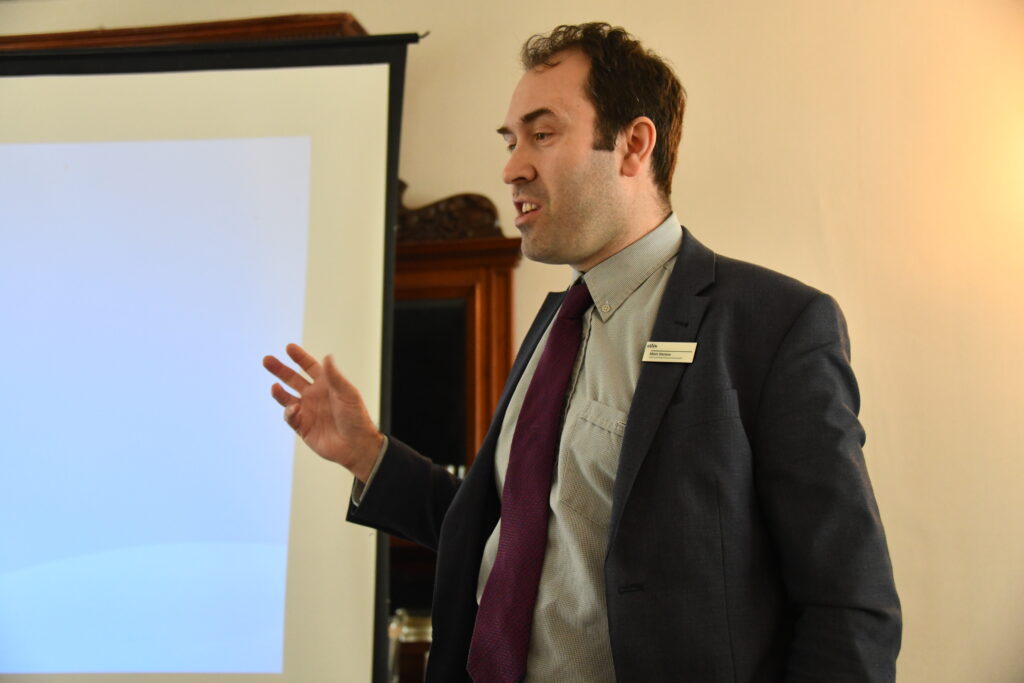
Matt Barnes
That surge in demand has brought new opportunities – but also new pressures. One of the most immediate challenges facing the network is the condition of the trains themselves. Much of the diesel fleet serving the west of England is now decades old.
“The average age of our DMU fleet across the west services is more than 30 years old,” Matt explains. “Some of the units will hit 40 this year.”
At the same time, previous efficiency measures reduced the number of trains available. GWR’s High Speed Train sets, which once helped support regional services, have now been withdrawn. The result is a system that is busier than ever but operating with limited rolling stock.
“Several years ago we realised that the situation couldn’t carry on like it was,” Matt says. “We needed to get some more units into the fleet.”
The solution emerged in the form of Class 175 trains-diesel multiple units built between 1999 and 2001 that had been operating in Wales before being replaced. For GWR, they represented the quickest realistic option for strengthening services.
“At the time, there was only one option really that appeared to be relatively quick to act,” Matt says. “These were the Class 175s. They’re much younger trains. They were in service in Wales, and they’ve just been replaced there, and they were available to take straight on.”
Transport For Wales Class 175 diesel multiple unit viewed in July 2021.
GWR is acquiring 26 of the units. Once fully introduced, they will operate on the main line between Exeter and Penzance, as well as on regional services, including routes to Okehampton and Barnstaple. A handful will also appear on trains on Cornwall’s Newquay branch.
The aim is not simply to replace older trains but to strengthen the resilience and capacity of the network.
“We’ve taken them on because they allow us to address resilience issues in the west DMU fleet,” Matt explains. “They also help address some capacity issues.”
One of the clearest examples of that demand is the 7.22am service from Barnstaple, where the daily rush includes hundreds of students travelling to Exeter.
“Specifically, the Barnstaple 7.22am challenge of over 400 students,” Matt says.
Longer trains are planned to ease that pressure. On the busiest services, the Class 175 units will run as five-car formations, significantly increasing the number of seats available.
Yet introducing new trains to an existing railway is rarely as simple as moving them from one place to another. When the Class 175s arrived from Wales, they were not ready to enter passenger service immediately.
“The challenge we faced is those trains effectively had gone into storage after they were taken out of use in Wales,” Matt says. “The condition of them was not basically suitable for immediately deploying into traffic.”
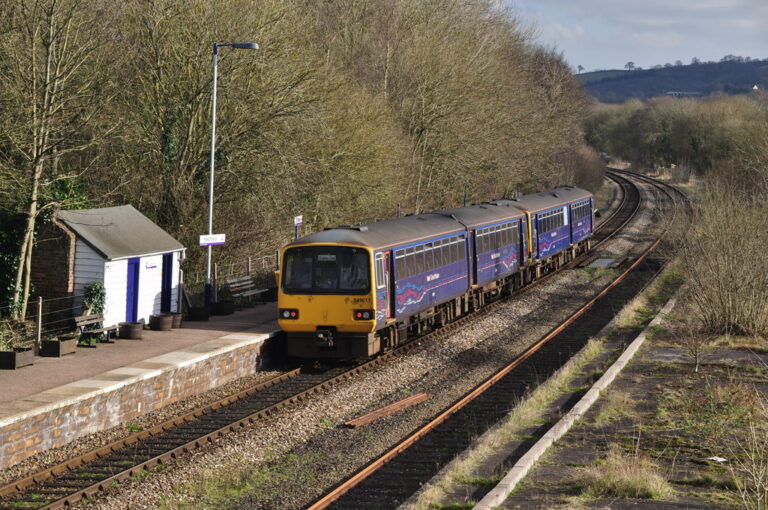
The 1613 Exeter Central to Barnstaple (2B81) formed of 158798 arriving into Barnstaple and will immediately form the 1733 Barnstaple to Exeter Central (2R91)
Before passengers could board them, the trains needed substantial engineering work. The first stage is an overhaul carried out at Wolverton Works, north of Milton Keynes, by the trains’ owners. Only after that process is complete can GWR carry out its own inspections.
“The second stage is we then do an exam to assure ourselves from an engineering perspective that they’re ready for use,” Matt explains.
That work has taken longer than originally anticipated.
“It’s been more of a challenge than perhaps we were expecting,” Matt says. “Frankly the units have degraded more than we expected.”
Even once the engineering work is complete, there are further hurdles. Drivers must be trained to operate the new trains, and the infrastructure across the network must be confirmed as compatible.
“When you introduce the train into the business, there’s two things you need to do apart from getting the train physically ready,” Matt says. “One is to train people and prepare our bit of the business. And the other piece is to modify and ensure the infrastructure is compatible.”
Driver training alone takes around two weeks for each driver.
“A week of classroom, if you like, and a week of driving them up and down, just getting used to how they handle,” Matt says.
The process is already underway. Several of the trains are now in the GWR system, with some used for training and others undergoing final checks. Passenger services using the trains have already begun in Cornwall.
“We have got trains in use in Cornwall,” Matt says. “We have one of them we use for passenger service in Cornwall and we have several more that we are using for driver training.”
At present, nine units are within the business, with more gradually joining as engineering work progresses.
However, geography adds another complication. The new trains are based at GWR’s depot in Plymouth, meaning driver training must begin there before expanding further across the network.
“We had to train our drivers at Plymouth and Par in Cornwall first before we can come to Exeter,” Matt explains. “Effectively Exeter is the latter part of the training.”
That sequence means that the lines serving North Devon – where extra capacity is urgently needed – must wait until later in the rollout.
“While we really, really want to deliver the extra capacity on the Barnstaple line to address the crowding… we physically can’t get there because we’ve got to train other people first,” Matt says.
Even so, progress is steadily being made. The expectation is that the first Class 175 services will appear in the Exeter area before the end of the year.
“We are working towards, by the end of the year, having the first trains in use in this area,” Matt says.
For passengers, the wait should ultimately be worthwhile. While Devon’s current Class 158 trains represented an improvement when they were introduced, the Class 175 units promise a noticeable step up in comfort.
“Interior-wise… these are very nice trains,” Matt says. “From a customer perspective, they will go down really well.”
The delays, however, have not been easy.
“The unfortunate thing is it’s been frustrating that we haven’t been able to make as much progress as we’d like as soon as we’d like,” he admits.
For Matt, the story of the new trains sits within a much bigger narrative about rail in Devon. Over the past decade, the region’s railway has shifted from a useful transport option into something far more central to everyday life.
“It is fair to say that the transformation that we have seen in that time is quite enormous,” he says.
Part of that change has been driven by new stations and reopened routes. The return of trains to Okehampton created new journeys and new opportunities. But it also demonstrated how rail can connect communities far beyond the immediate line.
“The Dartmoor line actually makes money,” Matt says. “And the reason it makes money is that there’s a huge amount of travel off it… that then uses Exeter as an interchange point to travel long distances.”
That network effect is key. A railway line is rarely just about the towns directly along its tracks; it connects to a much wider system of journeys.
“The benefit of the railway is it’s a network,” Matt explains. “It doesn’t just get you on a short segment. It allows you to access places all over.”
That idea sits at the heart of the next phase of planning for Devon’s railways. Earlier versions of the Devon Metro concept focused largely on adding stations and improving services on existing lines. Now, Matt says, the conversation is shifting.
“When I was involved, 16 years ago, the original Devon Metro iteration, it was all about new stations and service enhancements,” he says. “Now we need more infrastructure.”
The work now under discussion concerns shaping the railway to support the region’s future growth. That includes looking at how different lines fit together to support travel across Exeter, North Devon, East Devon and beyond.
“The work that we’re starting to think about is what’s next for Devon Metro,” Matt says.
That could involve further service improvements, new connections between lines, or increased frequencies. Among the aspirations is a half-hourly service on the North Devon line, as well as ideas linking places such as Axminster, Digby and the Exmouth branch.
Ultimately, the goal is to ensure the railway continues to support the region’s expanding economy and population.
“The important thing from a sub-regional perspective is that we have a vision,” Matt says, “for how the railway slots together to deliver growth in the Exeter, North Devon, East Devon, South Devon area rather than just any one route.”
The scale of Storm Chandra’s impact on the South West rail network was stark; for a time in late January, almost every line across Devon and Cornwall was closed.
When the storm swept across the UK between 26 and 27 January, it arrived with relentless rain, powerful winds and ground already saturated from weeks of wet weather. The result was widespread disruption across the region’s railways, leaving passengers stranded and operators scrambling to respond to a situation that rapidly escalated beyond anything usually encountered.
For Great Western Railway, the challenge was unprecedented in its recent experience. David Whiteway, Regional Growth Manager at GWR, says the storm exposed just how vulnerable the network can be when extreme weather hits multiple routes at once.
“When Storm Chandra hit, it wasn’t just the Barnstaple line that was out of action,” he explains. “The only line in the whole of Devon and Cornwall that had a partially normal service was the Exmouth branch and even then, a few days later, that itself had its own problems that caused closure.”
In practical terms, that meant an entire regional rail system struggling to function. “Every single line of Devon and Cornwall this winter has had such bad weather that for a period of time it has been shut,” David says. The Barnstaple and Okehampton routes were among the worst affected, suffering prolonged disruption that proved far more complex to resolve than typical weather-related incidents.
That distinction is crucial. Rail operators deal with disruption regularly, but usually on a much shorter timescale. “I’m being really honest with you,” David says. “We don’t normally get disruption that lasts days and days and days. Normally, we manage it on an hour-by-hour basis.”
Storm Chandra forced the railway into unfamiliar territory. “What we found is actually in our business there was nobody able to step in whose job it was to manage a long-term closure of the line,” he says. “So we’ve had to cobble things together. We’ve had to learn on a day-by-day basis.”
As conditions worsened, GWR had to take the rare step of declaring what is known as a “black service outage”. The rail industry operates a colour-coded system for disruption: green for normal service, amber for moderate issues, and red for significant disruption. Black is something else entirely.
“When we get to black, it is a stage that we only do as an absolute last resort,” David explains. “It means the weather is so bad we physically can’t get you to where you need to be. We can’t get road transport, we can’t run rail services.”
That was the reality facing the railway during the height of the storm. With so many routes closed simultaneously, even contingency plans struggled to keep pace.
One of the most visible aspects of any rail disruption is the appearance of rail replacement buses. But providing those services on a large scale, particularly at short notice, is far from simple.
“Because nearly every line in Devon and Cornwall was shut, that meant we were physically never going to be able to supply enough rail replacement buses to cover both counties,” David says. In those circumstances, difficult decisions had to be made about where limited resources should go.
The mainline was prioritised, particularly the route via Hele, with Network Rail focusing efforts on reopening it as quickly as possible to restore the highest number of services.
Even where buses could be arranged, the logistics were daunting. Rail operators do not maintain a reserve fleet of vehicles waiting for emergencies. Instead, they rely on specialist contractors to source them from across the transport industry.
“We don’t sit with a bank of buses and drivers doing nothing ready for potential storm damage,” David says. “We use a company called First Travel Solutions, whose job it is to ring around pretty much every bus company you can think of.”
The scale of the requirement alone was a problem. Running a replacement service for the Barnstaple line requires around 24 buses at any given time just to maintain an hourly timetable. When multiplied across several closed branch lines, the demand quickly outstrips local availability.
“It did take us about three or four days before we were able to start providing road transport on the Barnstaple line,” David explains. “Simply because it did not exist. It wasn’t available for us to provide.”
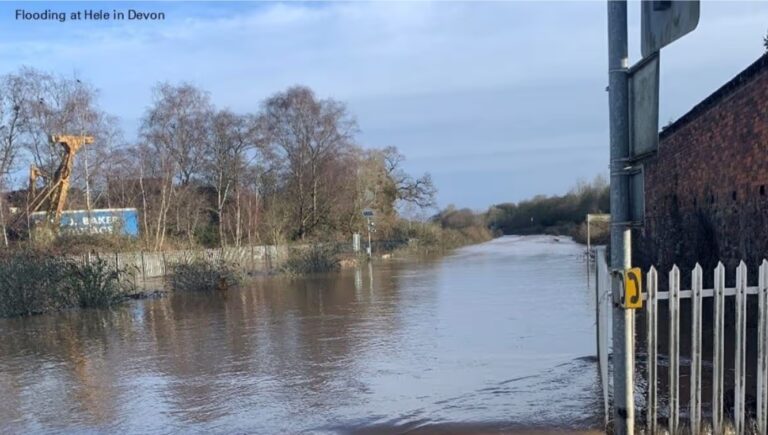
Flooding around Hele (Credit : Weatherman Radmore)
And even when buses were secured, new complications emerged. The railway entered what became a 24-day possession of the line while Network Rail carried out repairs and waited for divers to assess damage. During that time, keeping the replacement service running proved an ongoing challenge.
“We were able to secure a bus company for three or four days,” David says. “But under EU driving regulation times that we still work to in this country, they have to have either a 24-hour or 45-hour break in between.”
The result was a constantly shifting operation. Bus companies would step in for a few days before needing to withdraw drivers for mandatory rest periods, forcing GWR and its contractors to search for new operators at short notice.
“We got as far as actually bringing in coach companies from as far away as Wales and Hampshire to secure the line towards the end of the possession,” David says. “That’s why every other day you would see different service buses operating this route.”
Local operators were approached as well, but they faced their own constraints. Bus companies still had to run school contracts and regular public services, leaving little spare capacity to support emergency rail replacements.
“We did go as far as possible around asking local bus companies if they could enhance some of their public timetable buses,” David says, particularly along the busy route five corridor. “Unfortunately, that wasn’t possible because they did not have enough buses and drivers to run extra services.”
For passengers already dealing with major disruption, another issue quickly became apparent: knowing where to go. Replacement buses do not always stop directly outside railway stations, and in some locations, there was confusion about pick-up points.
“We also found that getting that information out to the bus drivers – for them to understand where it is they need to stop – and informing customers where they need to go to catch that bus was a challenge,” David says.
The experience exposed gaps in the system that had previously gone unnoticed. “We did find problems we didn’t know existed out there,” he admits.
Those lessons are already shaping changes. Across the network, stations have begun receiving permanent rail replacement signage, clearly indicating where buses stop and how passengers should reach them.
“You may have already seen at all the stations, we’ve now put up fixed bus stop information,” David says. “Signs of rail replacement and signs at the station themselves to show you where to go if that is not directly outside of the station.”
Another priority is improving staff presence on the ground during disruptions. For upcoming engineering works later this month, GWR plans to deploy significantly more bus coordinators to guide passengers and manage boarding points.
“We are going to have a lot more bus coordinators on the ground informing customers where to go and greeting them,” David says.
Even that is not straightforward when disruption occurs without warning. Many of the people who normally perform those roles are booked years in advance for planned engineering work and often hold other jobs.
“A lot of the people that we normally employ for our planned engineering works are planned up to two years in advance,” David explains. “They have other jobs and do this as a part-time role.”
During Storm Chandra, that meant coordination on the ground was inconsistent simply because staff were not immediately available. The company is now examining ways to use local railway staff to step into those roles during unexpected closures.
“We are looking at ways within the company of how we can utilise local staff and teams to perhaps come and fulfil that role when we have unplanned disruption,” he says.
While the immediate crisis caused by Storm Chandra has passed, the region’s railways are not yet free from disruption. The Tarka Line is scheduled to close again at the end of the month, this time for planned engineering works.
Given the difficult winter, the decision raised obvious questions about whether those works should be postponed. But the rail industry ultimately concluded that delaying them would risk further problems.
“We did review whether it is best to postpone this work given how much disruption we’ve had on this line this winter,” David says. “But we’ve collectively taken as a rail industry the decision that it’s important to carry on.”
The reason is long-term improvement. Some of the planned work includes renewing sections of track to increase line speeds, part of a wider effort to deliver a more reliable and efficient service.
“Some of them utilise things like helping us improve the line speed by renewing the track,” David explains, “which are some of the long-term aims we’re all working towards to provide a better service.”