

Home Blog Page 89

Barnstaple launches bid to become UK Town of Culture

A bid to secure a major national cultural title is gathering momentum as community leaders, artists and organisations rally behind plans to showcase a town’s heritage, creativity and civic pride.

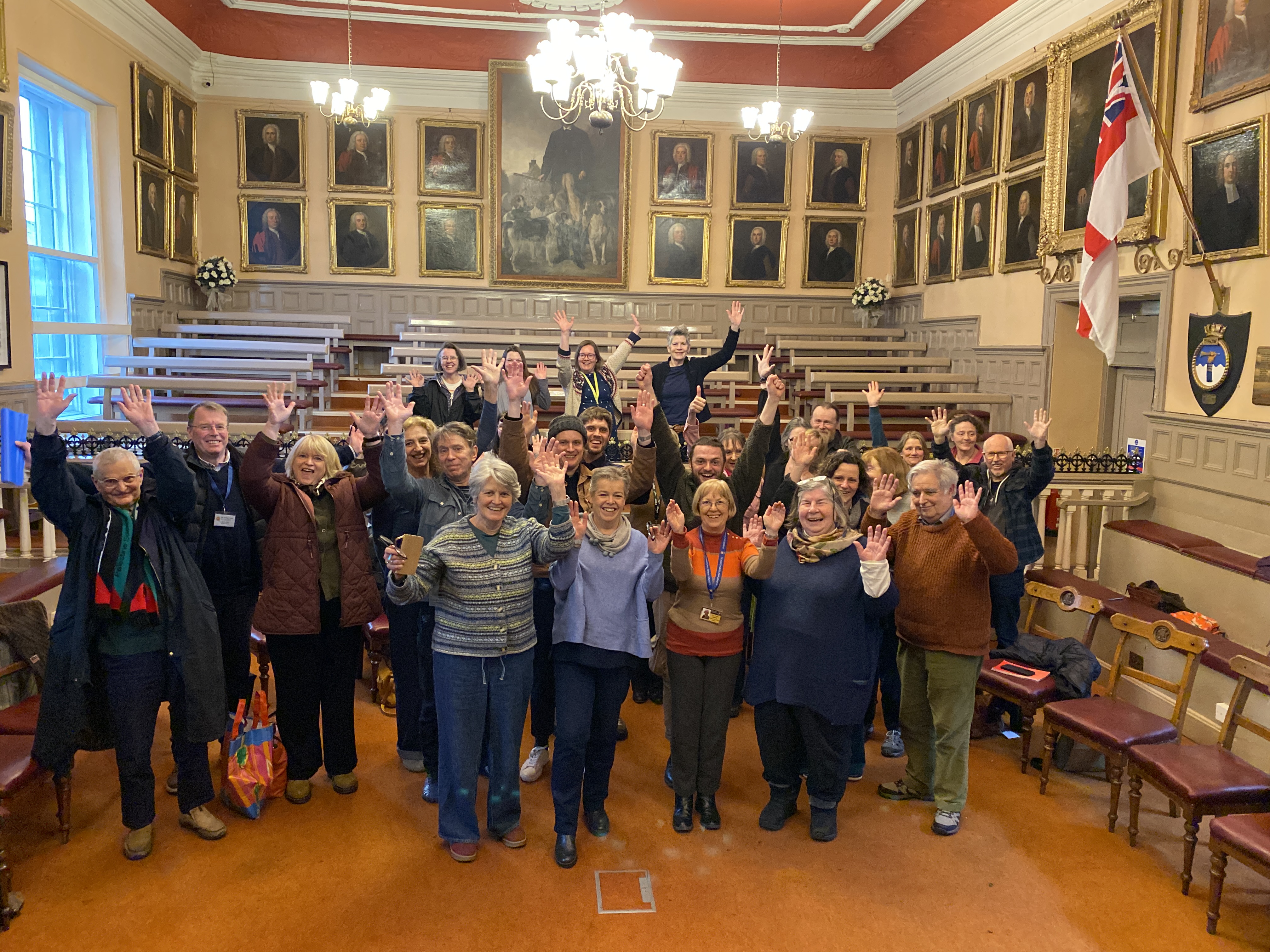
Barnstaple Town Council has confirmed it is supporting a campaign for the town to be named UK Town of Culture 2028, working with local groups, creatives and organisations to develop a formal submission.

The competition, launched by the UK Government, is the first national scheme of its kind and is open to towns of all sizes. It aims to recognise places that can tell their own story, bring communities together and deliver an ambitious cultural vision.

Shortlisted towns will each receive £60,000 to help develop full bids. The overall winner will be awarded the UK Town of Culture 2028 title and a £3 million prize, while runners-up will receive £250,000 to deliver elements of their proposals.

Barnstaple Town Council said it would work alongside the local bid group and partners across the community to produce a submission celebrating the town’s creative strengths.

Members of Barnstaple’s creative community said: “Culture belongs to everyone, and each of us has a role in shaping what it becomes”.

The Town of Culture bid group added: “Barnstaple’s bid to be named the UK Town of Culture has already united people with a renewed sense of energy, enthusiasm and optimism – celebrating the strengths we share today and inspiring a collective vision for our cultural future.

“The local creative community has shown amazing support for this initiative and are keen to be involved in the process to achieve Town of Culture status for Barnstaple. We look forward to connecting with all communities as we #BigUpBarny”.

Mayor of Barnstaple, Cllr Janet Coates, said: “We are proud to be working with our community to deliver a bid for UK Town of Culture 2028.

“This is a fantastic opportunity to showcase Barnstaple’s rich heritage, creativity and community spirit.

“This bid is about bringing people together and celebrating everything our town has to offer, from our history and cultural events to the talent and passion within our community.

“We are excited to play our part in shaping this vision and creating a legacy for Barnstaple.”

Further information about the town’s bid and ways to get involved is available at www.bigupbarny.co.uk.

More details about the national competition can be found at www.gov.uk/government/news/first-ever-uk-town-of-culture-competition-to-restore-pride-in-communities.
Exeter pupils help rescue animals during shelter visit

0

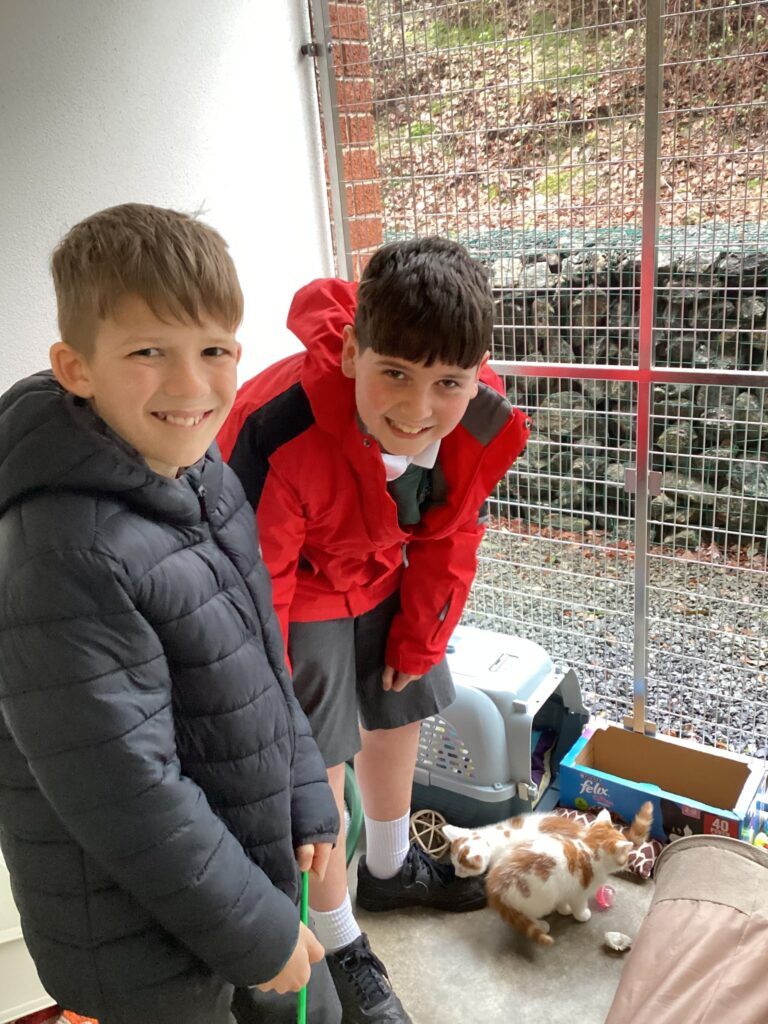
Pupils swapped the classroom for a day of animal care after meeting kittens, playful ferrets and other rescue animals during a visit to a local shelter.

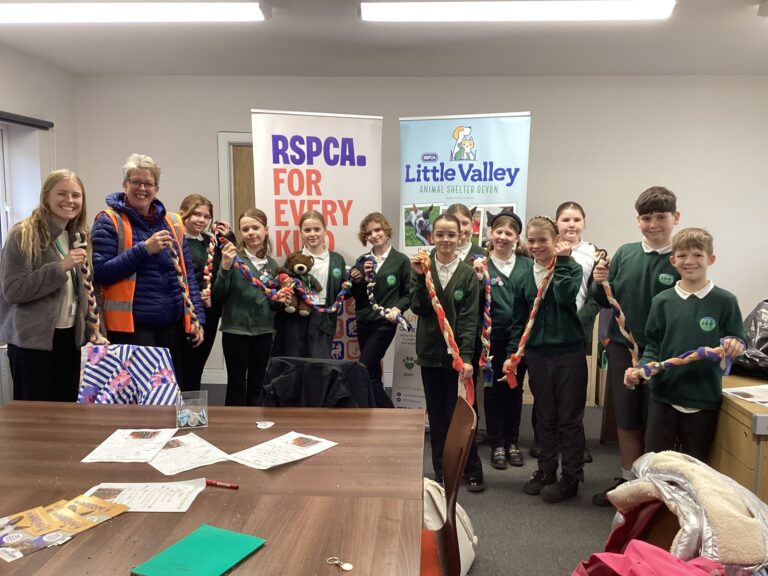
Year six pupils from Exwick Heights Primary School spent time at RSPCA Little Valley Animal Shelter while working towards their Torbay & Devon Civic Award, gaining hands-on experience of how animals are cared for and rehomed.

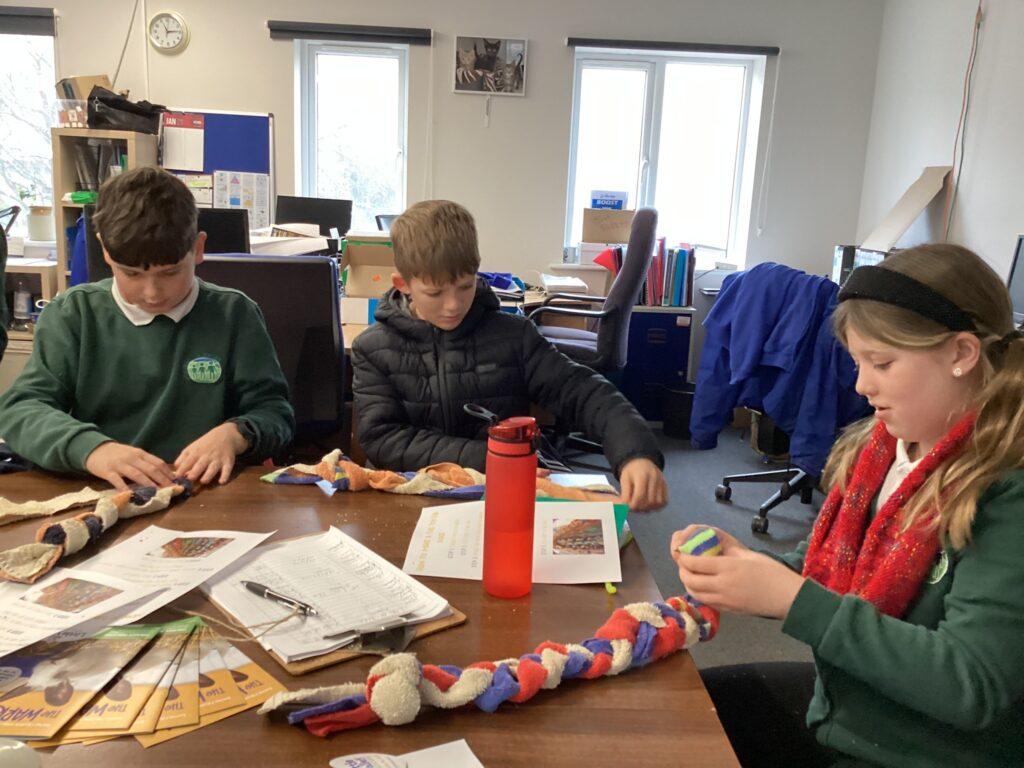
As part of their active citizenship work in the community, the pupils suggested visiting a charity. During their trip, they learned about caring for animals in need, asked questions about the shelter’s work and helped make toys for dogs staying at the centre.

Pupils from Exwick Heights Primary School meet kittens during their visit to RSPCA Little Valley Animal Shelter.
Credit: Ted Wragg Trust

The visit also gave pupils the opportunity to socialise very young kittens and meet several ferrets at the shelter.

Gemma Wills, headteacher at Exwick Heights Primary School, said: “It was a real joy to see our pupils so engaged throughout the day.

“They loved socialising the kittens and met the funniest ferrets with the loveliest personalities.

“It was a great way for them to learn about caring for animals and have fun while putting our values of kindness, curiosity and determination into practice.”

Pupils from Exwick Heights Primary School making toys for dogs during their visit to RSPCA Little Valley Animal Shelter.
Credit: Ted Wragg Trust

Moira Marder, chief executive of the Ted Wragg Trust, said: “Sometimes the most valuable lessons happen outside the classroom.

“Trips like this show children how they can make a positive difference in their community while enjoying themselves and building friendships.”

RSPCA Little Valley Animal Shelter has been caring for, rehabilitating and rehoming animals in Devon for more than 30 years. The charity relies largely on community support to continue its work helping animals in need.

Exeter runner honours hospice legacy in London Marathon

40,000 runners take on the TCS London Marathon each year. The bucket-list moment is an extraordinary 26.2-mile journey through the heart of the capital, past iconic landmarks like Tower Bridge, Big Ben and Buckingham Palace.

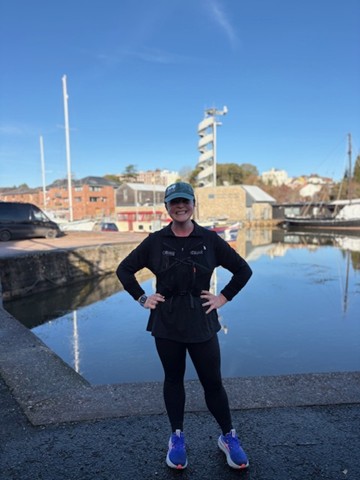
This year Lizzy Farwell from Exeter will be representing Children’s Hospice South West (CHSW) at the globally renowned event, which is far more than a physical challenge, but a personal tribute to her family: “I am incredibly honoured to be taking part in this year’s London Marathon. My connection to Children’s Hospice South West began long before I could ever imagine running 26.2 miles. From the age of five, I was involved as the very first well sibling of CHSW, witnessing my inspirational parents, Eddie and Jill Farwell, create the children’s hospice movement in the South West. What they built was born from love, courage, and our own family’s experience.”

Lizzy’s brother and sister, Katie and Tom, were born with a life-limiting illness, MPS, and as a family they received support from the only children’s hospice in the UK at the time; Helen House in Oxford.

Lizzy shares that some of her happiest childhood memories were made in a hospice: “As a family, we knew first-hand how vital a hospice could be, not just as a place of care, but as a place of comfort, togetherness and dignity. Some of my most treasured childhood memories were made in a hospice alongside my older siblings: playing in the garden, dipping into the Jacuzzi, laughing over board games with my parents or simply being together around the dinner table.”

“Those times were filled with joy and love, even though they sat alongside some of the saddest and most difficult moments our family faced. That contrast is something I carry with me, how light and laughter can still exist during the darkest chapters of life.”

Lizzy Farwell training for London Marathon

Lizzy’s parents were inspired to create a children’s hospice in the South West as they knew first-hand how it could positively impact so many families. From this idea Children’s Hospice South West was born and over time it’s 3 children’s hospices opened for families in the region to benefit from.

Lizzy says that what her family built together continues to guide her: “I will always be inspired by what my parents created and be immensely proud of how they used our family’s story to build a place where families across the South West could come together, feel supported, and never feel alone. I saw the extraordinary love and care my brother and sister received from the hospice teams, people who are truly one of a kind.”

Over the years Lizzy has taken on various fundraising activities supporting CHSW, including the charity’s 3-day Incredible Hike on the South West Coast Path but the scale of the London Marathon makes this her biggest challenge yet. Holding memories of her parents, brother and sister close through every mile of her training, Lizzy’s motivation has never been stronger:

“As I train for this marathon, my family has been with me every step of the way. They may not be beside me in body anymore, but they are absolutely with me in spirit. And although I am the last Farwell standing, I run with them in my heart, hoping, more than anything, that I will do them proud on race day.”

Running the London Marathon on Sunday 26 April will not only be a personal achievement for Lizzy taking on her first marathon but also a celebration of the Farwell family’s legacy and the incredible impact they have had on children’s hospice care across the South West.

If you would like to support Lizzy, please visit JustGiving and search for ‘Lizzy Farwell’ or click https://www.justgiving.com/page/lizzy-farwell-11?utm_medium=FR&utm_source=CL

New conservation plans proposed for Totnes and Dartmouth

Fresh plans to safeguard and enhance the historic character of Totnes and Dartmouth are set to go out to public consultation, as South Hams District Council moves to update its conservation area appraisals for the two towns.

A report to the Executive on Wednesday, March 5, recommends that members approve the commencement of a six-week consultation on draft updated Conservation Area Appraisal and Management Plans for both areas. The review forms part of a wider programme to reassess all conservation areas across the South Hams.

Authorities are required “from time to time” to assess and designate areas of “special architectural or historic interest the character or appearance of which it is desirable to preserve or enhance”.

The council describes it as a “statutory responsibility to review their conservation areas from time to time and seek via consultation, public views to ensure the ongoing preservation and enhancement of the conservation area.”

The consultation period will mark “the start of formal community engagement whereby the public are invited to review the new document and provide comments”.

It will last six weeks, with responses taken into account and incorporated where relevant to ensure the documents remain “an up to date and effective planning tool for the area it serves.”

Both towns have already been closely involved in shaping the draft documents. Recognising that Totnes and Dartmouth are two of the main towns in South Hams, the council says “a more throrough consultation process was undertaken. This included virtual discussions, pre-draft meetings with town councils, and engagement with local amenity groups and historians.

In Totnes, after an initial meeting with the town council, “a small group came forward, comprising parish councillors and interested persons from local groups including the museum for subsequent meetings and email correspondence.” The group suggested possible boundary extensions and contributed links, contacts and detailed feedback. The draft review was subsequently updated and discussed again with the town council.

In Dartmouth, the town council opted to engage separately from other historic groups. Discussions were generally held in person, where councillors outlined their ambitions for the reappraisal and proposed boundary changes. The report records appreciation for the “time and support offered by the Town Councils, amenity groups, local historians and residents.”

As part of the review, the existing boundaries of both conservation areas have been reassessed. In Totnes, four proposed boundary extensions put forward by the town council are included in the draft . In Dartmouth, three extensions suggested by the Dartmouth and Kingswear Society have been taken forward, although two further suggestions were not progressed “to avoid the inclusion of areas that are covered by other more relevant protections and which could be legally challenged.”

The updated appraisals will continue to carry weight in planning decisions. The report notes that the revised documents will “remain a material consideration in the determination of planning applications in both Conservation Areas” and will help ensure that “the preservation and enhancement of the Conservation Areas is be maintained into the future.”

Climate considerations are also referenced. The updated appraisals “refer to the declaration of the Climate Emergency and associated Planning Statement recognising that mitigating climate change and conserving historic buildings are compatible goals and that historic buildings can be a key part of the solution for lower carbon emissions through sensitive adaptation and retrofitting.”

The report outlines the risks of not proceeding. Without an update, the existing documents would remain in force but be “outdated”, limiting their relevance in planning decisions. There is also said to be “a risk of scrutiny if the conservation area appraisals are not updated, undermining their role as a material planning consideration.”

If approved by the Executive, the consultation will run for six weeks. Following that period, feedback will be considered and any relevant changes made before the finalised Conservation Area Appraisals and Management Plans are brought back to the Executive for adoption. Any additional properties included through boundary extensions will be registered accordingly, and updated digital mapping will be published on the council’s systems.

The proposed outcome, the report concludes, is for the revised documents to be adopted “to ensure the relevant document meets the requirements of the Planning (Listed Buildings and Conservation Areas) Act 1990 and remains a material planning consideration, to ensure continued preservation and where possible, enhancement of the Conservation Areas for both our enjoyment and that of generations to come.”

Nursery praised for safeguarding and outdoor learning

“Children arrive at the nursery excited to see their friends,” inspectors found, as Skylark Nursery School was judged to be meeting the expected standard in all areas, with safeguarding arrangements confirmed as effective.

The nursery, based at Meadow Park Barn, Lower Mead Farm, Alston Cross, Ashburton, Newton Abbot, caters for children aged two to four. It has 32 places and is run by Nature Nurseries Ltd. Registered in November 2023, it operates Monday to Friday from 8.30am to 5pm.

Inspectors reported that “the safeguarding standards are met. This means that leaders and/or those responsible for governance and oversight fulfil their specific responsibilities and have established an open culture in which safeguarding is everyone’s responsibility and concerns are actively identified, acted upon and managed. As a result, children are made safer and feel safe.”

In the classroom, staff were praised for making learning engaging and purposeful. “Staff make the most of teachable moments to support children to develop a firm foundation in their mathematical skills.

Children count on their fingers and then encounter larger numbers when they chat about the ages of members of their family. Leaders emphasise the importance of staff interacting with children and modelling imaginative play, such as in the home corner. This supports children’s language skills well. Leaders provide a cosy place for children to talk about stories with their friends, which helps them to develop positive attitudes towards their learning.”

Assessment was found to be used effectively. Inspectors noted that “staff use assessment well to help them plan for and prepare children for the next stage of their learning. They share information with other settings that children attend. Leaders carefully monitor the progress of children who face barriers to their learning. They refer to other professionals to ensure that children have the help they need.”

Children’s behaviour and attitudes were also highlighted positively. “Leaders prioritise developing a sense of community. They talk to children about being kind and help them learn to play together. In the garden, children develop confidence as they learn how to balance and step across tree stumps.

“Children enjoy working together to roll up a large rug, ready for group time. They help each other carry and lay out blocks to sit on, and staff praise children for being considerate and helping each other.”

Inspectors said staff were proactive in monitoring attendance and vigilant when children were absent, ensuring communication with families to check on welfare. They also found that leaders regularly reviewed arrangements to ensure children’s safety and wellbeing, including when they were sleeping.

Outdoor learning was a notable feature. “Leaders emphasise the importance of being outdoors and noticing the changes in nature. Children enthusiastically go to the garden where they make choices about where to play with their friends. Children learn to share and take turns with the equipment. Younger children gain confidence and develop physically by riding on balance bicycles. Older children enjoy playing games together, such as hide-and-seek.”

However, inspectors identified areas for improvement. They reported: “However, on occasion, children’s learning is not sufficiently well supported during routine times of the day, such as when moving from one activity to the next. When children finish their story time, they all rush together to get ready for lunch. This means that some children have to wait and queue to wash their hands and miss important learning time.”

Inclusion was generally strong, with staff working closely with families and other professionals. But the report noted that “occasionally, children’s home cultures and learning in their own language are not promoted and celebrated as well as possible.”

Leaders were described as having “an accurate view of their strengths and areas for development” and were said to be committed to adapting provision as the community changes, including ensuring additional funding is used effectively to support children who need extra help.

Plymouth pupils quiz MP on politics and future careers

Students were given the chance to put their questions directly to their local MP during a school visit aimed at raising aspirations and exploring future career paths.

Fred Thomas, MP for Plymouth Moor View, visited Tor Bridge High to meet pupils taking part in the school’s “Your Future Story” programme, an initiative designed to support high-achieving students from Year seven through to their first year of university.

During the visit, Fred met with year seven students involved in the long-term programme, which offers guidance and opportunities to help young people reach their potential. The scheme provides tailored support for both students and their families as they plan their future education and career pathways.

He also joined a question-and-answer session with the school parliament and school ambassadors, where students raised topics ranging from foreign policy to local issues such as roadworks.

Pupils also shared their views on potential restrictions on social media access for under-16s, an issue currently under consideration by the UK government.

The visit gave students the opportunity to discuss their ambitions, explore routes into higher education and gain insight into public service and the role of local representatives.

Tracy Stephenson, headteacher at Tor Bridge High, said: “We are very grateful to Mr Thomas for taking the time to visit and speak with our students.

“Experiences like this give them a real sense of what’s possible, and help them understand how their hard work and aspirations can translate into future opportunities.

“It was a joy to see students asking such thoughtful questions about their education and the world around them.”

Fred Thomas said: “It was brilliant to meet with a handful of students who have been selected to take part in the Your Future Story programme.

“I also thoroughly enjoyed getting a bit of a grilling from the School Parliament and School Ambassadors during a Q&A.

“There were some really insightful and thoughtful questions.”

£4.2m plan to complete Exeter to Cranbrook cycle route

A new report from Devon County Council sets out proposals to complete a new off‑road walking, wheeling and cycling route between Exeter and Cranbrook.

The report, to go before our Cabinet next week, asks councillors to consider approving the construction of the Mosshayne to Cranbrook section of the Exeter to Cranbrook cycle route.

This section would complete a missing link between Exeter and Cranbrook, providing a safer and more attractive route away from busy roads.

If approved, the route would run through green space between the Mosshayne and Tithebarn development area and Cranbrook.

It would link into existing and planned paths, including routes through Clyst Meadows Country Park, Exeter’s strategic cycle network, Cranbrook town centre and Cranbrook railway station.

The proposed route would be suitable for people of all ages and abilities, including families, less confident cyclists and people using mobility aids.

It is intended to support everyday journeys such as commuting, education and leisure, as well as improving access to green space.

If given the green light, the scheme would deliver around one kilometre of new shared‑use path, including a new bridge over the River Clyst.

Some land would need to be acquired to deliver the route, with negotiations ongoing and compulsory purchase powers available if required.

The estimated cost of the scheme is £4.2 million, funded through a combination of external grants and developer contributions.

Construction would be phased and could be completed by March 2028.

Councillor Jacqi Hodgson, the council’s Cabinet Member for Climate Change and Biodiversity, said: “This report sets out proposals for completing an important walking and cycling link between Exeter and Cranbrook.

“Any decision will be for Cabinet to make, but the aim is to improve safety, connectivity and travel choices for local people, while supporting healthier and more sustainable journeys.

“Every new stretch of Active Travel Route makes a vital contribution to addressing climate change by reducing our dependence on fossil fuels for travel.”

The council’s Cabinet will consider the report at its meeting on Wednesday 11 March 2026.

Torridge council tax to rise by just over 10p a week

Torridge Councillors met at Full Council on 25th February 2026, to finalise the budget and determine the Council Tax rate for the 2026/27 financial year. The approved increase of £5.84 (2.99%), which is lower than inflation at 3.6% (CPIH, December 2025), will represent a rise of just over ten pence per week for the majority of Torridge residents.

For the remaining elements which constitutes the full council tax payment Devon County Council approved a rise of £89.91 (4.99%), Police & Crime Commissioner £15.00 (5.20%), Devon and Somerset Fire & Rescue Service £5.00 (4.78%) and the various Town and Parish councils an average of £6.55 (7.29%).

Councillor Ken James, Leader of Torridge District Council said: “To ensure we continue to provide these essential front-line services that Torridge residents depend on, it is important for us to increase Council Tax.  By doing so, we can strengthen our resources and enhance the quality of services available to everyone in the district.

“The Council Tax collected by Torridge constitutes only a small fraction of the total payment. In fact, for every pound collected, 73 pence is allocated to Devon County Council, 12 pence to the Police, 4 pence to the Fire Service, and 3 pence to Town and Parish Councils. This leaves approximately 8 pence per pound for Torridge to support the essential services that benefit our community.

“As a council, the increase will enable us to continue to deliver value for money, whilst ensuring that financial sustainability remains one of our key priorities.” 

Due to investments and efficiencies made in temporary housing, spending has decreased from approximately £800,000 in 2023/24 to a forecast of around £300,000 in 2025/26. This is direct result of the Council’s efforts to increase the amount of space in its hostels and other forms of accommodation. This area remains a key focus for delivering savings in the coming years.

Despite the challenges facing the revenue budget, the Council is pleased to announce its largest ever level of capital investment in the district. The Operational Services Centre is now complete and fully operational, while construction of the Appledore Maritime Innovation Centre is underway and expected to be completed by autumn. Work has also commenced on the Community Regeneration Partnership projects (£20m), and improvements are being made to leisure and public facilities, including renovations to the old Bideford Library & Town Hall. Through these investments, the Council is dedicated to modernising its services to improve efficiency, uphold our commitment to net zero, and support the community.

Exeter launches survey on improving city air quality

Residents are being asked for their views on how to improve air quality on Exeter. 

The council is developing a new Air Quality Strategy and Air Quality Action Plan for the city. 

The Air Quality Strategy and Air Quality Action Plan set out how to manage and improve air quality in the city over the coming years. 

The council is working with Ricardo, who are experts in supporting organisations with climate goals and sustainability. 

To help with this work, the council wants to hear from people who live, work or spend time in Exeter. Their views will help us understand local experiences of air quality and what matters most to our communities. 

Cllr Ruth Williams, Lead Councillor for City Management, said: “Air quality refers to the condition of the air around us, including the levels of pollutants that can affect our health, wellbeing, and the environment. 

“Poor air quality can have impacts on people’s respiratory and cardiovascular health and can also affect local communities and the natural environment. 

“Hearing from you now will help us to build a clear picture of how people understand air quality in Exeter, identify key concerns or priorities and shape the direction of the draft Strategy and Action Plan.” 

This early engagement is an important first step and helps ensure that the Strategy and Action Plan are informed by a wide range of local perspectives. 

The draft strategy will go to public consultation. 

Please take the time to complete a short online survey. It will take between 5-10 minutes to complete and is available on the council’s consultation website: Improving air quality in Exeter: Engagement survey

Exeter residents urged to join Great British Spring Clean

Community groups, businesses and residents across Exeter are being encouraged to get involved in the Great British Spring Clean. 

Events are taking place from 13 to 29 March – and people can sign up now. 

The Great British Spring Clean is the nation’s biggest mass-action environmental campaign – it is calling on residents across Exeter to show they love where they live by taking part in the mass action litter pick. 

Nationally, more than 400,000 volunteers clear litter from our streets, parks and beaches every year. 

Exeter City Council is supporting the charity’s call to residents to pledge action and pick one bag or more of litter from streets, parks and beauty spots to protect our vibrant communities and precious wildlife habitats. 

Visit the Keep Britain Tidy website to make the pledge and get advice and guidance about organising a clean-up. 

Residents, community groups or businesses who would like to borrow litter-picking equipment and arrange collection of bagged litter can contact the city council by emailing StreetCleansingOperations@exeter.gov.uk.

Councillor Ruth Williams said “The Great British Spring Clean is a great opportunity for residents to commit to help tidy up their neighbourhoods. 

“Taking part in a litter pick connects us with other people, keeps us active and improves our wellbeing – it’s a great way to take pride in local areas while making a positive impact on the environment. It is also good for our environment, and especially for nature and wildlife which can be impacted by litter.

“We have several community groups already undertaking regular litter picking in Exeter, and they do a fantastic job. If people enjoy participating in the Great British Spring Clean, they may wish to join existing groups or even start their own.” 

To find out more and to pledge to pick up a bag or two, visit the Keep Britain Tidy website.