



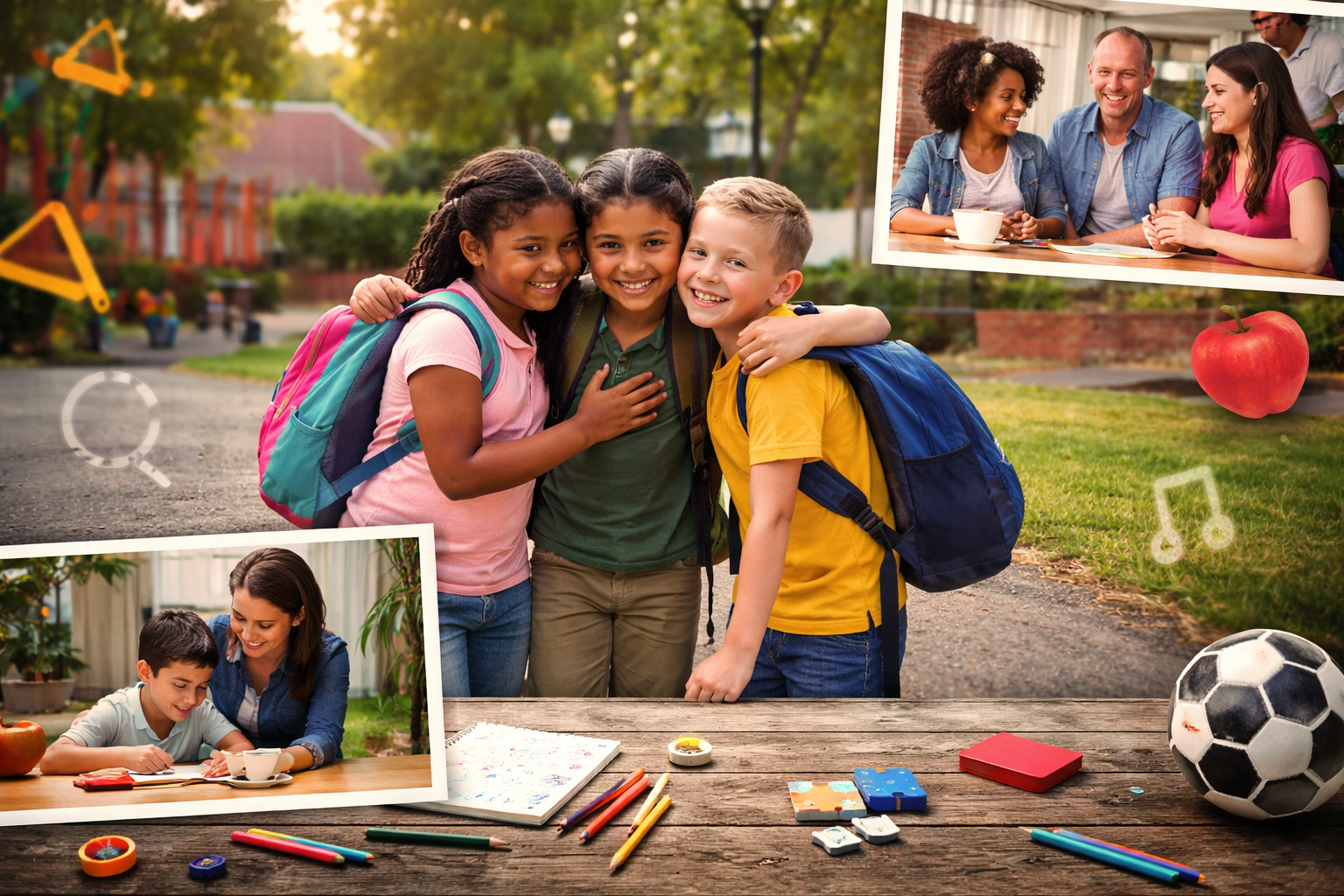
Friendships forged in the playground and confidence built in the classroom are proving just as valuable as academic results, according to parents who say school plays a crucial role in shaping their children’s lives beyond lessons.
New research suggests that a strong majority of parents in Plymouth believe school helps their children grow socially and emotionally, with 78% saying it boosts confidence and 80% crediting it with developing important social skills.
The findings, from the Department for Education, highlight the wider benefits of school life, with many parents pointing to the lasting impact of friendships formed during school years. Nine in 10 (90%) said their child’s friendships extend beyond the classroom, helping to strengthen both confidence and a sense of belonging.
Parents identified the top five life lessons children gain at school as making friends (61%), confidence (54%), problem solving (51%), teamwork (34%) and self-motivation (34%).
The research also suggests these skills carry into home life, with eight in 10 (80%) parents saying their child’s social development at school has had a positive effect on behaviour at home.
More than half (51%) of parents said their own school years were the best of their lives, while 56% remain in touch with friends they made at school.
Gemma, a parent from Plymouth, said: “I think any parent worries about how their child will enjoy school. What put me at ease was building a rapport with the school, being consistent in my communication, and letting them know mine and my child’s worries and concerns.
“It really helped to put us both at ease knowing my child was being supported.
“From my experience, I have found that school is about a lot more than just classes, it is where children gain important social skills.
“They learn how to make friends, sort out the little fallouts, and feel like they are part of something.”
Georgina Reid, headteacher of Marine Academy Primary, said: “Every day I see examples of school being about far more than academic achievement.
“For pupils, it is an opportunity to build a community, learn how to build friendships, navigate disagreements, and feel a sense of belonging.
“Through daily interactions with peers and staff, they develop empathy, social skills, and confidence.
“These skills are just as important as what is learned in the classroom and stay with children long after they leave school.”
The Department for Education said school absence can limit a child’s opportunity to develop these skills.
A high-performing school in Plymouth has now been selected to run attendance and behaviour hubs, which aim to support schools in improving attendance and behaviour through shared best practice.
The initiative will work with schools across the area to identify absence early, build strong routines and create supportive environments for pupils and families.
Further information about the programme is available via the Department for Education’s guidance on school reforms.