

Home Blog Page 46

Work planned to get underway on £9 million bridge

Work is due to start next month on a £9 million scheme to replace a bridge near Cullompton.

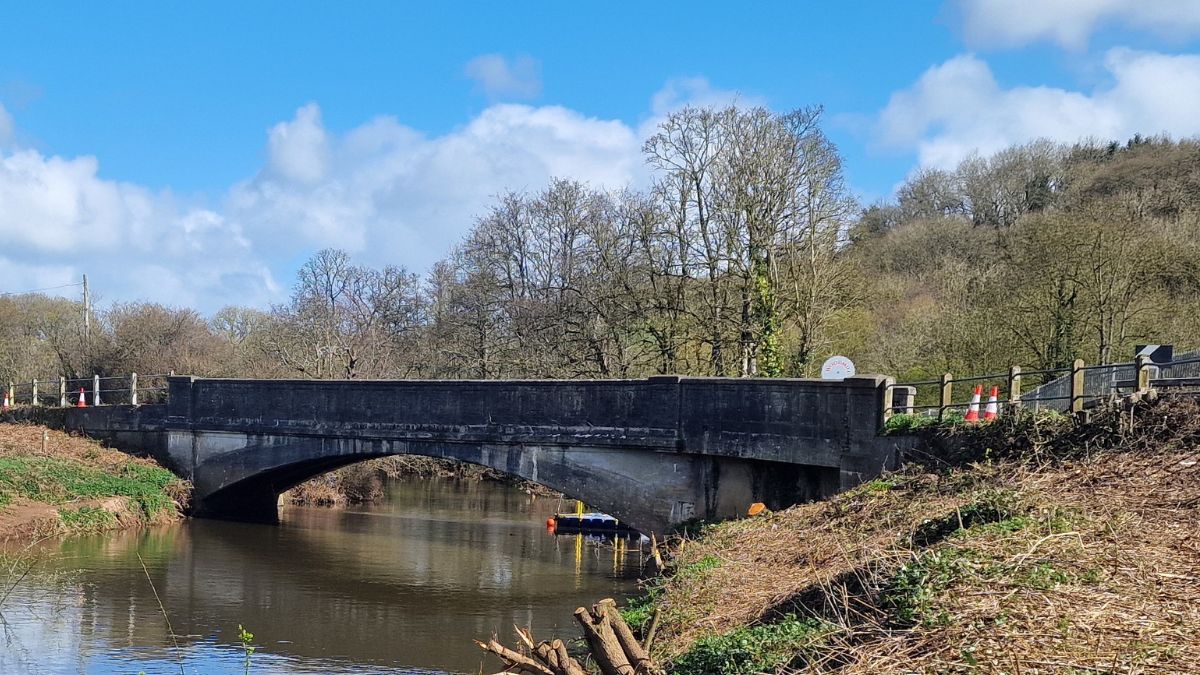
The Baulk Bridge carries the B3181 over the River Culm just south of Cullompton. The structure, which was built in 1924, no longer meets modern standards and needs to be replaced after investigations found it’s suffering from steel corrosion and deteriorating concrete.

To ensure the existing bridge remains open for as long as possible and to minimise disruption during construction, the new 30-metre span bridge will be located slightly downstream and the road will be re-aligned.

Our scheme, which is scheduled to get underway on Monday 11 May, will be carried out using temporary traffic lights for the majority of the time. A temporary 30mph speed limit will also be in place for an 1,100 metre section of the road north of the Nags Head railway bridge.

Councillor Dan Thomas, Cabinet Member for Highways, said: “It’s vital this link is upgraded as it’s a busy non-motorway link between Exeter and Cullompton used by around 5,000 vehicles every day, as well as being an important diversion route for the M5 motorway. Every effort is being made to minimise disruption, and as the new bridge will be on a slightly re-aligned route it’s reducing the amount of time that the road will need to be closed.”

Councillor James Buczkowski, County Councillor for Cullompton and Bradninch, said: “This is a significant investment in a key route into Cullompton, and it’s essential that we get this work done to ensure the long-term safety and resilience of the network. The B3181 is not just a local road, it carries thousands of vehicles every day, supports local businesses, and acts as an important alternative route when the M5 is under pressure.

“I’m particularly pleased to see the level of collaboration between highways officers and our local councils, with careful thought given to how and when the work is carried out. That includes the timing of road closures and the approach to traffic management, all aimed at keeping disruption to a minimum wherever possible. There will inevitably be some disruption, as with any major infrastructure project, but this scheme has clearly been planned with that in mind. By taking the time to get this right now, we are avoiding greater disruption and risk in the future, and that is the responsible approach for our communities.”

Two closure periods are scheduled for the B3181 from Exeter Road to Clan Farm – initially during the first few weeks of the scheme for nine days from Saturday 23 May to Sunday 31 May 2026 to establish site access, install traffic management and carry out earthwork.

Towards the later stages of the scheme, the B3181 will be closed for up to 23 days from Saturday 24 July 2027 to Sunday 15 August 2027 to complete construction and surfacing of the road, divert utility services and install lines, signs and safety barriers.

During these closures a signed diversion, which has to use similar standard roads, will be in place via the B3181 Exeter Road, A373 Honiton Road, A375 Exeter Road, A30, A3015, B3212, B3181 and vice versa.

Work will be carried out by Wills Bros on our behalf.
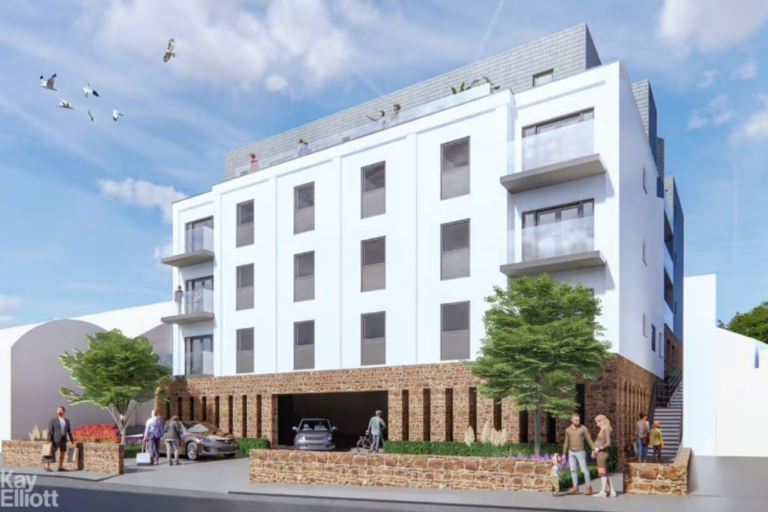
Controversial Brixham flats plan set for crunch planning decision

A major redevelopment plan that could reshape a prominent town centre site is edging closer to a decision, with councillors set to weigh up a scheme that has already sparked strong local opposition.

Plans have been submitted to redevelop the former Jewson site at Torbay Trading Estate, New Road, replacing the existing commercial building with a four to five storey block of flats.

The proposal, submitted by McCarthy Contracting & Development Ltd, would see the demolition of the current structure and the construction of 23 two-bedroom flats, alongside parking, access and landscaping works.

Planning officers have recommended the scheme for approval, subject to conditions and a legal agreement, with a final decision expected to be made by Torbay Council’s planning committee.

The application was validated on Thursday, January 15, with a decision originally due by Thursday, April 16, before being extended to Friday, May 1.

The development would create a residential building reaching up to five storeys at its highest point, with 23 flats and 12 parking spaces.

The site currently houses a large industrial unit used as a car garage and is described as being in a relatively poor condition, having been altered over time from its original art deco design.

The scheme has attracted dozens of objections from residents, many focused on the height and scale of the proposed building.

Susan Furminger said the five-storey design would be “not in keeping with the local area” and described it as “overbearing” and an “overdevelopment”, adding it would lead to loss of light and privacy for neighbouring homes.

She also raised concerns about parking and traffic, saying additional vehicles would “compound parking problems” on nearby roads and increase risks for pedestrians on New Road.

Similar concerns were echoed by Michael Furminger, who said the building would be “too high, overbearing and out of character” and warned it could negatively impact views across the town, including towards All Saints Church.

Joan Arr said the extra storey compared to previously approved plans would “dominate nearby properties” and result in overshadowing and reduced privacy.

Jason Hill also objected, stating the development would “not fit with a picturesque fishing village” and could increase traffic, noise and pollution in the area.

Craig Flack described the scheme as an “unsightly monstrosity” that would tower over neighbouring homes, while Phillipa Sclater said the additional height could lead to a loss of light and privacy and potentially affect property values.

Several residents, including Joanne Sampson, raised concerns about balconies and windows overlooking nearby homes, while others questioned whether 12 parking spaces would be sufficient for 23 flats.

Wayne Saunders, who lives next to the site, said he was concerned about the impact on a boundary wall, potential noise, overlooking from balconies and increased pressure on drainage systems.

Concerns were also raised about road safety and pedestrian access along New Road.

Paul Barnett, in a neutral response, suggested that if approved, the development should include new pedestrian crossings and traffic calming measures, funded by the developer.

He said crossing the road had become “dangerous” due to increased traffic and limited crossing points.

Some representations also questioned access arrangements via the neighbouring industrial estate and whether agreements were in place, as well as potential legal issues such as party wall agreements.

Planning officers note the site is allocated for housing in the local neighbourhood plan, although specifically for around 20 affordable homes rather than open market units.

Despite this, an independent viability assessment concluded the scheme cannot provide affordable housing due to financial constraints.

Council planners have highlighted a wider issue, pointing to a “very pressing need” for housing in Brixham and limited opportunities for expansion beyond constrained land.

Technical consultees have raised issues including flood risk, drainage and highway access, though no objections have been made subject to conditions.

A final decision will now rest with councillors at an upcoming planning committee meeting on April 27.

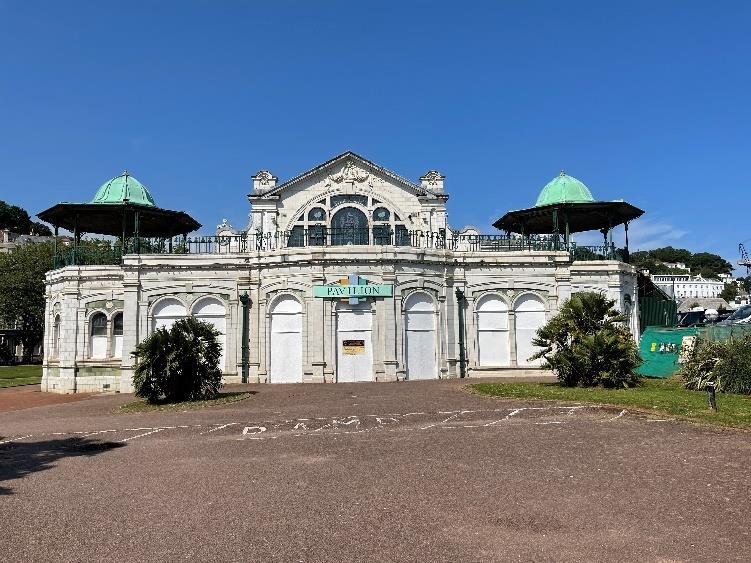
First glimpse inside Torquay Pavilion in over a decade revealed

1

We are submitting a Listed Building Consent (LBC) application to support a programme of community outreach and engagement as part of the ongoing work to restore Torquay Pavilion.

This marks the latest workstream led by the Council since taking full ownership of the building and progressing plans for its long‑term restoration.

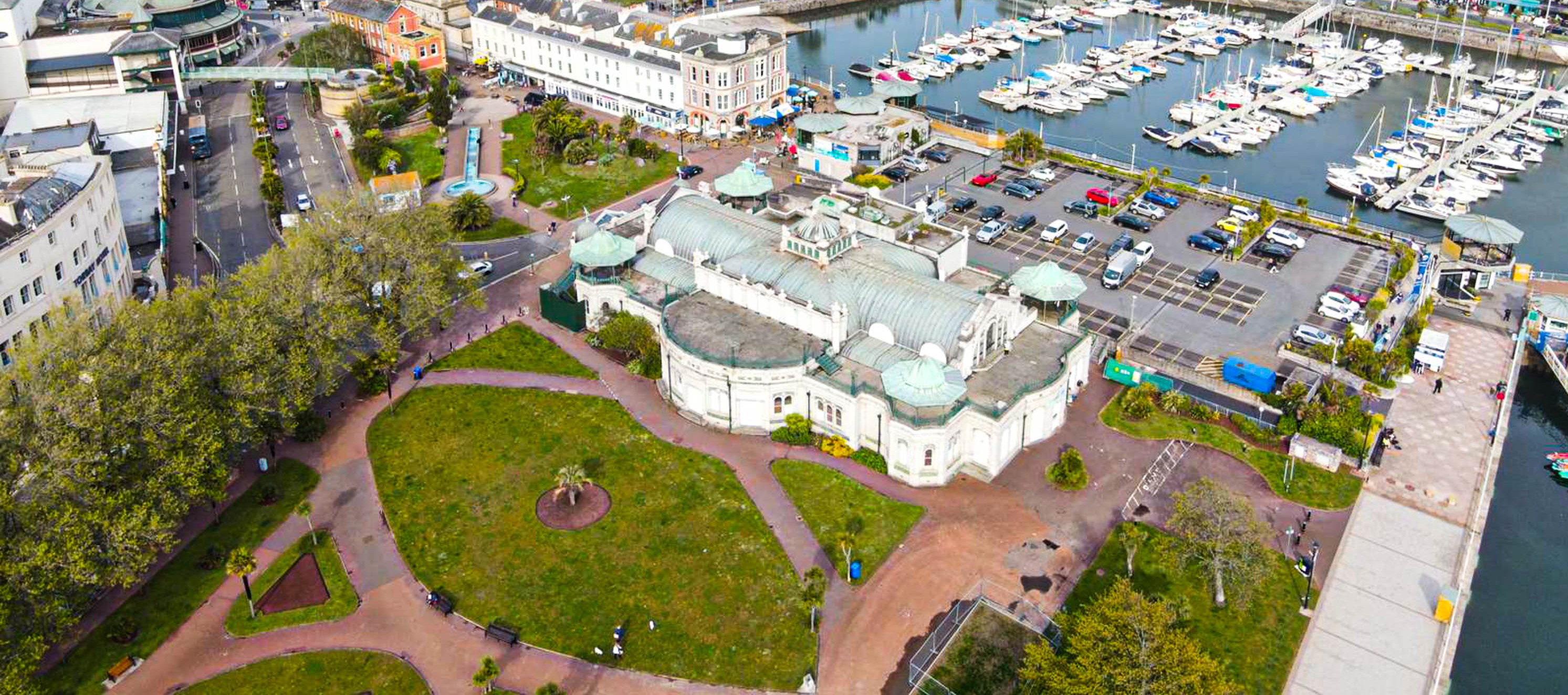
The application seeks approval for two site cabins to be positioned within the existing site compound. These cabins are proposed to open to the public over the summer, offering a space to showcase elements of the Pavilion’s rich social history. The Listed Building Consent application also includes plans for a new viewing area on the eastern elevation (car park side), giving people the chance to look inside the building for the first time in more than a decade. Alongside this, there will be opportunities for the community to share memories, stories, artwork and other contributions as part of a wider effort to help local people reconnect with the Pavilion. Further details on the outreach and engagement programme will be shared next month.

© Dr Duncan Philips

It is important to note that this Listed Building Consent application does not seek approval to begin restoration works. We are awaiting the outcome of the Options Appraisal, which will identify a preferred end use for the Pavilion—one that reflects and celebrates Torbay’s culture and heritage. The findings of this work will be shared in the summer.

Restoration design will progress following the Options Appraisal, ensuring the building and its internal fit‑out are fully aligned with the requirements of the preferred end use.

In parallel, we continue to explore funding opportunities for full restoration in partnership with a range of organisations. Once a preferred end use is confirmed, the council expects to advance these discussions further and move towards securing a positive long‑term outcome for the Pavilion.

Cllr Chris Lewis, Deputy Leader and Cabinet Member for Place Development and Economic Growth, said; “Reaching this stage is the result of a huge amount of hard work behind the scenes, and I want to recognise the dedication of our council officers and specialist contractors who have brought us to this point. Their expertise has been vital in helping us understand the true condition of the Pavilion and in shaping the careful, responsible steps we are now taking. This Listed Building Consent application is another important milestone as we work towards a future for the Pavilion that honours its heritage and reconnects it with the community”.

Timeline of restoration activity

  • October 2024 – Torbay Council regains full control of Torquay Pavilion
  • January – December 2025 – Building investigative works undertaken
  • January 2026 – Public consultation launched to shape future use
  • January – May 2026 – Structural and architectural information collated
  • May – November 2026 – Restorative design development and works specification
  • June 2026 – Options Appraisal findings published
  • June 2026 – Community outreach programme begins
  • December 2026 – February 2027 – Market testing phase

The timeline presented is indicative and may be refined as the project progresses.

Fury over flare plan as neighbours say noise issues still unresolved

A fresh planning proposal has reignited concerns from residents already grappling with noise complaints, as a bid to install new equipment at an established green energy site comes under scrutiny.

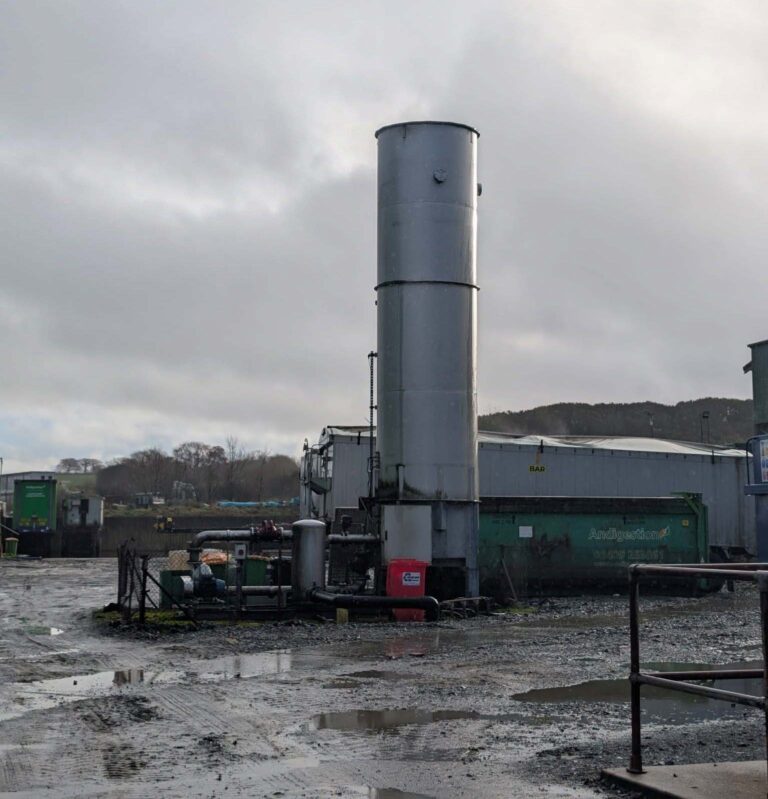
Plans have been submitted to Devon County Council for the installation of a replacement flare unit at an existing anaerobic digestion facility near Holsworthy.

The application, lodged by Severn Trent Green Power Limited, proposes upgrading ageing infrastructure used to safely burn off excess biogas generated on site. According to planning documents, the current flare has been in operation for almost 20 years and is described as increasingly unreliable.

The new unit would be connected to Tank 5 within the facility and designed to operate at the same time as existing combined heat and power engines, improving the site’s ability to manage surplus gas safely.

Developers say the flare would have a capacity of 1,200 cubic metres per hour of biogas and stand just over 11 metres tall. It would be constructed mainly from stainless steel and include an acoustic shroud intended to reduce noise from associated equipment.

Planning documents state the proposal would “not give rise to any significant visual, noise or other environmental effects” and would instead improve safety and operational efficiency at the site.

However, objections have already been raised by local residents, who claim existing noise issues at the plant remain unresolved.

One submission to the council states: “The site already is above permitted dB during the day and at night… Despite the comments in the application regarding promise of noise control they are not doing so now.”

The objector adds that mitigation measures introduced in July 2025, including acoustic hoods, “did not solve the noise problems”, with further surveys carried out in September 2025 but no resolution yet delivered.

They question whether further permissions should be granted before existing issues are addressed, saying: “Surely the current problems with noise control must be resolved… before more permits are given.”

The anaerobic digestion facility, located around 950 metres north of Holsworthy, processes food and green waste to generate renewable energy. It has been in operation since planning permission was first granted in 1999, with subsequent approvals allowing for expansions and modifications over the years.

According to the applicant, the flare is a standard safety feature at such sites, used during maintenance periods or when gas cannot be processed through energy systems. It converts methane into carbon dioxide, helping to reduce greenhouse gas impact and prevent uncontrolled releases.

The application will now be considered by Devon County Council, which will assess both the technical merits of the proposal and concerns raised by nearby residents before making a decision.

Rural mast plan sparks debate over signal boost and countryside views

A plan to install a towering telecoms mast in the countryside could transform mobile coverage — but not without raising questions over its impact on the landscape.

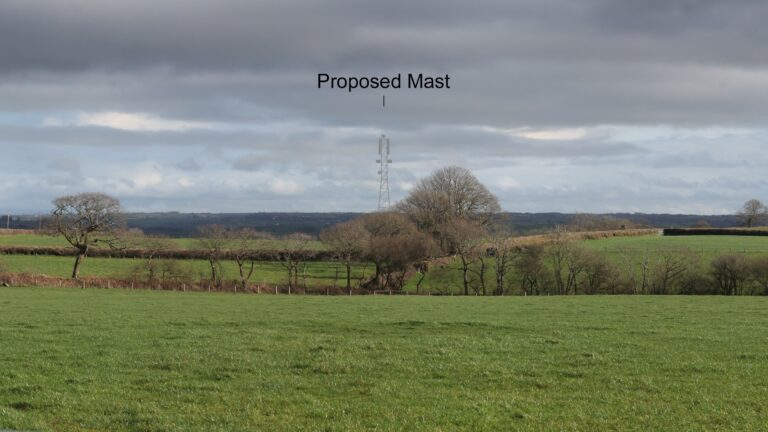
Cornerstone Telecommunications has submitted a prior approval notification for a 22.5 metre lattice tower on land at Kingsford Farm, near Peters Marland, Devon. The proposal falls under permitted development rules set out in Part 16 of the General Permitted Development Order.

The development would include three antennas, one 0.6 metre dish and associated equipment. It would also feature two equipment cabinets, a meter cabinet and additional infrastructure contained within a 1.1 metre-high stockproof fenced compound.

Supporting documents state the mast is designed to improve both coverage and network capacity in the surrounding area. Mobile base stations are required where people live and work to maintain reliable digital services and avoid so-called “blackspots” where signal is poor or unavailable.

The applicant explains that individual base stations can only handle a limited number of calls and data connections. When demand exceeds this capacity, users may experience slower speeds and reduced call quality.

In such cases, operators may upgrade existing infrastructure or build new sites to meet demand, particularly in areas where connectivity remains limited.

The proposed mast would be a grey lattice structure, a design choice intended to reduce its visual impact by allowing some visibility through the framework and blending more easily with the sky.

Planning documents also note that the site has been selected to limit disruption to existing landscape features, with access taken from a nearby track and no requirement for new roads.

Technical information submitted alongside the application explains that terrain, buildings and vegetation can weaken mobile signals, meaning additional or taller structures are sometimes required to maintain reliable coverage.

Dish antennas, such as the one proposed, are typically used to link base stations together and operate using low-powered signals in a focused beam. Guidance states that exposure levels from such equipment are expected to remain well within international safety limits.

Northam plan opens for feedback as residents invited to comment

The Northam Neighbourhood Plan proposal, as submitted to Torridge District Council in accordance with Regulation 15 of the Neighbourhood Planning (General) Regulations 2012 (as amended), establishes a vision for the evolution and long-term sustainability of Northam and provides policies and proposals to guide development within the designated area over the period up to 2031.

On 25 March 2026, sections 98 and 99 of the Levelling-up and Regeneration Act 2023 came into effect, and these amended the Planning and Compulsory Purchase Act 2004 and the Town and County Planning Act 1990 in respect of the legal compliance and the Basic Conditions requirements for neighbourhood plans.

In accordance with Regulation 16 of the Neighbourhood Planning (General) Regulations 2012 (as amended), representations are invited from interested parties during the period from Thursday 16 April until 17:00 on Friday 1 May 2026 on specific additional information only; whether the Northam Neighbourhood Plan proposal complies with two new legal compliance requirements and one new Basic Condition requirement. Late representations will not be accepted.

Details about the new requirements can be inspected throughout the period set out above:

  • online via https://www.torridge.gov.uk/northamnp
  • at the following locations during normal opening hours:
    • Torridge District Council, Riverbank House, Bideford, EX39 2QG
    • Northam Library, Fore Street, Northam, EX39 1AW

Representations should be made in writing and may be submitted during the consultation period:

Hospice boosted by £17,000 donation from crematorium recycling scheme

North Devon Hospice is the latest charity to benefit from North Devon Crematorium’s role in a national metal recycling scheme.

A cheque for £17,000 was presented to the hospice at the crematorium on Thursday, 16 April. The donation has been generated from the proceeds of the recycling scheme run by the Institute of Cemetery and Crematorium Management (ICMM), which enables metals from cremated remains to be safely recycled.

The money will go towards North Devon Hospice’s ongoing work in providing expert 24-hour care to those facing life-limiting illnesses, both at the hospice in Barnstaple and in patients’ homes, and giving emotional support for their families.

Councillor Helen Walker, Chair of the North Devon Crematorium Joint Committee, said: “We are very proud to support North Devon Hospice, and we are delighted this contribution will allow it to continue their outstanding work providing vital care and support to local people and their families.

“The ICMM initiative allows us to generate meaningful donations from the cremation process, always with the consent of families, and it is so pleasing that we are able to reinvest that money back into our local community.”

Claire Paine, Business Relationship Manager at North Devon Hospice, said:  “We are so incredibly thankful for this generous donation from North Devon Crematorium. Moments like this remind us just how fortunate we are to be part of such a compassionate and tight-knit community. The people of North Devon go above and beyond, and that support means the world, not just to our team, but to every patient and family we care for.

“This donation will make a real, tangible difference. It will help us continue to provide the vital end-of-life care and emotional support that so many families across North Devon rely on during the most difficult days of their lives. We couldn’t do what we do without partnerships like this, and we are incredibly grateful.”

For more information about North Devon Hospice, head to their website, www.northdevonhospice.org.uk/

The metal recycling scheme is run by the ICCM and is only carried out with the consent of the bereaved.

Court action after years of illegal land use ends in jail warning

Two people from Snapper have been handed suspended prison sentences for continued failure to comply with a planning enforcement notice.

Garry Braund and Tina Thorne pleaded guilty to four breaches of failing to comply with an enforcement notice at a hearing at Exeter County Court on Tuesday, 24 March.

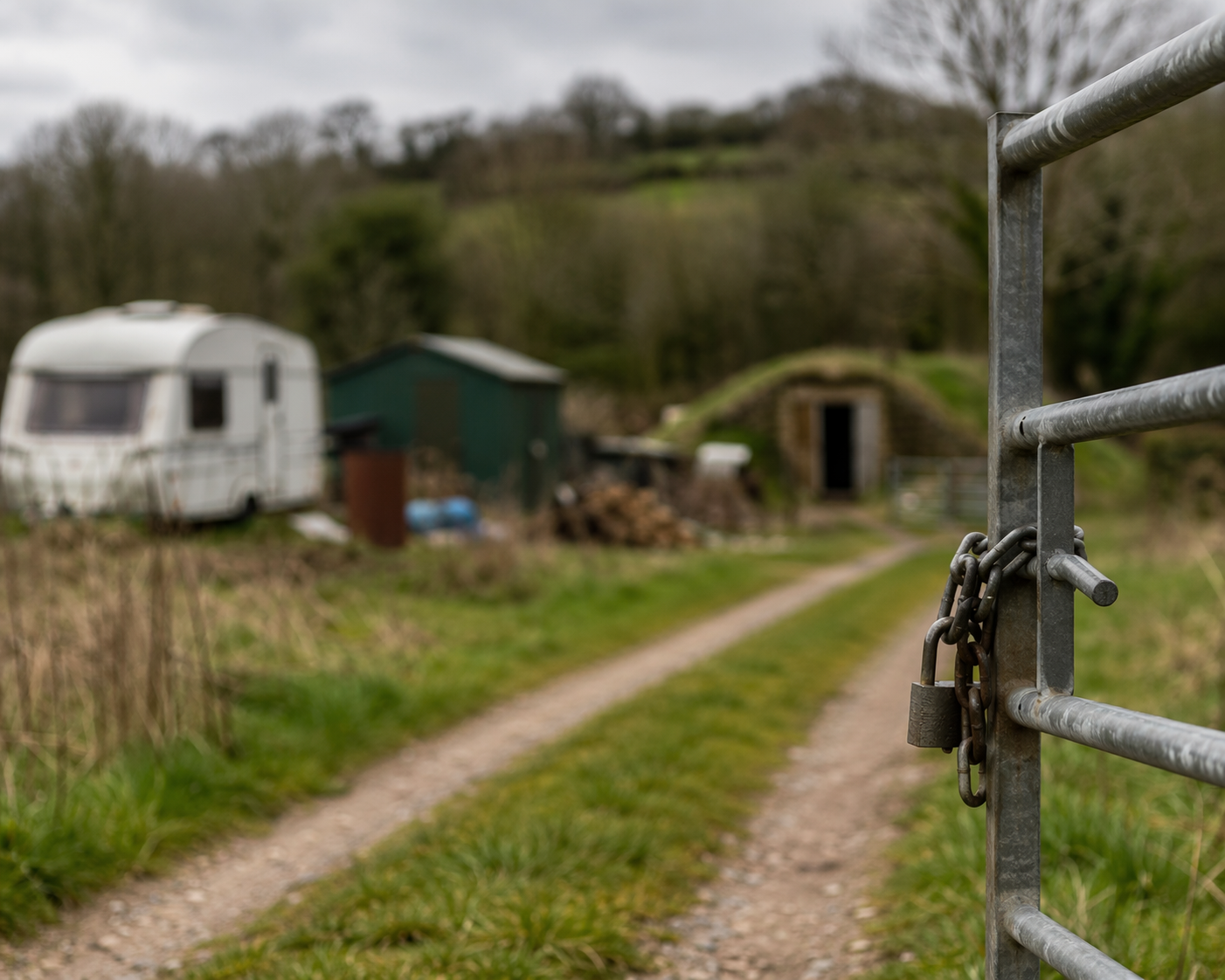
The pair were initially served a planning enforcement notice in December 2016 when it was found land at Honey Hill was being used as a residence with caravans and sheds, and a vehicle access had been constructed which entered the road on a blind bend.  

Despite repeated warnings, opportunities to comply, and previous court involvement, the breaches persisted for approximately nine years. Over that time the unauthorised development intensified, including the expansion of residential use, additional structures, and the creation of an underground dwelling.

It was found that Braund and Thorne’s actions amounted to persistent and deliberate non-compliance. They were sentenced to 42 days in prison, suspended for 12 months, on the condition that they do not resume occupation at the land and do not take further steps to reverse compliance with the enforcement notice.

They were also ordered to pay £8,088 in costs for three recent hearings. In total, the council has secured cumulative costs of more than £30,000, which are now being pursued through charging orders against the land.

Councillor Malcolm Prowse, Lead Member for Regeneration, Economic Development and Planning at North Devon Council, said: “Planning regulations are in place to ensure our natural environment is protected for the benefit of all our residents, and this court action demonstrates our commitment to upholding them.

“I would like to thank the officers who have spent so much time ensuring this protracted case has reached its necessary conclusion. It shows we will persist in taking enforcement action, even where cases are complex or involve difficult parties, to protect our communities and uphold the planning system.”

More information on planning compliance and how to report a concern can be found on the council’s website.

Get snapping as North Devon launches exciting photo competition

Local photographers are being invited to unleash their creativity by submitting their favourite photos of North Devon.

North Devon Council is launching a new competition for photography enthusiasts, with the winning entries to be displayed in the council’s Town Centre Hub in Barnstaple’s Green Lanes Shopping Centre

Photos must be taken within the North Devon district and may feature landscapes, wildlife, street scenes or other local subjects. Images must not include people who can be identified.

The winning entries will be professionally printed and displayed throughout the Town Centre Hub, including large-format prints in the main public area and a feature panoramic image in the largest meeting room.

The competition is open to all ages. Each participant may submit three images before entries close on Friday 29 May 2026.

Councillor David Clayton, Leader of North Devon Council, said: “North Devon boasts many natural wonders and is also home to a large number of talented photographers. The competition provides a fantastic opportunity for your work to be exhibited in the Town Centre Hub, where it will be on display for all to see. I wish everyone the best of luck, so get creative and get snapping!”

Whether you’re a professional or an enthusiastic smartphone photographer, the contest is open to all! Entrants can send their submissions as JPEGs or PNGs by visiting our photocomp 2026 webpage and filling in the form. The terms and conditions are available on the page.

The Town Centre Hub, located in Green Lanes Shopping Centre, opened in June 2025 and has quickly become popular. The hub provides a fantastic face to face service and also offers bookable meeting rooms of various sizes. For more information, please visit our town centre hub webpage.

Torquay tipped as dark horse in race for UK Town of Culture 2028

0

A seaside contender has entered the cultural spotlight, with one Devon town quietly tipped as a potential challenger in the race to be crowned UK Town of Culture 2028.

Experts have named Torquay among the outsiders in early predictions for the title, as betting markets begin to take shape ahead of the competition.

Figures released by OLBG show Reading as the clear early favourite, with odds of 4/6 giving the Berkshire town an implied probability of 60 per cent. The early frontrunner is said to benefit from strong infrastructure and a well-established bid profile.

Paisley and Hebden Bridge are among the closest challengers, priced at 6/4 and 2/1 respectively. Both locations are noted for distinct cultural identities, with Paisley linked to heritage-led regeneration and Hebden Bridge recognised as an independent arts hub.

Further down the list, several coastal and tourist destinations are seen as potential beneficiaries of the title. Margate is priced at 5/1, followed by Hastings at 7/1, Whitby at 8/1 and Scarborough at 9/1.

Torquay appears at 11/1, placing it among a group of longer-odds contenders that also includes Barrow-in-Furness and Middlesbrough.

Jake Ashton, current affairs editor at OLBG.com, said: “These markets often favour towns with a strong regeneration story. Reading leads on infrastructure, but places like Margate or Hastings could shorten if their bids gain momentum.”

The UK Town of Culture award is expected to bring increased tourism and investment to the winning location, with bidding interest continuing to build as more towns position themselves in the running.

Full odds and predictions are available at www.olbg.com/news/uk-city-culture-2028-odds-reading-odds-market-takes-shape.