Home Blog Page 76

Future engineers gain trackside insight during Network Rail placement

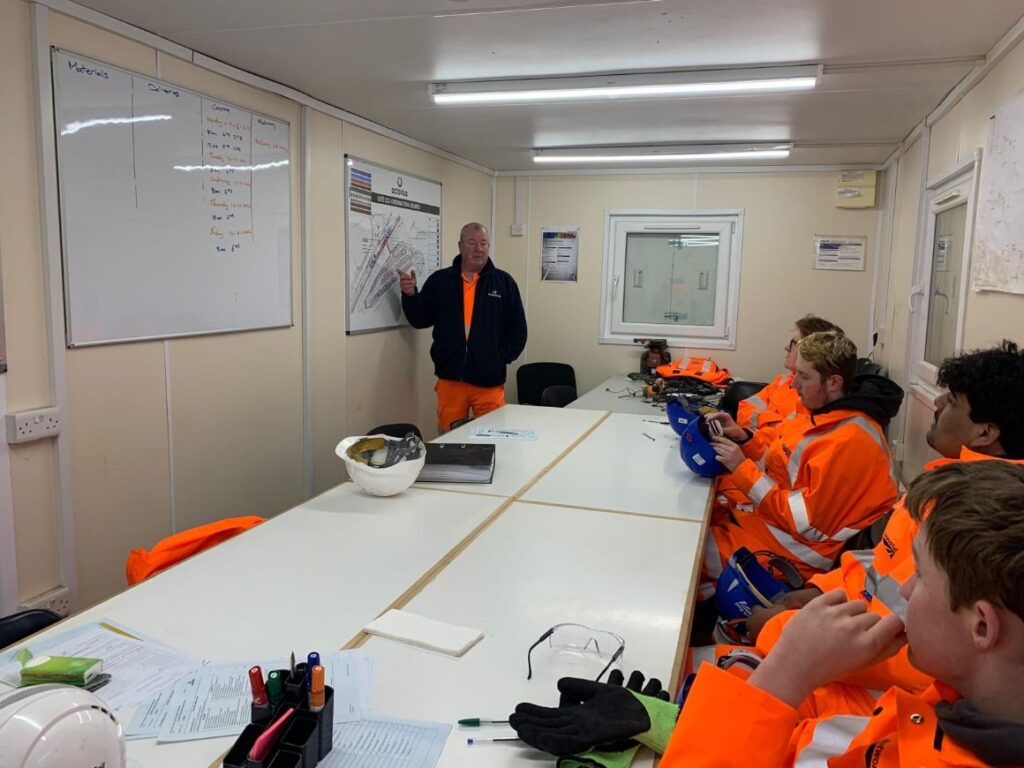
A group of aspiring engineers swapped the classroom for the railway as they stepped onto live infrastructure projects to see how Britain’s rail network is built, maintained and protected.

Four year 12 students from South Devon UTC in Newton Abbot, part of Education South West, completed a four-day work placement with Network Rail, giving them first-hand experience of careers across the railway and construction industries.

Delivered across two weeks, the placement combined site visits, practical experiences and talks from industry professionals. The programme was designed to give students a clearer understanding of how major infrastructure projects operate and the variety of roles involved in delivering them.

During the first visit, students travelled to Bristol Temple Meads station where they were introduced to several ongoing and completed projects across the historic site. The visit provided an overview of how large-scale infrastructure improvements are planned, managed and delivered.

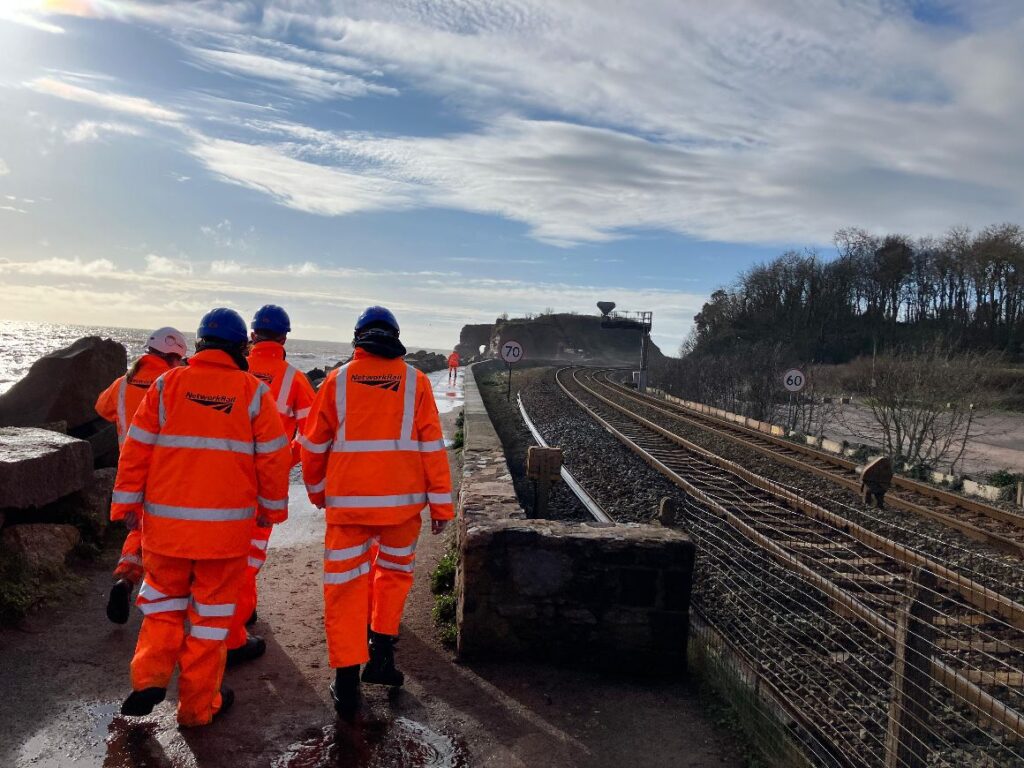
The following day began at the Dawlish sea wall, where students learned about coastal defence engineering and the challenges of protecting critical rail links from extreme weather.

They later visited Exeter St David’s depot with Great Western Railway, where they explored train simulators, maintenance facilities and depot operations to understand how rolling stock is serviced and managed.

The final two days of the placement involved visits to live project sites across Devon and Cornwall. Students observed bridge renewal works, new station developments and building refurbishments while working alongside construction managers and project teams to see how projects are delivered safely and efficiently.

The placement forms part of South Devon UTC’s wider approach to employer engagement, allowing students to apply classroom learning to real-world projects and gain insight into potential career pathways.

Claire Plumb, headteacher at South Devon UTC, said: “At South Devon UTC, we are passionate about ensuring our students experience education beyond the classroom.

“This placement with Network Rail gave our students an exceptional opportunity to see the scale, responsibility and teamwork involved in delivering major infrastructure projects.

“Experiences like this allow students to apply their technical knowledge in real settings, build professional confidence, and begin to see themselves as future engineers.

“We are incredibly proud of how our students represented the UTC and grateful to Network Rail and GWR for providing such an inspiring experience.”

Daniel Parkes, principal portfolio manager within Network Rail’s integrated infrastructure team, said: “All four students were an absolute pleasure and engaged throughout.

“We had really positive feedback from the rest of the team who supported the visits.

“At least two of the students seem set on being part of the railway industry going forward in their careers.”

Devon school trust shortlisted twice for national MAT Excellence Awards

0

A Devon academy trust has been recognised on the national stage after securing two shortlist nominations at a major education awards ceremony celebrating excellence across multi-academy trusts.

Education South West, which runs eight primary schools, four secondary schools, one all-through school and a University Technical College across Devon, has been shortlisted in two categories at the MAT Excellence Awards organised by Optimus Education.

The trust is a finalist for Chief Financial Officer of the Year, with Stuart White recognised for his leadership across finance and operations. Education South West has also been shortlisted for the Staff Development Award for trusts with 13 or more schools.

White, the trust’s chief financial officer and chief operating officer, has overseen the organisation’s finances while helping to strengthen wider operational systems.

Under his leadership, Education South West has recorded clean audits each year. His work has also included introducing in-house data systems and developing HR infrastructure across the trust.

The staff development nomination highlights the trust’s approach to professional development and wellbeing.

Education South West offers personalised development pathways, coaching and professional networks designed to support staff at different stages of their careers. Its Grow Your Own leadership programmes and flexible continuing professional development routes have helped create internal progression opportunities.

Eleven of the trust’s 14 headteachers have been promoted from within the organisation.

The trust said its wellbeing pledge and shared teaching principles aim to support collaboration, consistency and staff support across its schools. It added that rising staff satisfaction and internal promotions reflect the impact of the approach.

The MAT Excellence Awards recognise academy trusts across the country for their impact on pupils, staff and communities. Winners will be announced at a ceremony in London on Wednesday, June 18.

Matthew Shanks, chief executive officer of Education South West, said:

“We are absolutely delighted to see Stuart and the wider Education South West team recognised at a national level. These shortlists reflect the strength of our collective effort, from robust financial stewardship to the deep investment we make in developing and supporting our people.”

Matthew added: “We believe that when you grow great staff, you transform life chances for children. This recognition belongs to every colleague across our trust who works tirelessly to serve our communities each day.”

Mid Devon council tax set to rise as new budget approved

At a meeting of Mid Devon District Council’s Full Council, Members set the budget for the financial year 2026/27 including the District Precept for Council Tax.

Next financial year the average Band D property will pay £246.29 to Mid Devon District Council, an increase of 2.99%, which is equivalent to less than 14 pence per week.

The amount of money the District Council receives is one small element of a household’s Council Tax Bill, with the other elements comprised of precepts from Devon County Council, Devon and Somerset Fire and Rescue Authority, Devon and Cornwall Police and Crime Commissioner and the household’s local Town or Parish Council if applicable.

This means an average Band D household’s total Council Tax Bill will rise from £2,521.17 in 2025/26 to £2,656.41, an increase of 5.36%.

Leader of the Council, Luke Taylor, said: “Once again setting a balanced budget has been a difficult task, made even more challenging by the uncertainty about government funding until very late in the budget setting process. Along with many district councils, the shift in the governments focus away from rural funding has led to another reduction in funding. Despite these challenges once again we have a balanced budget that maintains our high-quality service levels and enables us to deliver our priorities of providing more affordable housing, reducing our impact on the climate and growing our local economy.”

The Council has a duty to provide statutory services such as waste collection, recycling and street cleansing, homelessness provision and planning. It is also committed to providing non statutory services for our residents which include investment in leisure, the provision of parks and open spaces and community development grants.

The Council Tax collected is used, in part, to fund these services and details of the allocated 2026/27 budget are detailed in the table below.

 Mid Devon2025/26 £m2026/27 £mMovement
Total gross budget61.57662.8652.1%
Housing30.16930.8462.2%
Transport0.9220.9523.3%
Environment10.08910.1610.7%
Planning5.0935.2312.7%
Recreation and tourism7.0116.966-0.6%
Other5.5905.402-3.4%
Parish precepts*2.7023.30722.4%

*The percentage increase reflects the overall increase in the quantum of the Precept requested by Parishes and does not reflect the movement in individual Parish Band D charges.

A number of these gross service costs are also paid, in part, from fee income in areas such as Leisure, Waste, Car Parking and Planning. The net cost of running the Council is funded by the below income streams:

 Income Stream2025/26 £m2026/27 £mMovement
Total Income Budget61.57662.8652.1%
Housing rents/charges29.44629.5100.2%
Government funding*1.5935.180225.2%
Business rates*5.0612.304-54.5%
Council tax**7.3497.6794.5%
Other18.12718.1920.4%

*The significant swing between Government Grants and Business Rates is largely due to the changes in how the Council is funded by Government. The c£3m historic growth in Business Rates income has been built into the grant funding with Business Rates income being reset.

**The increase in Council Tax also reflects the movement in collection rate and growth in the taxbase, along with the increase in the Band D charge.

Full details about Council Tax charges for 2026/27 as well as previous years can be found here.

Third generation of family takes reins of iconic Tiverton canal barge

Devon County Council has welcomed the Tiverton Canal Company’s announcement that a third generation of the Brind family will be taking on the running of the living heritage attraction based at the Grand Western Canal.

The owners of the company, Philip and Jacquie Brind, are handing over the reins to their daughter Becky and her husband David Poxon, who she met when he was working as a horseman with the barge around 20 years ago.

The attraction was launched in 1974 and then bought by Pat and Ray Brind in 1985. Their son Philip and his wife Jacquie started on the barge in 1986, before buying the business in 2006.

Philip Brind said: “Jacq and I’ve had a really wonderful time in our 40 odd years, and met some truly wonderful people! We’ve had the best of times, and we are very excited to announce it’s time for our daughter Becky with her husband Dave to take the business into the future.

“In our opinion, Becky and Dave make the very best choice to continue the company’s success, as they both understand the importance of keeping this very rare horse-drawn barge heritage attraction alive for future generations. We of course wish them both all the very best.

“We would like to take this final opportunity to thank everyone who has supported us over the years. Special thanks must go to Mark, Jo and Craig in the Canal Ranger Service, as they are an amazing and ‘essential team’ that keep the canal running and maintained, without which we would not be able to run our business.

“But most of all, we thank ‘you’ for visiting the canal and the horse-drawn barge, some every year! Thank you for your friendship and kind words over the years. If it wasn’t for ‘you’, there would be no horse-drawn barge in Devon.”

The Grand Western Canal Country Park is owned and managed by Devon County Council with support from Mid Devon District Council. The Tiverton Canal Co operates in the Country Park under a lease with the County Council.

Becky and Dave will begin their new season on Wednesday 1 April. They’ll be taking over at a time when the attraction has been celebrating some major achievements.

In 2024, The Tiverton Canal Co celebrated its 50th anniversary of the horse-drawn barge, as well as winning Devon’s Best Small Attraction of the Year Award in that same year. It has also won the Tripadvisor Travellers’ Choice Award three years in a row.

Councillor Jacqi Hodgson, Devon County Council Cabinet Member for Climate Change and Biodiversity, said: “The Grand Western Canal and the horse-drawn barge are synonymous with each other, so it’s fantastic news that another generation of the Brind family will be taking on the company. The horse-drawn barge is one of many reasons our award winning Canal and Country Park is such a popular destination. I’m sure the family will continue their great work with the attraction which brings the heritage of the canal alive for visitors.”

Councillor Simon Clist, Vice-Chairman of the Grand Western Canal Joint Advisory Committee and County Councillor for Willand and Uffculme, said: “I’m delighted that the third generation of the Brind family will be taking over the reins of operating the horse drawn barge on the GWC. This facility on the canal is a huge draw for tourists and a vital resource to our local economy. The experience of this method of transport is a relaxing and highly enjoyable opportunity to view the local countryside and wildlife whilst unwinding from the rigours of everyday life. I wish them every success and my best wishes.”

Councillor Neale Raleigh, County Councillor for Tiverton East, said: “I’m delighted that the Tiverton Canal Company is moving into its third generation, with Becky Brind and her husband Dave now taking on this much loved heritage attraction. The Brind family has dedicated decades to keeping the Grand Western Canal’s iconic horse drawn barge alive, and their continued commitment is wonderful to see. Becky and Dave begin their new season on 1 April, following a year of major milestones including the barge’s 50th anniversary and recent tourism awards. This handover ensures that the unique heritage of the canal remains in safe hands for future generations to enjoy.”

£2.7m plan approved to help protect Devon communities from flooding

An action plan to help safeguard communities from flooding has been approved by cabinet.

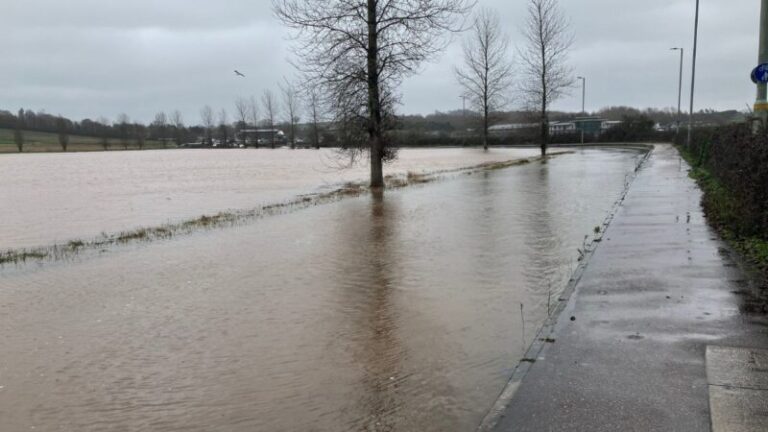
The Flood Risk Management Action Plan for 2026/27, commits more than £2.7 million to help protect communities and follows a winter in which dozens of homes across the county were flooded.

The decision comes after a year that saw 80 properties in Devon reported being flooded during severe winter storms in January and December of 2025 and more recently this year with over 180 properties following Storm Chandra

Many communities across Devon were affected which highlighted the growing impact of intense rainfall linked to climate change.

The approved Action Plan sets out how the County Council, as Devon’s Lead Local Flood Authority, will invest in flood prevention, resilience and investigations over the next financial year.

The total £2.7 million flood risk management budget for 2026/27 includes:

  • £1.1 million in revenue funding to resource flood investigations, planning advice, watercourse regulation and emergency response
  • £465,000 in capital funding for flood improvement schemes across Devon
  • More than £1.1 million in external funding, including Defra grants and Local Levy contributions

Funding will support projects and studies in Exeter, Exmouth, Totnes, Cullompton, Barnstaple, Kenton, Tavistock and Westward Ho!, alongside county‑wide work on drainage maintenance, water quality and community preparedness.

While flooding during 2025 was often scattered across multiple locations, three major storm events triggered formal flood investigations, including winter storms that caused internal flooding to homes in several parts of Devon. Similarly at the beginning of 2026 over 50 different locations have been affected and a further Flood Investigation Report will need to be produced

The Action Plan recognises that climate change is increasing both the frequency and severity of heavy rainfall, making surface water flooding an increasing risk in both towns and rural communities. It also acknowledges that some flood schemes, subject to securing funding, can take years to design and deliver, meaning the Council will continue to pursue faster, targeted measures where possible.

A central part of the plan is continued investment in Property Flood Resilience (PFR), which provides tailored protection such as flood doors and barriers for homes most at risk. Over the past year, 20 homes have already been protected, including properties in Exeter and South Pool, with further schemes progressing in rural areas.

The plan also builds on Devon’s work in Natural Flood Management, using measures such as leaky dams, wetlands and soil improvements to slow water upstream, reduce flood peaks and deliver wider environmental benefits.

Community resilience remains a key focus, with continued support for flood wardens, emergency planning and digital flood warning tools to help residents prepare for and respond to flood events.

Councillor Jacqi Hodgson, Cabinet Member for Climate Change and Biodiversity, said: “The flooding we experienced this winter showed just how vulnerable many communities already are and we face increased risk of devastating storms.

“This Action Plan is about learning from those events and investing in practical measures that reduce risk, protect homes and help communities become more resilient as our climate continues to change.

“The Action Plan builds on Devon’s Local Flood Risk Management Strategy and will remain flexible, allowing priorities to be reviewed if further flooding occurs.”

Residents can find advice, support and information about flood investigations and resilience measures on the County Council’s flood risk management webpages.

More than 100000 people in South West quit smoking last year

New figures released to mark National No Smoking Day next week (Wednesday 11 March) shows that more than 100,000 people in the South West quit smoking in 2025.

Analysis from UCL’s Smoking Toolkit Study found that, among people in the South West who reported smoking tobacco in the past year, 37.9% tried to stop, and of those, 28.3% quit successfully – equivalent to 103,000 people across the South West.

Separate YouGov polling for Action on Smoking and Health (ASH) shows the appetite to quit is already strong: 54% of smokers in the South West say they want to stop, including 24% who “REALLY want to stop”.

Smoking remains the leading cause of preventable illness and premature death in the UK, causing around 80,000 deaths each year and harming nearly every organ of the body.

The good news is that stopping smoking brings rapid and significant health benefits at any age. Evidence shows that success is much more likely when smokers have access to effective support: while many people need more than one attempt, using stop smoking services and effective quit aids can significantly increase the chances of quitting, with every supported attempt bringing smokers closer to stopping for good.

New recycling reforms set to boost recycling rates across Devon

Recycling in England is set to increase, thanks to new Simpler Recycling reforms set out by UK government.  

The reforms introduce new requirements over a period of time, with the latest set of rules helping households recycle more from home.  

Local authorities in England must start working towards collecting a core set of materials in household recycling collections, if not already. 

The core materials are metal, glass, paper & card, plastic, cartons (eg Tetrapak) and food waste. 

The reforms have been introduced to standardise recycling nationally, eliminate confusion over what can be recycled, and to increase the UK’s current recycling rate of 44.6% (2023). 

In 2024-25, Devon maintained one of the highest recycling rates in England at 54.2%, placing it second nationally. 

Most councils in Devon either already collect these core materials (and more) from households or can add these core materials to existing containers, meaning that the majority of Devon residents will see little change to their current recycling collection. 

Any additional materials will be introduced gradually over time and any changes will be communicated to residents 

DEFRA is staggering the implementation of Simpler Recycling over three key dates in total: 

From March 31st 2025 – Core recycling (metal, glass, paper & card, plastic, cartons and food waste) must be collected from business and non-domestic premises (such as schools and hospitals) employing 10 or more full time employees. 

From March 31st 2026 – Local authorities must work towards standardised core recycling collections, including weekly food waste collections for households. 

From March 31st 2027 – Plastic film such as bags, wrappers and film packaging will also be included as part of the plastic waste stream. Micro-businesses with fewer than 10 employees will have to be compliant. 

The Simpler Recycling scheme is designed to simplify the recycling system so people can recycle the same materials whether they are at home, school or work. 

The reforms standardise what items can be recycled as a core minimum but will not mandate how the recycling is collected from households.

Currently, collections are decided at a local level, with each local authority deciding which collection system, such as bins, boxes or bags, would be most suitable for that area, given the funding available, local housing type and other factors.

A national ‘one size fits all’ approach would not be suitable, since the considerations for urban environments are very different to those in rural areas. 

Councillor Jacqi Hodgson, Cabinet Member for Climate Change and Biodiversity, said:  “The Simpler Recycling reforms are a step in the right direction and should make it much easier and less confusing for people to recycle at home, school and work. Devon residents already do a fantastic job at recycling, but any measures that make recycling easier is a change for the better. Hopefully we will see recycling rates increase in Devon and nationally as a result.”

For more information about recycling in Devon, visit www.recycledevon.org.  Also go to: Simpler recycling: household recycling in England – GOV.UK

Gang jailed after flooding North Devon with millions of pounds of drugs

Six people have now been sentenced to a total of nearly 40 years in prison for flooding North Devon with Class A drugs worth millions of pounds.

The investigation named Operation Haku involved an organised crime group with members in North Devon, West Yorkshire and Merseyside.

The gang utilised couriers who travelled to Liverpool to pick up cocaine and transported it to Devon where it would be distributed to street sellers for onward sale.

A total of 17 journeys were identified and it is estimated drugs worth as much as £4million had been transported to the South West.

Among those arrested was a Devon-based courier who was caught while returning from Liverpool and found in possession of 3kg of Class A drugs with a street value of £240,000.

The defendants

• Organiser – Christopher Harper, 46, of Goole, Yorkshire.

• Organiser – Stephen Reid, 52, from Liverpool.

• North Devon regional manager – Paige Kightley, 31, from Lacey Avenue, Bideford.

• North Devon courier – Neil Warren, 49, from High Street, Ilfracombe.

• North Devon street supplier – Karl Aldridge, 38, from Corporation Terrace, Barnstaple.

• Manchester supplier/courier – Ezra Walker, 40, from Manchester.

Videos released by Devon & Cornwall Police show Neil Warren being arrested as his vehicle exited the M5 and Harper and Warren meeting at a hotel with a bag later found to contain a large quantity of Class A drugs.

The operation

Between July 2024 and December 2024, members of organised crime groups based in North Devon and Merseyside conspired together to traffic large quantities of cocaine into Devon, to be distributed and sold on the streets of Barnstaple and surrounding areas.

Drugs were collected from Liverpool on 17 occasions by Harper and 15 by Warren.

Arrangements were made by Harper and Reid using mobile phones. Harper would then contact and direct Warren to the Liverpool area, providing him with postcodes and locations on Merseyside.

Reid and Warren were also in direct contact, and both Harper and Warren met with Reid on each date visiting Liverpool, spending a short amount of time in the area.

Harper was also in heavy contact with Barnstaple-based Kightley on the dates of the trips.

Kightley was in contact with Warren and local drug suppliers such as Aldridge, who would receive the drugs to distribute and sell in North Devon.

The trips often coincided with bulk messages sent from phones used by Aldridge advertising cocaine for sale in the Barnstaple area.

Financial investigation showed money transferred from Aldridge to Kightley and onto Harper, to pay for further supplies.

Harper’s accounts received unexplained bank transfers from other accounts in North Devon.

In addition to obtaining drugs from Harper’s gang via Kightley, Aldridge also received cocaine from Manchester-based Walker.

Arrests

Walker and Aldridge

5 November 2024

Walker travelled from Manchester to Devon and was stopped by police officers on the A361 towards Barnstaple.

Within the vehicle officers found a package containing white powder. Walker also failed a drugs test and was arrested and taken into custody.

Following the arrest of Walker, officers attended Aldridge’s home and executed a search before arresting him for drug offences.

Searches were carried out and within Walker’s vehicle officers found 122g of cocaine with a street value of around £10,000.

In Aldridge’s home, a quantity of cocaine was located along with re-sealable bags and tubs, scales with cocaine traces, dealers’ lists and £2,000 in cash.

Both were charged, remanded and entered guilty pleas at court.

Warren

10 December 2024

Harper was working in Penrith, Cumbria, but in the evening went to the area of Liverpool Reid resided, texting him confirming his arrival, before returning a short time later.

11 December 2024

Harper sent a text to Warren stating ‘ring me asap pal, it’s time to get busy’.

Later that afternoon Warren drove to Liverpool from Barnstaple after being provided with a postcode by Harper.

Warren remained in Liverpool for 15 minutes before contacting Harper who directed Warren to a Premier Inn in Penrith.

Warren then drove from Liverpool to Penrith.

Harper was confirmed as a guest at the Premier Inn on 11 December. CCTV showed him exiting the hotel and entering a vehicle in the car park.

Warren then could be seen carrying a bag and getting into Harper’s van. Harper and Warren then entered the hotel together with Harper carrying the bag. An identical bag was seized from Warren the next day and found to contain 3kg of Class A drugs.

12 December 2024

Harper and Warren exited the Premier Inn with Warren carrying the bag. Warren then drove to Liverpool, with WhatsApp contact with Reid taking place along the way.

Warren and Harper exchanged a flurry of calls inferring Harper was in contact with the person Warren was due to meet. Warren made a lengthy call to Harper before heading home. He was stopped by officers exiting the M5 in Devon.

On arrest Warren indicated there was an item in the back of the car that did not belong to him. The vehicle and Warren were taken to Exeter Police Station for a search.

Within the car was cash and various parcels of cocaine with an estimated street value of nearly a quarter of a million pounds.

While Warren was in custody, Harper made multiple calls to Warren’s phone and other parties in the Barnstaple area trying to locate his courier.

He even made calls to hospitals asking if Warren had been admitted and continued to try to monitor his court hearings and subsequent sentencing in the media over the coming months.

Arrest of the organisers

On 16 April 2025 detectives from the Devon & Cornwall Police Serious & Organised Crime Investigation Team raided addresses in the Peterborough, Liverpool and Barnstaple areas.

Harper was located and arrested in Peterborough and found in possession of the phone used to arrange the supply of cocaine from Liverpool to Devon.

Reid was located and arrested in Liverpool and found to be in the possession of three phones used to arrange the supply of cocaine from Liverpool to Devon.

Kightley was arrested at her home in Northam, Barnstaple, and found to be in possession of drug paraphernalia. She claimed not to deal drugs but to merely pass them from one person to another.

The sentences

All six defendants entered guilty pleas and have now been sentenced at Exeter Crown Court.

Aldridge was sentenced in January 2025 to five years and four months for being concerned in the supply of Class A and B drugs.

Walker was sentenced in January 2025 to five years and four months for being concerned in the supply of Class A drugs.

Warren was sentenced in March 2025 to four years for being concerned in the supply of Class A and B drugs.

Harper, Reid and Kightley were sentenced on Friday 13 March 2026 to 10 years five months, seven years five months, and five years seven months respectively for being concerned in the supply of Class A drugs.

Senior Investigating Officer, Detective Inspector Daniel Bickford of the Serious & Organised Crime Investigation Team, said: “Illegal drugs have a devastating impact, not just on those who use them, but on families, businesses, and the wider community.

“This group exploited vulnerable people and brought fear and misery to our communities. Today’s sentences send a clear message that we will not tolerate organised crime in our communities and will commit resources to relentlessly pursue those responsible.

“This result was only possible thanks to the determination of our officers and the invaluable support of our partners and local residents. By working together, we have made North Devon a safer place for everyone and a more hostile place for criminal gangs to operate in.

“The investigation uncovered significant quantities of Class A drugs, as well as criminal proceeds of crime, all of which have now been removed from circulation. The police and partners remain committed to tackling drug supply and associated crime and urge anyone with information about drug activity to contact them in confidence.”

Devon & Cornwall Police North Devon LPA Chief Inspector, Graham Thomas said: “I welcome today’s sentencing of three key people who were involved in the trafficking of drugs between Merseyside and North Devon.

“The use of cocaine is illegal and comes at a significant cost to users, suppliers and the community at large. People don’t always see the misery and crime associated with the supply of drugs, but our communities feel it, which is why I and my colleagues are determined to do all we can to stop and disrupt these dangerous networks.

“I hope the sentences act as a deterrent to anyone involved in the supply of drugs and invite anyone with information about other dealers or networks to contact the police directly or through Crimestoppers”

To report a crime or if you have information about crime, use the online reporting tool on the Devon & Cornwall Police website, or call 101. If a crime is taking place, call 999.

Crime can also be reported completely anonymously. Visit the Crimestoppers website or call 0800 555 111 to report a crime with 100% anonymity.


Heating oil prices double leaving rural Devon households facing crisis

0

Rural households and farmers are facing an “immediate and serious affordability challenge” as fuel and heating costs surge, a Devon councillor has warned in a letter to the Chancellor.

Cllr Cheryl Cottle-Hunkin has written to the Chancellor of the Exchequer, Rachel Reeves, urging the Government to take urgent action to support rural communities facing sharp rises in energy and fuel costs.

The cabinet member for rural affairs at Devon County Council said escalating global tensions had triggered volatility in energy markets, with residents already reporting dramatic increases in household heating costs.

In her letter, dated Saturday, March 14, Cllr Cottle-Hunkin said some Devon households had reported heating oil prices more than doubling in a matter of days.

She wrote: “In recent days, the escalation of conflict involving Iran has caused severe volatility in global energy markets, and the consequences are already being felt acutely in rural communities.

“In some cases heating oil prices reported by Devon residents have more than doubled within a matter of days, leaving many households facing the prospect of unaffordable heating bills just as they prepare to refill their tanks.”

Cllr Cottle-Hunkin warned that similar increases were being reported in LPG, red diesel, fertiliser and road fuel, which are all vital for rural households and agricultural businesses.

She said: “These costs are fundamental to both daily life and agricultural production in rural areas, and the pace of the increases is deeply alarming for households and businesses alike.”

Devon’s rural geography means many homes are not connected to the mains gas network and instead rely on alternative fuels.

Cllr Cottle-Hunkin wrote: “Around half of Devon’s residents live in rural communities, often spread across small towns, villages and isolated settlements.

“There are around 41,000 households in Devon that rely on heating oil as their primary source of heating, with many thousands more dependent on other off grid fuels.”

She added that households reliant on heating oil are not protected by Ofgem’s energy price cap, leaving them particularly exposed to sudden increases in global fuel prices.

“For many families, particularly older residents and those on fixed or modest incomes, the sudden spike in heating oil prices presents an immediate and serious affordability challenge,” she said.

The councillor also highlighted the impact rising fuel prices could have on agriculture and rural businesses.

She wrote: “Red diesel and fertiliser are essential to agricultural operations, and the sharp escalation in prices threatens farm viability, food production and the resilience of the rural economy.

“Devon’s farming sector plays a vital role not only in the county’s economy but also in the nation’s food security.”

Transport pressures were also identified as a major issue in rural areas.

“In rural Devon many households must rely on private vehicles simply to reach work, education or healthcare,” she wrote.

“Low income rural households can spend up to a quarter of their disposable income running a car due to the lack of viable public transport alternatives.

“When fuel prices rise rapidly, the impact on rural families is therefore immediate and unavoidable.”

Cllr Cottle-Hunkin urged ministers to introduce targeted support for rural communities.

She wrote: “Without swift intervention, many households and rural and farming businesses will face extremely difficult choices in the weeks ahead.

“Targeted relief for households relying on heating oil and support for farmers and rural businesses facing exceptional input price increases must be considered urgently.”

The councillor added that rural communities make a significant contribution to the national economy and food security.

“It is therefore crucial that central government acts swiftly to ensure rural residents and businesses are not left behind during this crisis,” she said.

Green light given to convert former village pub into new homes

The former Lamb Inn in Longdown is set to become five self-contained flats after Teignbridge District Council granted planning permission for the scheme, backing plans that will see the village pub and two existing flats converted into new homes with parking, cycle and bin storage, solar panels and a stand-alone bat roost.

The application proposes the conversion of the public house and two flats into five flats, creating a net gain of three dwellings.

Council documents say the scheme includes parking in the former pub car park, a bike store, a bin store, solar panels on the roof and a bat roost building in the garden to the rear.

The design and access statement says the five homes would be arranged as two flats on the ground floor, two on the first floor and one in the roof space.

Planning papers show the Lamb closed in 2022 and has since been marketed on both a leasehold and freehold basis. In the planning statement, the applicant’s agent said there had been “no offers received”.

A financial viability appraisal submitted with the application concluded: “In our opinion, unfortunately the Lamb at Longdown is unviable as a business, which is reflected both in the failed marketing exercise and the negative viability assessment above”.

It added: “Substantial investment would be required in order to bring the property back into use, and the potential profit of a reasonably efficient operator, even cross-subsidised by rental income from the flats above, does not justify that investment”.

The officer’s report makes clear the proposal raised a policy tension because the site lies in open countryside, where new dwellings are generally restricted, and because the Lamb was the village’s only pub.

The report says the scheme did not meet the local plan’s countryside housing policy and that “the principle of a new residential dwellings in this location is considered to be unacceptable”. However, officers ultimately found that separate policy tests on the loss of local facilities had been met after reviewing the viability evidence and the length of marketing.

The report states: “It is considered that the FVA submitted with this application has demonstrated that the use of the building as a pub is no longer viable in the long term and criterion of Policy WE12 has therefore been met.”

Support for the plan appears to have been strong. The officer’s report says 33 letters of support were received, with comments including that “it is important for the building to be occupied again”, that “the pub is no longer viable”, that the proposal would provide accommodation in the area and benefit the community, and that it would safeguard “an historic building”.

Holcombe Burnell Parish Council also backed the application, citing “almost unanimous support in the community” expressed through Facebook and comments on the application.

The council also recorded environmental and amenity issues in its decision. A condition requires the ecological recommendations to be followed in full, including the provision of a stand-alone bat roost building and bird nesting boxes, with the reason given as: “To safeguard legally protected species, and to ensure no biodiversity loss.” Another condition requires a 1.8m privacy screen beside the rooftop terrace of Unit 4 before it is occupied, “in the interest of residential amenity”. Parking, bin storage and cycle storage must also be completed before the flats are brought into use.

On the wider impact, the council said the proposal would “facilitate the re-use of an existing building”, while officers concluded the change to five flats was likely to generate fewer vehicle trips than the former pub use.

The report also says the scheme would not cause worse harm to the setting of the nearby Grade II listed Longdown War Memorial than an earlier approved scheme, and that there was enough parking space on site to serve the development. At the same time, the loss of the village pub remained a significant issue in the planning balance, with officers noting that three extra dwellings alone would not outweigh losing the only pub in Longdown without the viability case.

Permission was formally granted on Monday, March 10, subject to conditions. The decision notice says the development must begin within three years, and the scheme must be carried out in line with the approved plans.

The officer’s report also records a Community Infrastructure Levy liability of £135,757.16 and an upfront habitat mitigation contribution of £1,005 linked to the net gain of three dwellings.