


Home Blog Page 81

Salcombe Harbour prepares for busy season with new upgrades

Salcombe Harbour has reported a modest financial surplus while preparing for a busy boating season, with maintenance work, safety improvements and new infrastructure projects underway across the estuary.

A report by harbour master Cameron Sims-Stirling outlines operational updates, safety incidents and investment in facilities across Salcombe and Kingsbridge ahead of the main sailing season.

The Harbour Authority is forecasting a surplus of £22,800 for the 2025/26 financial year — around 1.4% of the £1.68 million gross budget. The report says the positive balance has been driven by increased income from harbour dues, the harbour water taxi and plant hire, although this has been partly offset by higher seasonal staffing costs and spending on mooring equipment.

A final financial outturn report is expected to be presented to the harbour board in June.

Work has continued throughout the winter to prepare the harbour for the start of the boating season.

All 357 deep water moorings and 580 foreshore moorings were serviced over the winter period, with buoys cleaned, ropes renewed and equipment checked. Harbour staff also completed winter lifting operations for 103 vessels scheduled for storage ashore.

The harbour’s moorings policy has also been updated, outlining how facilities are allocated and managed.

Under the policy, the harbour authority controls and maintains deep water moorings, while some private or privately-maintained moorings are permitted in certain areas. Allocation of mooring licences generally prioritises people who pay council tax to South Hams District Council, with waiting lists maintained for different types of berths.

The harbour authority currently manages hundreds of mooring facilities across the estuary, including resident and visitor berths, pontoons and foreshore swinging moorings.

Several infrastructure improvements have also taken place over the winter months.

Works have been completed at the Batson boat park and slipway, funded through the council’s marine infrastructure reserve, while new facilities have been installed at the harbour depot including upgraded fuel storage, a black water pump-out and pressure washing equipment.

A new harbour work barge is also under construction, with fabrication nearing completion and the vessel expected to move into the outfitting stage this spring before sea trials later in the year.

Meanwhile, a new tender and kayak rack has been installed on the slipway in Kingsbridge as part of efforts to improve facilities for harbour users.

The report also details a winter incident involving a harbour workboat during routine mooring maintenance.

On Thursday, December 18, four harbour boatmen were working near Newbridge when conditions deteriorated suddenly during a squall. Water entered one of the vessels and the crew were forced to run the boat ashore to prevent it sinking in deeper water.

The crew were rescued by colleagues in two nearby workboats and returned safely to the harbour workshop. No injuries were reported, although those involved were described as wet and cold.

The report states that improved assessment of weather conditions, weight distribution when deploying equipment and checks of onboard pumps could help reduce risks during similar operations.

The harbour authority has also confirmed support for a community watersports organisation operating in Kingsbridge.

The paddleboarding provider “Waterborn”, which has run activities on the quay for three seasons, is continuing as a community interest company. The organisation delivers training courses, marshals events and runs the annual SUP the Creek race, which forms part of the national stand-up paddleboard championships.

Harbour officials said allocating a commercial berth for a rescue boat would help support its ongoing activities.

The harbour board is expected to review further performance indicators and strategic planning progress at upcoming meetings as preparations continue for the summer season.


Torridge fleet fuel decision dragged back after councillors intervene

A row over whether to switch council vehicles to a greener fuel has been dragged back into the spotlight after councillors challenged a decision to delay action for another year.

Members at Torridge District Council are set to scrutinise a vote that rejected a proposed trial of hydrotreated vegetable oil (HVO) in the authority’s fleet and instead opted to wait for further information.

The decision was taken at a meeting of the community and resources committee on Monday, February 2, where councillors debated whether the council should begin using the renewable fuel as a replacement for diesel in operational services vehicles.

A motion proposing a 12-month trial of HVO was put forward by Cllr Hames and seconded by Cllr O’Rourke. However, the proposal was defeated after a vote of four in favour and six against.

Councillors instead backed a separate motion from Cllr Lock, seconded by Cllr Elliott, agreeing to take no action for the next year while more robust information is gathered before reconsidering the issue. The motion passed by seven votes to three.

The decision has since been formally called in by Cllr D Smith, Cllr W Lo-Vel, Cllr C Bright, Cllr H Thomas and Cllr C Hodson, meaning it will now be reviewed by the council’s internal overview and scrutiny committee.

A report prepared for councillors states that fleet vehicles account for around 710 tonnes of carbon emissions, roughly 40 per cent of the council’s total carbon footprint.

HVO is a renewable fuel made from feedstocks such as vegetable oils, animal fats and waste oils. It can be used in existing diesel engines without modification and suppliers claim it can significantly cut emissions compared with standard diesel.

However, councillors were warned there are concerns about the sustainability of some HVO supply chains and whether feedstocks are genuinely derived from waste products.

According to the report, the council’s operational services use about 319,000 litres of fuel each year, and switching to HVO could cost the authority an additional £70,180 to £124,410 annually, depending on supplier and bulk discounts.

Cllr Leather said: “As lead member for operational services I cannot support the huge increase in cost that this proposal would cause to our waste services.

“There are conflicting issues regarding sustainability and a robust verification process on the ‘green’ products used in creating HVO.”

Cllr Hames said: “Given our council’s target of becoming carbon neutral by 2030 the use of HVO fuel should be further considered as an interim measure to contribute to this target, subject to full consideration of the evidence regarding sustainability and cost.

“However, priority should be given to purchase of battery powered vehicles to meet the council’s operational needs.”

Councillors will now review the earlier decision as part of the call-in process before determining whether any further action should be taken.

MPs warn Devon rail network is failing passengers after storm chaos

MPs have warned Devon’s rail network is under growing pressure after storms and flooding forced repeated closures and disrupted thousands of journeys.

Politicians representing parts of the county say recent disruption has highlighted the vulnerability of key rail routes and the urgent need for long-term investment to protect services used by commuters, students and patients.

Speaking at a meeting focused on the future of the North Devon line, North Devon MP Ian Roome said the past winter had shown how fragile the network can be.

“I do not think any of us would have fully realised what a hard winter would turn out to be for rail travel in Devon,” he said.

Mr Roome said the North Devon line had experienced three closures since November, two due to flooding and another following Storm Chandra in late January.

“I am sure many of you will have been as shocked as I was to see a video of flood water washing away the track bed and Network Rail teams rushing to make emergency repairs,” he said.

“By the way, I think they have done a really good job, the workers have really worked hard on trying to get those repairs done.”

He said the disruption had caused widespread problems across the region.

“Since then, my inbox has been full of stories from people from North Devon whose daily lives have been turned upside down by a sudden halt in the train services,” Mr Roome said.

“Everyone in this room will know just how many students use the line. Many of them have missed days or weeks of education and training in Exeter.

“Commuters cannot get to work, patients cannot reach the Royal Devon and Exeter for more specialist treatments and neither can NHS staff.”

Mr Roome thanked operators running replacement bus services but said the road network could not cope with the extra demand.

“Our road network in Devon was not built with this kind of extra capacity in mind,” he said.

The MP also pointed to growing public support for improvements to the Tarka line.

“Here in North Devon our petition in support of upgrading the Tarka Line broke 3,000 signatures,” he said.

“But of course this is not just a Liberal Democrat campaign or even a North Devon campaign. This effort has widespread support from local councils across the area of all political stripes and none.”

Mr Roome said MPs across Devon had raised the issue with ministers in Westminster.

“Several of us in this room get the job of relating this tale of woe to the rail minister Lord Hendy and I also told the chancellor in the spring statement we need the investment in the rail line,” he said.

“She has promised me a visit with the relevant minister to sort that out.”

He said investment worth “tens of millions of pounds” would be needed to improve resilience and capacity.

“The next bad winter is never more than one year away,” he said.

Mr Roome also warned that housing growth in Barnstaple would likely increase demand for rail travel, pointing to around 200 new homes being built near the town’s railway station.

“Those record passenger numbers on this line are going to keep climbing,” he said.

“So we can be a quaint regional branch line with a shaky reputation or build a real engine for growth for our half of Devon.”

Exeter MP Steve Race also highlighted the wider impact of recent disruption: “The severity and irregularity of storms across the peninsula have transitioned into an annual occurrence presenting significant challenges to the resilience of our railway infrastructure.”

He said recent closures had affected several key routes including the line at Dawlish, the route between Taunton and Exeter St David’s, and the Barnstaple line.

“These disruptions have a tangible impact on our economy and our people,” Mr Race said.

“Exeter College students have already missed 10% of their course as a direct result of these infrastructure failures.”

He said businesses had also felt the effects, with some unable to operate normally during periods of disruption.

To better understand the impact, Mr Race said he had written to organisations across the region to gather data.

“Additionally, I am meeting with the transport secretary to discuss forward planning with my colleagues,” he said.

He added that improving the North Devon line remained a priority.

School praised for nurturing compassion and confidence in pupils

0

A primary school has been praised for creating a compassionate and inclusive environment where pupils are encouraged to grow in confidence, responsibility and understanding.

St Michael’s C of E Academy, part of the Learning Academy Partnership, received positive feedback following a Statutory Inspection of Anglican and Methodist Schools (SIAMS) inspection, which highlighted the strength of its community and the impact of its Christian vision on pupils and staff.

SIAMS inspections evaluate the effectiveness and distinctiveness of church schools by examining how their Christian vision shapes school life. Inspectors assess how this vision influences the provision offered by the school and how successfully it enables pupils and adults within the community to flourish.

During the visit, the inspector spent time speaking with pupils, staff and parents. The subsequent report concluded that the school benefits from a shared sense of purpose and direction, helping the whole community to thrive.

Pupils were recognised for demonstrating a well-developed sense of responsibility and a strong understanding of justice. Leaders at the school were also praised for placing spiritual development at the heart of the curriculum and designing learning opportunities that raise aspirations while remaining accessible to all pupils.

The report also noted that the school’s vision and values encourage pupils to work hard for their future. Inspectors found that pupils show perseverance in their learning and demonstrate courage when facing new experiences.

Inspectors highlighted how St Michael’s actively promotes a caring and supportive environment, with a clear focus on the wellbeing of both pupils and staff. Older pupils were also commended for acting as positive role models, confidently guiding younger children in living out the school’s values.

Julie Edwards, head of academy at St Michael’s C of E Academy, said: “We are delighted that the SIAMS inspection recognised the strength of our school community.

“Our Christian vision underpins everything we do, shaping not only academic learning but the character, confidence and compassion of our pupils.

“I am incredibly proud of our children, staff and families who work together each day to ensure everyone feels valued and able to flourish.”

Tracey Cleverly, chief executive officer of Learning Academy Partnership, said: “This report is a wonderful affirmation of St Michael’s strong sense of purpose.

“The school’s commitment to spiritual development, wellbeing and high aspirations reflects the very best of church school education.

“We are proud to see pupils developing as thoughtful, responsible young people who understand justice, show courage and care deeply for one another.”

Man appears in court accused of child sexual assault in Devon town

A DEVON man has appeared in court accused of child sexual assault

David Gooding, 56, of Exe View, Silverton, appeared at Exeter Magistrate’s Court charged with assaulting a 15-year-old girl.

The alleged offence is said to have taken place on May 26, 2024 in Tiverton.

No plea was taken at this stage as the case must be handled at Crown Court.

The case was sent to Exeter Crown Court where Gooding will appear on April 10.

He was released on conditional bail not to contact the complainant, and not to enter a certain address.

  • This story was produced via the Police & Crime Commissioner’s Criminal Justice Court Reporting scheme.

Budleigh Music Festival unveils programme spanning four centuries

Budleigh Music Festival has revealed its 2026 programme, offering a rich celebration of four centuries of music, from early classical masterpieces through to contemporary greats.

Taking place from June 25 to July 4, the Festival has built a strong reputation for bringing high quality artists to the region. And it promises to be a multi-sensory experience with three concerts featuring stunning visuals on screens in the church.

The Festival’s diverse and compelling programme, which has been curated by artistic director Jason Thornton, includes:

  • MILOŠ – Guitar
    One of the world’s most celebrated classical guitarists, MILOŠ has performed on the greatest stages, from Carnegie Hall to the Royal Albert Hall. His programme will feature music by Handel, Bach, Villa-Lobos and Lennon/McCartney.
  • Wolf Hall in Concert
    This special concert celebrates one of the town’s most cherished residents, the late Hilary Mantel. Staged in partnership with Budleigh Salterton Literary Festival, of which Mantel was patron, the concert will feature actor Anton Lesser, who portrayed Thomas More in the BBC series. Composer Debbie Wiseman’s atmospheric score will be performed live by the Locrian Ensemble, featuring soprano Grace Davidson, the voice of the original soundtrack. With projected imagery evoking the Tudor world of Cromwell and Henry VIII, it promises a powerful act of remembrance and artistic celebration.
  • Ryan Wang: Piano

Canadian pianist Ryan Wang captivated audiences worldwide when he won BBC Young Musician 2024. His performance will feature Mozart, Strauss and Chopin.

  • English Musical Theatre Orchestra with West End performers – Simply Sondheim
    Featuring songs from Into the Woods, Sweeney Todd, Company, Follies and more, this concert guarantees an evening of soaring melodies and thrilling harmonies, expertly performed by leading musical theatre artists.
  • Will Duerden (double bass) and Svitlana Kosenko (piano)

Will Duerden is highly sought-after as a soloist, chamber musician and orchestral leader, with a growing international career. Ukrainian pianist Svitlana Kosenko studied at Kharkiv Special Music School and is an accompanist at the Royal College of Music.

  • Bellot Ensemble – Musicke for the Two Crownes: England and France in Dialogue, 1600–1700
    Renowned for their energetic performances and distinctive approach to 17th-century repertoire, the Bellot Ensemble will present a vibrant exploration of court music from England and France.
  • Crescent Collective – From Deep Within to Deep Space: Elgar & Holst Reimagined
    Conducted by Festival Director Jason Thornton, this concert marks the debut of Crescent Collective, a new virtuosic chamber orchestra dedicated to bringing orchestral masterpieces into more intimate spaces. They will be joined by outstanding young Australian cellist James Morley for Elgar’s Cello Concerto. Holst’s iconic Planets Suite will be accompanied by mesmerising NASA imagery.
  • Carrot Productions – Aardman in Concert
    A cinematic and musical celebration of clay, comedy and creativity, this new show for 2026 is presented in partnership with Aardman. The journey through five decades of British animation and music will culminate in a full performance of The Wrong Trousers with live orchestra.
  • Aaron Azunda Akugbo (trumpet) and Zeynep Özsuca (piano)
    One of the country’s finest young trumpeters, Aaron Azunda Akugbo, will be accompanied by festival favourite and acclaimed Turkish pianist Zeynep Özsuca.

Kate Somerby, Chair of Budleigh Music Festival, said: “This is a festival designed to appeal to a wide range of music lovers. We’re proud to present such diversity across the centuries – from orchestral and chamber music to Sondheim – and to introduce a stunning new visual element that will enhance the experience for our audiences.”

Two events have been added to this year’s Festival programme. A benefit concert for the RNLI in recognition of the tragic events which occurred in Budleigh Salterton on Christmas Day will take place on June 25 and Bob Chilcott will conduct Faure’s Requiem on June 26 in memory of trustee Janet Keliher who passed away in January.

The Festival will host a world premiere of a specially commissioned new work, performed by 100 children from schools across Devon. Written by Festival patron Bob Chilcott and delivered in partnership with Devon Music Hub, the project reflects the Festival’s commitment to music education and youth engagement.

Kate added: “Opportunities for young people to perform and engage with classical music are increasingly limited in rural areas. This commission builds on our ongoing work with schools and offers a truly memorable experience that we hope will inspire a lifelong love of music.”

Tickets for Budleigh Music Festival go on sale to Festival Friends on 20th March with general sale opening on 1st April

www.budleighmusicfestival.co.uk

Historic Bideford Quay fountains flowing again after major refurbishment

0

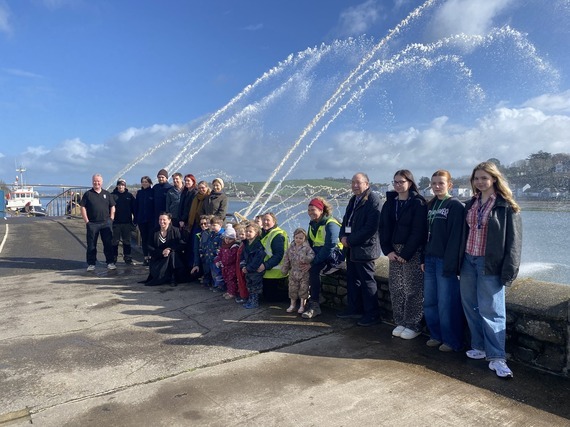
The long-silent water fountains on a popular quayside have sprung back into life, ending a 17-year pause and restoring a familiar sight for residents and visitors.

The fountains on Bideford Quay are now operating again following refurbishment work funded through the Government’s Rural England Prosperity Fund.

Councillors from Torridge District Council joined representatives from Northwave Engineering Ltd and Aquatech Water Services Ltd to mark the moment earlier today. They were accompanied by Clare Coghill, head of the Bideford Regeneration Board, year 12 students from Bideford College who sit on the board, and children from Muddy Boots Pre-school.

The fountains were originally installed in 2002 to celebrate the late Queen’s Golden Jubilee. After years out of action, the system has now been fully refurbished ahead of schedule.

Local firms Northwave Engineering Ltd and Aquatech Water Services Ltd carried out the work, installing new high-efficiency pumps and an upgraded control system. The technology allows the fountains to respond to tide levels and wind conditions, helping prevent spray from reaching the Quay.

Valve assemblies have also been refurbished to extend the life of the system, while decorative lighting has been upgraded to improve the display at night.

Cllr Bob Hicks, chair of Bideford Harbour Board, said: “I am both proud and delighted that this iconic feature is working again.

“No doubt, these fountains will provide a fantastic backdrop to festivals and events in the town, bringing an uplifting and energetic atmosphere to the Quay, enhancing this much-loved public space for residents and visitors alike.”

Hidden Dartmoor tramways reveal prison labour from 1800s

Dartmoor Prison once relied on teams of inmates sent onto the open moor to cut peat for fuel, hauling thousands of tons back to the prison during the 19th Century. Today, the land has been restored and forms part of the vital landscape that feeds the rivers and reservoirs South West Water now protects.

Across Dartmoor, faint lines cut through the moorland that do not belong to nature.

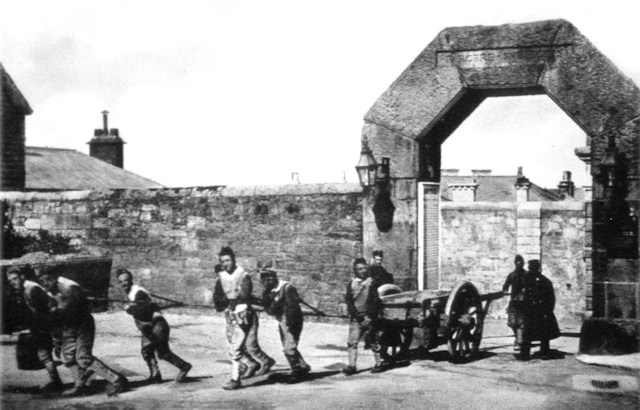
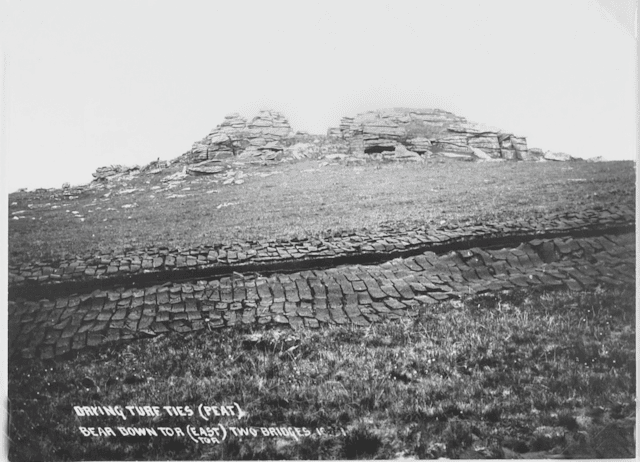
Through the mist, they look like the ghost of railway tracks, but are, in fact, the remains of tramways built nearly two centuries ago to move thousands of tons of peat cut by prisoners from Dartmoor Prison.

“Visitors to the remote uplands of Dartmoor might not be aware that these were once busy industrial areas,” explains Jo Higgins, Historic Environment Officer with the South West Peatland Partnership . …

… see today. Research commissioned by the South West Peatland Partnership as part of peatland restoration works helps to enhance understanding of historic and archaeological sites left by people on the moors.”

1,920 tons of turf in five months

One of the most striking examples of that industrial past lies in the story of Dartmoor Prison.

In the summer of 1853, prisoners cut and secured 1,920 tons of turf in just five months. According to official reports it was “to be used as fuel, and for making gas for the prison”. At local prices, its value was estimated at around £800.

According to Dartmoor Prison Museum curator, Graham Edmondson, a report from the prison museum’s archive describes how “the peat which abounds near the prison will furnish heat… will generate gas of the purest quality, producing an effulgent light.”

Today, water that falls on the same ground feeds Burrator reservoir, supplying drinking water to South West Water customers. The prisoners, and those who supervised them, would have been oblivious to the long-term impact their daily grind would have decades later.

The transition from war prison to working prison

Dartmoor Prison first opened in 1809 as a war prison, holding thousands of captives from the Napoleonic Wars and the War of 1812 behind granite walls a mile in circumference.

It closed in 1816 and stood largely unused for decades.

During that gap, a local venture attempted to turn surrounding peat into naphtha, a flammable liquid. However, the fuel was poor quality and commercially unviable.

Labour on the moor

When the prison reopened in 1850 as a convict jail, peat cutting became routine.

Convict labour reshaped the land around the prison. Marsh ground was levelled and redirected to receive sewage from the prison buildings.

In the Report of the Directors of Convict Prisons (1865), the Governor made clear that peat cutting was part of a tightly controlled regime. He recorded:

“The parties proceed to the moor under escort, and the labour, though severe, is considered suitable employment.”

At the time, peat was valued for heat and light and was transported along horse-drawn tramlines such as the Omen Beam line to the Dung Hills.

What we know now

Healthy peatlands remain waterlogged. They lock up carbon and release rainfall gradually into streams and reservoirs used to provide drinking water.

South West Water is a lead partner in the South West Peatland Partnership and the condition of upland peat directly affects raw water quality and long-term resilience. Catchments that hold water higher in the landscape are more stable during intense rainfall and prolonged dry spells.

Morag Angus, South West Peatland Partnership Manager, says land once cut to keep lamps burning is now being rewetted to protect water resources.

“It’s an amazing project and partnership to be part of, making our peatlands wetter and better for wildlife, water, people and the planet. Dartmoor’s peatlands are rich in archaeology and contain so much history. We’re working together to stop the peat from degrading further, carrying out surveys with our in-house archaeologists and commissioning research to learn more about these natural archives of human industrial activity.”

Repairing old ground

Restoration work now focuses on blocking drains, reshaping exposed peat and encouraging sphagnum moss to return. The aim is not to recreate the 19th Century, but to stabilise what remains and allow natural processes to function again.

More than 5,000 hectares of peatland across the South West have had restoration works to slow the flow of water, reduce erosion and create essential spaces for nature.

“There’s still so much more to be done, and there’s no time to lose,” said Morag.

“It takes time to tackle hundreds of years of degradation. Some benefits from restoration are immediate for wildlife and water like dragonflies breeding in new areas. But carbon-rich peat will take much longer to begin to form again in some places.”

For Graham Edmondson, there’s a quiet irony in the story.

“The prisoners weren’t thinking about climate or hydrology. They were cutting fuel under orders and the moor was seen as a resource to be used. The idea that those blanket bogs would today be recognised as a vital, living system that stores water and supports resilience wasn’t part of their conversation as they marched onto the moor. That contrast is what makes the history so striking.”

Brend Collection partners with children’s hospice to raise £50,000

The Brend Collection is proud to announce a new charitable partnership with Children’s Hospice South West, a leading charity dedicated to providing vital care and support to babies, children and young people with life-limiting conditions and their families across the South West.

This meaningful partnership refl ects the Brend Collection’s long-standing commitment to supporting the communities in which it operates. Through a programme of fundraising initiatives, team-led events, guest engagement activities, and awareness campaigns across its hotels and venues, the Brend Collection aims to raise £50,000 over two years, alongside all its other charitable work.

Children’s Hospice South West provides specialist palliative care, symptom control, emergency support, and end-of-life care at its three hospices – Little Bridge House in Devon, Charlton Farm in Somerset, and Little Harbour in Cornwall – as well as in family homes. Its work ensures that families facing the most challenging circumstances receive compassionate, professional care when they need it most.

Brend Collection Director, Matthew Brend, said: “CHSW is one of the charities we have proudly supported for many years, so to now formalise our partnership feels like a natural and meaningful evolution. Having experienced first-hand the extraordinary care and compassion their teams provide to children and families at the most difficult of times, I am delighted that we can
strengthen our commitment even further. As a family business rooted in the South West, we understand the importance of supporting local families and communities, and I very much look forward to what we can achieve together.”

Phil Morris, CEO of Children’s Hospice South West, added: “A huge thank you to The Brend Collection for choosing to partner with Children’s Hospice South West over the next 2 years. Their commitment will make an incredible difference to the children and families we support, helping to make the most of short and precious lives in our region”.

Woman admits shoplifting and assault at Exeter Morrisons store

0

A 26-year-old Exeter woman has admitted to stealing items from a Morrisons store and assaulting a member of staff who tried to stop her.

Molly Pugsley, of Lanepark Close, Exeter, pleaded guilty to shoplifting and assault by beating at Exeter Magistrates’ Court.

The offences took place on October 16 last year at the Morrisons Daily store on Pinhoe Road. The court heard Pugsley is known to staff as a prolific shoplifter. She was seen leaving the shop with three boxes of soap powder worth £15 and a bunch of flowers also worth £15.

When a staff member challenged her, Pugsley pushed him, causing her to drop the flowers. A victim impact statement said incidents of this nature were “a daily occurrence” and that the employee “just wants to focus on the customers”.

In mitigation, Mr Seigne said Pugsley struggles with her mental health and has “a little bit of an offending history”, particularly relating to shoplifting.

Magistrates told her: “You have been here before, you know what the process is.” The case was adjourned until May 14 for a pre-sentence report.

This story was produced via the Police & Crime Commissioner’s Criminal Justice Court Reporting scheme.