



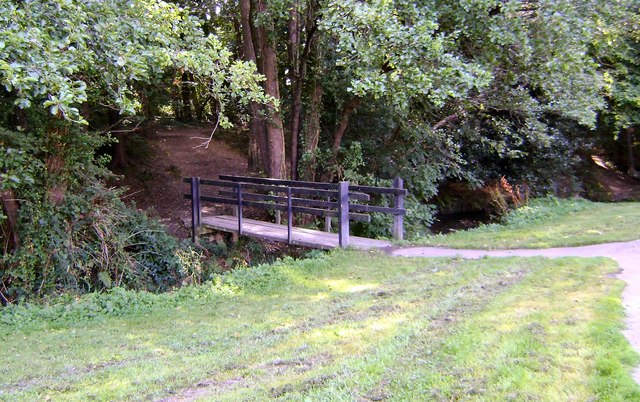
A long-shut woodland footbridge in Barnstaple at the centre of mounting public frustration could finally face a decision on its future, as council officials weigh up whether to scrap, replace or rebuild the ageing structure.
The crossing, which spans the Coney Gut stream, has been closed since early 2024 after inspections revealed significant decay in its main beams. Engineers later confirmed the structure was no longer safe, prompting its closure to the public.
The bridge had formed part of a well-used circular walking route through woodland, popular with walkers and dog walkers and previously used by a nearby primary school. Since its closure, access to the woodland remains possible from the southern end, but visitors must now return the same way.
According to a report prepared by Andrew Moulton, parks and grounds maintenance manager, the structure is believed to have been in place for around 35 years, dating back to when the surrounding housing development was first built.
Responsibility for the bridge remains unclear. Although Devon County Council initially inspected it in January 2024, the authority later confirmed the structure was not under its remit. The bridge is not listed as a public right of way.
Efforts to find a short-term fix were explored in August 2024, when a structural engineer assessed whether temporary repairs could allow the bridge to reopen. However, the estimated £12,000 cost, alongside ongoing scaffolding expenses, was deemed not cost effective.
The council has since received negative feedback from residents calling for the bridge to reopen.
Land ownership has also complicated matters. While the western bank is owned by North Devon Council, the eastern side belongs to Pearce Construction. The company declined to contribute towards replacement costs but indicated it would be willing to transfer its land to the council, subject to legal fees.
Councillors are now being asked to choose between three options.
The first would see the bridge, steps and foundations removed entirely at an estimated cost of £2,000, leaving the woodland accessible only via a single route.
The second option proposes replacing the structure with a new timber bridge, alongside new steps and foundations, at an estimated cost of £16,000.
The third would involve installing a steel-framed bridge, with associated works, costing around £21,000.
Additional costs of around £750 may also be required for environmental consent and potential planning permission due to the bridge’s position over a main river.
Funding would likely come from the council’s parks earmarked reserve, which currently stands at £23,000. However, the report warns that using this funding would reduce resources available for future equipment and maintenance needs.
The report will be considered by the Strategy and Resources Committee, which will decide how to proceed.