



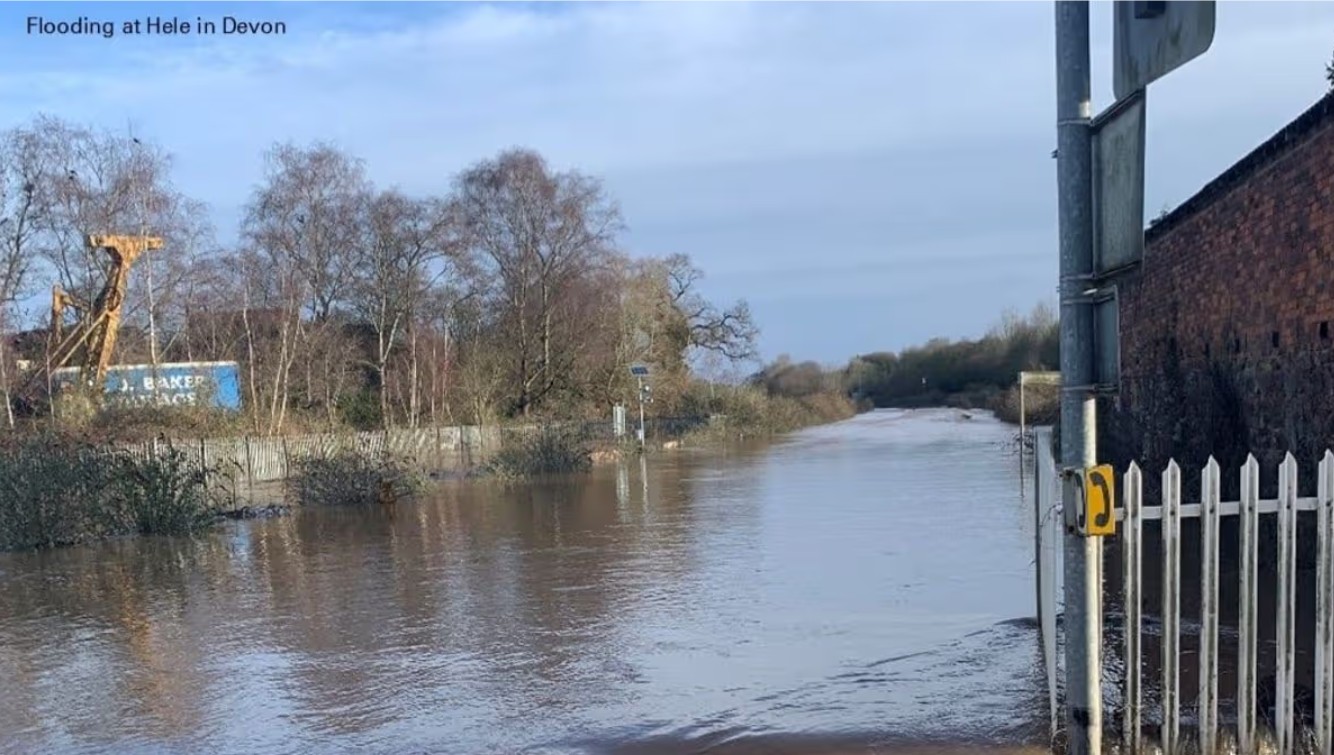
The scale of Storm Chandra’s impact on the South West rail network was stark; for a time in late January, almost every line across Devon and Cornwall was closed.
When the storm swept across the UK between 26 and 27 January, it arrived with relentless rain, powerful winds and ground already saturated from weeks of wet weather. The result was widespread disruption across the region’s railways, leaving passengers stranded and operators scrambling to respond to a situation that rapidly escalated beyond anything usually encountered.
For Great Western Railway, the challenge was unprecedented in its recent experience. David Whiteway, Regional Growth Manager at GWR, says the storm exposed just how vulnerable the network can be when extreme weather hits multiple routes at once.
“When Storm Chandra hit, it wasn’t just the Barnstaple line that was out of action,” he explains. “The only line in the whole of Devon and Cornwall that had a partially normal service was the Exmouth branch and even then, a few days later, that itself had its own problems that caused closure.”
In practical terms, that meant an entire regional rail system struggling to function. “Every single line of Devon and Cornwall this winter has had such bad weather that for a period of time it has been shut,” David says. The Barnstaple and Okehampton routes were among the worst affected, suffering prolonged disruption that proved far more complex to resolve than typical weather-related incidents.
That distinction is crucial. Rail operators deal with disruption regularly, but usually on a much shorter timescale. “I’m being really honest with you,” David says. “We don’t normally get disruption that lasts days and days and days. Normally, we manage it on an hour-by-hour basis.”
Storm Chandra forced the railway into unfamiliar territory. “What we found is actually in our business there was nobody able to step in whose job it was to manage a long-term closure of the line,” he says. “So we’ve had to cobble things together. We’ve had to learn on a day-by-day basis.”
As conditions worsened, GWR had to take the rare step of declaring what is known as a “black service outage”. The rail industry operates a colour-coded system for disruption: green for normal service, amber for moderate issues, and red for significant disruption. Black is something else entirely.
“When we get to black, it is a stage that we only do as an absolute last resort,” David explains. “It means the weather is so bad we physically can’t get you to where you need to be. We can’t get road transport, we can’t run rail services.”
That was the reality facing the railway during the height of the storm. With so many routes closed simultaneously, even contingency plans struggled to keep pace.
One of the most visible aspects of any rail disruption is the appearance of rail replacement buses. But providing those services on a large scale, particularly at short notice, is far from simple.
“Because nearly every line in Devon and Cornwall was shut, that meant we were physically never going to be able to supply enough rail replacement buses to cover both counties,” David says. In those circumstances, difficult decisions had to be made about where limited resources should go.
The mainline was prioritised, particularly the route via Hele, with Network Rail focusing efforts on reopening it as quickly as possible to restore the highest number of services.
Even where buses could be arranged, the logistics were daunting. Rail operators do not maintain a reserve fleet of vehicles waiting for emergencies. Instead, they rely on specialist contractors to source them from across the transport industry.
“We don’t sit with a bank of buses and drivers doing nothing ready for potential storm damage,” David says. “We use a company called First Travel Solutions, whose job it is to ring around pretty much every bus company you can think of.”
The scale of the requirement alone was a problem. Running a replacement service for the Barnstaple line requires around 24 buses at any given time just to maintain an hourly timetable. When multiplied across several closed branch lines, the demand quickly outstrips local availability.
“It did take us about three or four days before we were able to start providing road transport on the Barnstaple line,” David explains. “Simply because it did not exist. It wasn’t available for us to provide.”
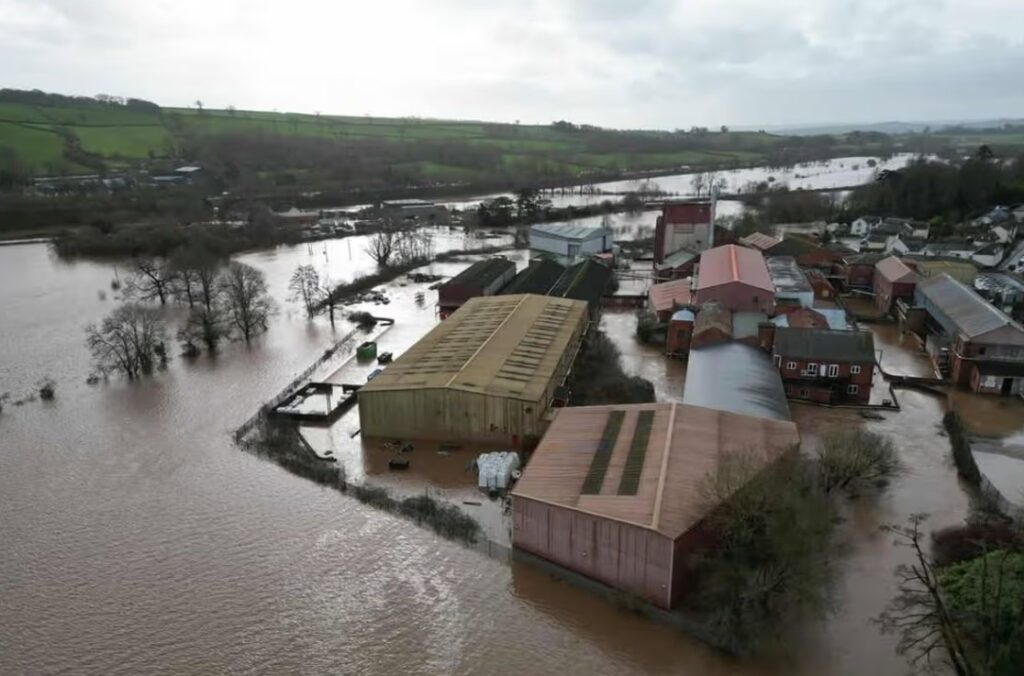
And even when buses were secured, new complications emerged. The railway entered what became a 24-day possession of the line while Network Rail carried out repairs and waited for divers to assess damage. During that time, keeping the replacement service running proved an ongoing challenge.
“We were able to secure a bus company for three or four days,” David says. “But under EU driving regulation times that we still work to in this country, they have to have either a 24-hour or 45-hour break in between.”
The result was a constantly shifting operation. Bus companies would step in for a few days before needing to withdraw drivers for mandatory rest periods, forcing GWR and its contractors to search for new operators at short notice.
“We got as far as actually bringing in coach companies from as far away as Wales and Hampshire to secure the line towards the end of the possession,” David says. “That’s why every other day you would see different service buses operating this route.”
Local operators were approached as well, but they faced their own constraints. Bus companies still had to run school contracts and regular public services, leaving little spare capacity to support emergency rail replacements.
“We did go as far as possible around asking local bus companies if they could enhance some of their public timetable buses,” David says, particularly along the busy route five corridor. “Unfortunately, that wasn’t possible because they did not have enough buses and drivers to run extra services.”
For passengers already dealing with major disruption, another issue quickly became apparent: knowing where to go. Replacement buses do not always stop directly outside railway stations, and in some locations, there was confusion about pick-up points.
“We also found that getting that information out to the bus drivers – for them to understand where it is they need to stop – and informing customers where they need to go to catch that bus was a challenge,” David says.
The experience exposed gaps in the system that had previously gone unnoticed. “We did find problems we didn’t know existed out there,” he admits.
Those lessons are already shaping changes. Across the network, stations have begun receiving permanent rail replacement signage, clearly indicating where buses stop and how passengers should reach them.
“You may have already seen at all the stations, we’ve now put up fixed bus stop information,” David says. “Signs of rail replacement and signs at the station themselves to show you where to go if that is not directly outside of the station.”
Another priority is improving staff presence on the ground during disruptions. For upcoming engineering works later this month, GWR plans to deploy significantly more bus coordinators to guide passengers and manage boarding points.
“We are going to have a lot more bus coordinators on the ground informing customers where to go and greeting them,” David says.
Even that is not straightforward when disruption occurs without warning. Many of the people who normally perform those roles are booked years in advance for planned engineering work and often hold other jobs.
“A lot of the people that we normally employ for our planned engineering works are planned up to two years in advance,” David explains. “They have other jobs and do this as a part-time role.”
During Storm Chandra, that meant coordination on the ground was inconsistent simply because staff were not immediately available. The company is now examining ways to use local railway staff to step into those roles during unexpected closures.
“We are looking at ways within the company of how we can utilise local staff and teams to perhaps come and fulfil that role when we have unplanned disruption,” he says.
While the immediate crisis caused by Storm Chandra has passed, the region’s railways are not yet free from disruption. The Tarka Line is scheduled to close again at the end of the month, this time for planned engineering works.
Given the difficult winter, the decision raised obvious questions about whether those works should be postponed. But the rail industry ultimately concluded that delaying them would risk further problems.
“We did review whether it is best to postpone this work given how much disruption we’ve had on this line this winter,” David says. “But we’ve collectively taken as a rail industry the decision that it’s important to carry on.”
The reason is long-term improvement. Some of the planned work includes renewing sections of track to increase line speeds, part of a wider effort to deliver a more reliable and efficient service.
“Some of them utilise things like helping us improve the line speed by renewing the track,” David explains, “which are some of the long-term aims we’re all working towards to provide a better service.”