



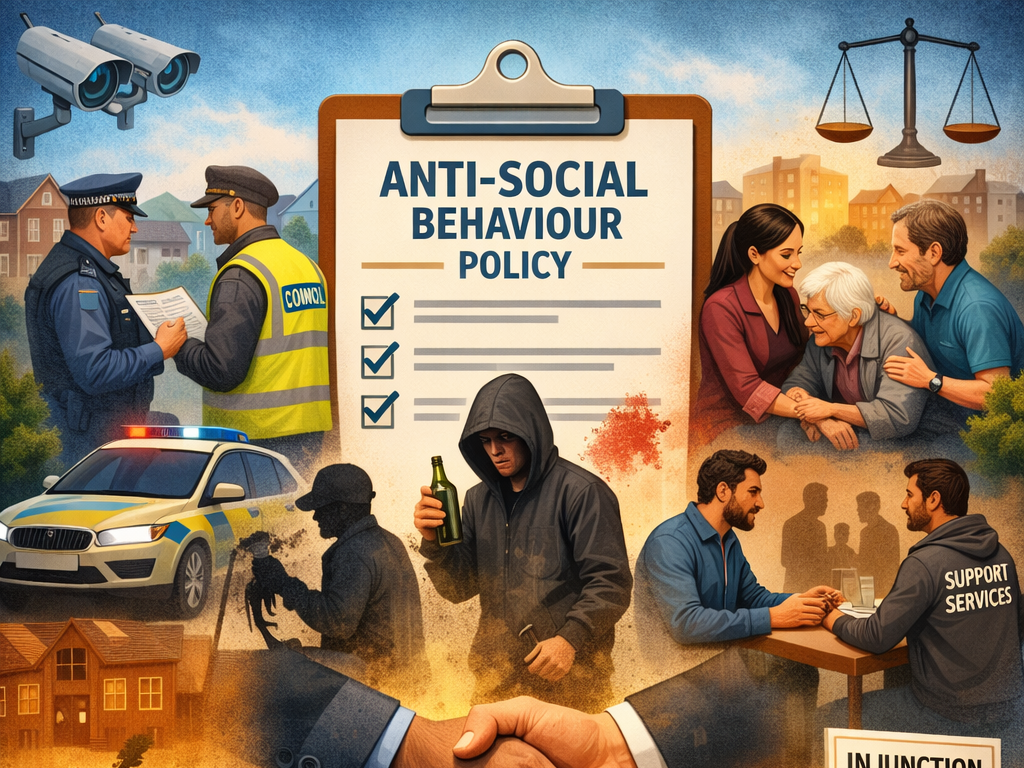
A renewed push to clamp down on anti-social behaviour has been unveiled, as council leaders set out a new plan aimed at protecting residents and strengthening communities.
Mid Devon District Council has introduced an updated corporate anti-social behaviour policy, outlining how it intends to prevent, manage and resolve incidents across the district. The move is designed to ensure people can live free from intimidation, harassment and nuisance, while also improving how cases are handled.
The report will be presented to the Community, People and Equalities Policy Development Group on Tuesday, March 24, where members will be asked to recommend its adoption.
The updated policy sets out a clear framework for dealing with anti-social behaviour, including what types of issues the council can address and how residents can report concerns. It places a strong emphasis on early intervention and supporting victims, while also recognising that some perpetrators may have underlying vulnerabilities.
Partnership working is identified as a key element, with the council working alongside police, housing providers, health services and voluntary organisations to manage cases effectively. The report states that coordinated action will help ensure the most appropriate response is taken, particularly in complex situations.
While informal resolution is preferred, enforcement powers remain available for more serious or persistent cases. These include legal tools such as injunctions and notices, which will be used proportionately and based on evidence.
The policy has also been updated to reflect current best practice, including a greater focus on multi-agency working and clearer definitions of anti-social behaviour. Changes include improved guidance on case reviews, updated references to support services for victims, and alignment with housing policies.
Council officers say the approach will help deliver a more consistent and transparent service, allowing staff to prioritise high-risk cases while resolving lower-level issues earlier. The report suggests this could reduce long-term demand on services and improve outcomes for residents.
The council will now focus on training staff, improving reporting systems and strengthening links with partner organisations. Public information will also be updated to make it clearer how residents can report anti-social behaviour and what response they can expect.
Looking ahead, the report highlights potential future changes at a national level, including proposals for new “respect orders” under the Crime and Policing Bill. These could allow authorities to impose restrictions on offenders, although details are still subject to legislation and guidance.
Financially, the policy is expected to be delivered within existing budgets, with costs largely limited to staff time, training and system updates. Officials suggest early intervention and partnership working could help reduce more expensive enforcement action over time.
The council says the updated policy reinforces its commitment to creating safer, more resilient communities, while ensuring all action taken is fair, proportionate and legally compliant.