



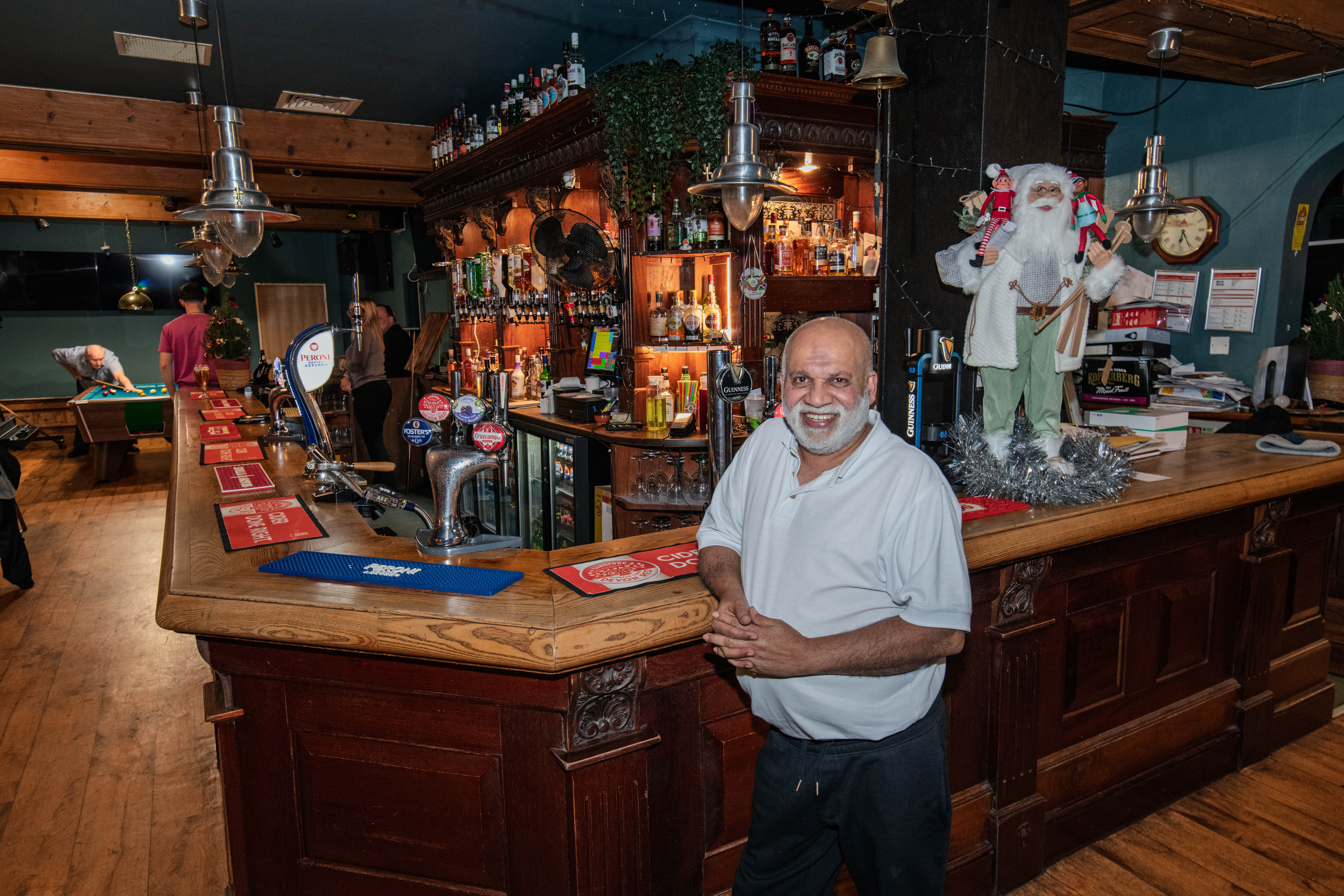
Running a pub for 25 years teaches you one thing above all else; if you don’t adapt, you don’t last.
For Jimmy Sivlal, the long-time steward of The Manor in Cullompton, adaptation has meant turning a once traditional drinking pub into something quite different – a small but bustling food hub designed to keep pace with a hospitality industry that has changed dramatically over the past two decades.
It has been about a year since the latest chapter began. Within the grounds of The Manor now sit multiple food operations: an Indian takeaway, a pizza offering, and a Sunday carvery – all leased out but carefully guided in their early stages by Jimmy himself.
The arrangement reflects both the realities of modern pub economics and Jimmy’s own gradual step towards retirement after a quarter of a century behind the bar.
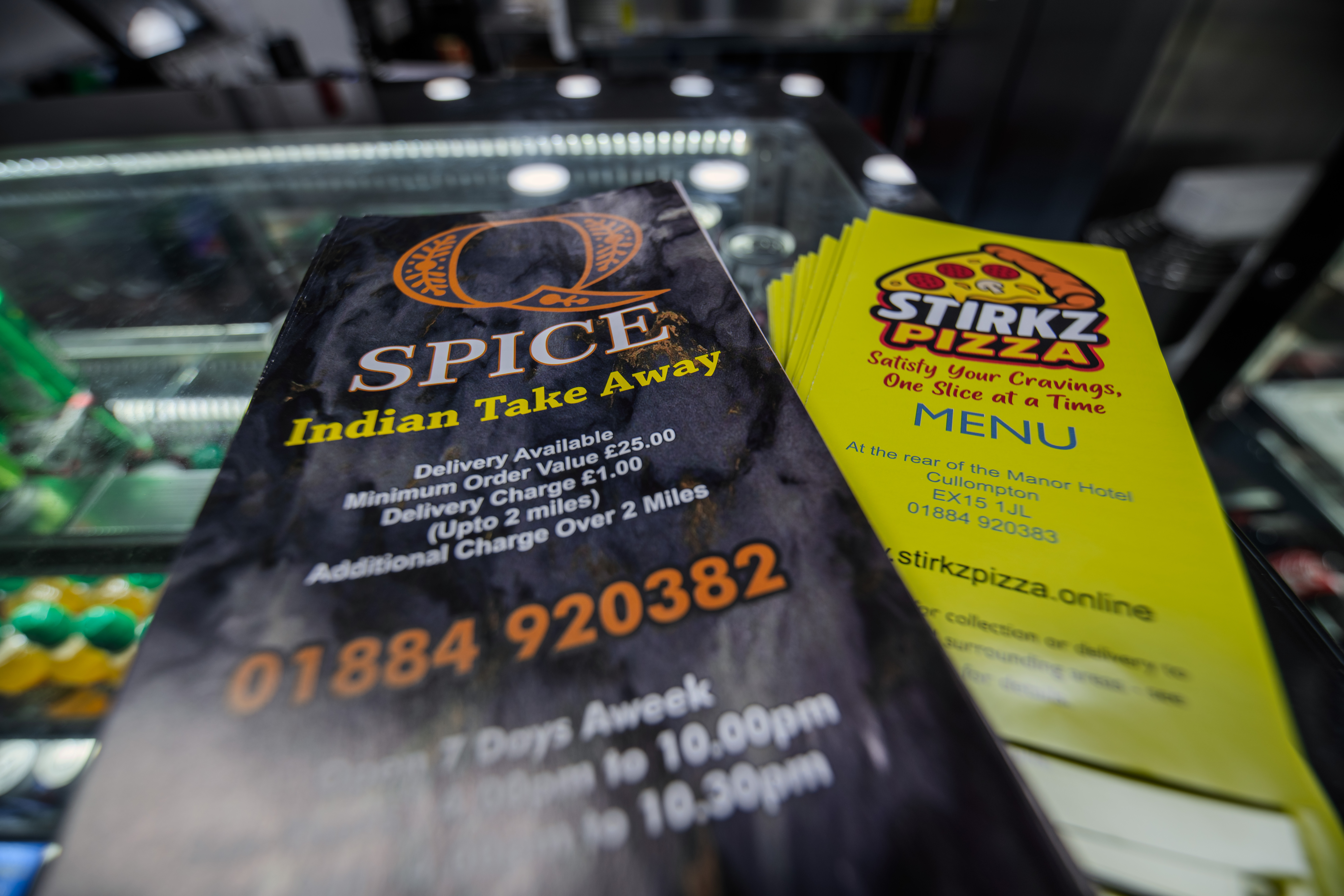
“It’s about a year now since we opened up Q Spice, which is a takeaway,” Jimmy explains. “At the moment, I’ve leased it to someone, and they run it as their own business. They pay me rent, and they are doing well and have sit-ins as well, but with a limited number of people.”
The concept has proven surprisingly resilient in its first year. Rather than running each kitchen personally, Jimmy has created a structure where individual operators run their own ventures within the same site. The result is a shared destination that offers several food choices under one roof – something that, in his view, Cullompton has long lacked.
“To be honest it’s been great and it is holding its own,” he says. “At weekends we are fully busy. Friday and Saturday we’re fairly busy. We open seven days a week. I initially helped them to get there, and here we are.”
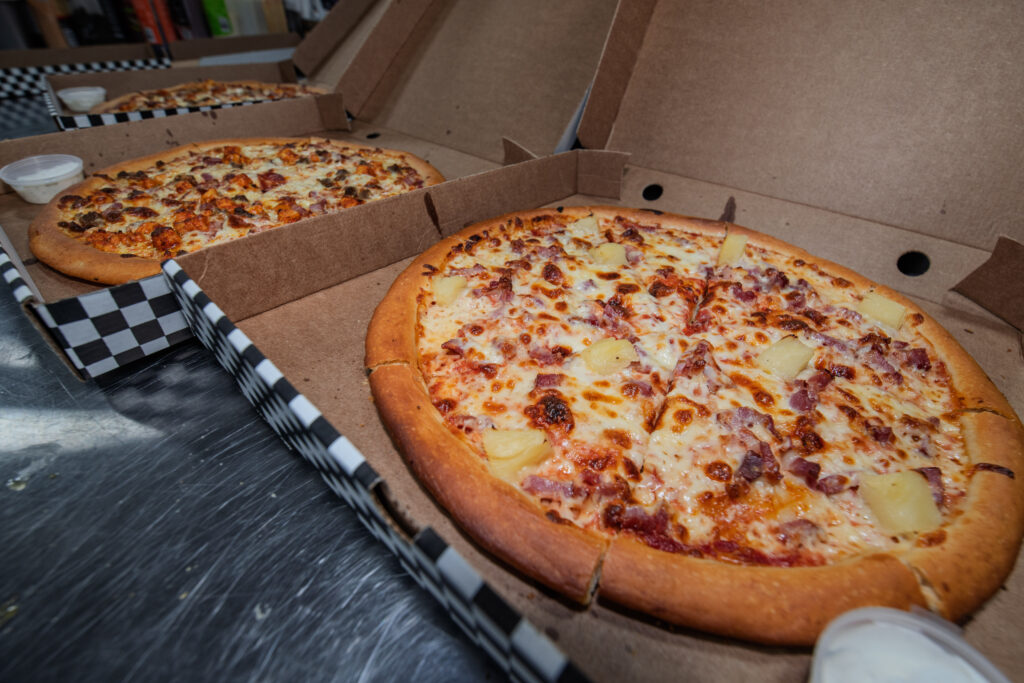
Alongside Q Spice sits Stirkz Pizza, which also began trading roughly a year ago. Like the takeaway, it operates under its own management while contributing to Jimmy’s broader vision for the venue.
The carvery, called About Time Carvery, rounds out the offering and has quickly found its own following. According to Jimmy, the feedback has been strong from the start.
“Our reviews are really good and people enjoy it,” he says. “We recently had a large booking for Christmas dinner at £35 a head which we thought was a fair price.”
Taken together, the different kitchens have effectively transformed The Manor into what Jimmy casually describes as a “food hub”. But the shift was not simply an entrepreneurial experiment – it was, in many ways, a necessity.
“Because the wet trade, it’s diminishing very fast,” he says. “So we had to get into something else and as I’m coming up to retirement, hence I’m leasing everything out, even the Sunday carvery.”
For much of its life, The Manor had been the kind of venue many towns once relied upon; a wet-led pub where drinking formed the centre of the business. At one stage it even operated as a nightclub. But the industry that sustained those models has shifted considerably.
Jimmy has watched that change unfold first-hand.
“It was very much a wet pub and bit of a nightclub,” he says. “The trend has changed very fast, and now the eating side is key.”
Food has become more than just an addition – it is increasingly the foundation that keeps many pubs afloat. Rising drink prices, changing social habits and supermarket competition have all chipped away at the once-dominant bar trade.
“If you buy three pints it’s £15 and you can get a meal for £9.90 so that’s the ratio,” Jimmy says, highlighting the shift in customer expectations.
The new setup at The Manor is designed to work with those realities rather than fight them. Customers can choose between Indian dishes, pizza, or the traditional carvery, while still using the pub as a place to sit and drink.
The menus themselves occasionally blur those boundaries. Some dishes even combine influences from both kitchens.
“We’ve got the chicken tikka pizza, which comes from the Indian side,” Jimmy explains. “The tikka and the tandoori pizza that’s mixed from Q Spice.”
The Indian menu, meanwhile, remains rooted in traditional cooking.
“The Indian restaurant is very traditional as we are Hindus and offer a different style of food compared to the majority of other restaurants,” he says. “As well as that you can get burgers and kebabs.”
It reflects Jimmy’s personal enthusiasm for food as much as it does a business strategy.
“I like cooking and I like different types of food,” he says.
Practical details have also played a role in the success of the new model. The Manor’s large car park – something many town-centre venues lack – has made it easier for customers collecting takeaway or dining in.
“It’s very positive for Cullompton because there’s hardly anywhere you could go for food and we have a large car park, so that helps a lot,” Jimmy says. “And I think it’s a plus-plus for Cullompton.”
Delivery has become another key part of the operation. Orders can be placed through an online system that offers incentives for customers using the platform.
“At the moment we have got a food hub app which you can order from and get a 15% discount on the Indian and the pizza,” he says. “It’s very reasonably priced. Also, we do deliveries within half an hour for most places.”
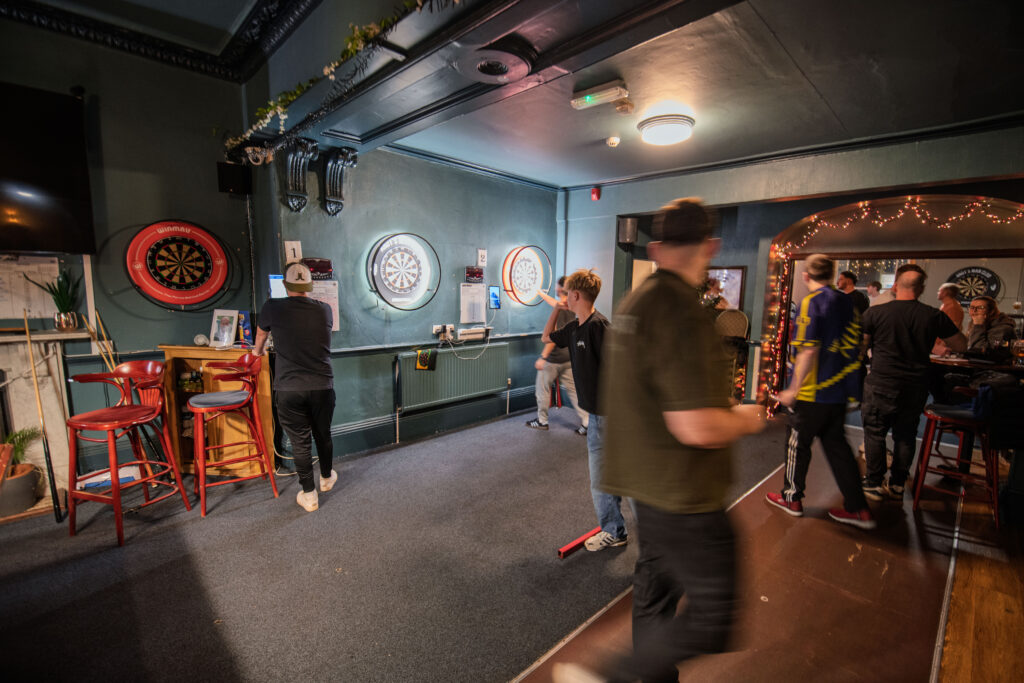
Despite the new food focus, The Manor is still very much a pub – just a different kind of one. Instead of loud nightlife, the emphasis is now on a calmer atmosphere built around meals, drinks and social gatherings.
Over the years Jimmy has steered the venue through several major transitions. One of the biggest came when he decided to scale back the nightclub element entirely.
“When I reduced the price of drinks, that hurt a lot of pubs,” he says. “And obviously the police weren’t too happy about that because when people were leaving they were causing a lot of trouble.”
Inside the venue itself, he says, there were rarely problems. But issues outside eventually led to a rethink of the business model.
“That era changed, and we stopped the nightclub, so now it’s purely sit down and drink, and that’s it.”
Looking back across the past quarter century, Jimmy sees survival itself as the achievement he is most proud of.
“Keeping The Manor doors open through challenging times,” he says when asked what stands out.
Those challenges have come in many forms – from economic pressures to the disruption caused by the pandemic.
“We also know how tough Covid-19 was for pubs,” he says. “We had some money come from the government, which helped us a lot.”
In the years since, there has been an ongoing debate about whether the pandemic permanently changed people’s habits.
“When people say that the COVID-19 pandemic stopped people from coming out because they got used to staying at home, I didn’t know how far that is true,” Jimmy says. “I just think it’s just too expensive for people to come out.”
The economics of the hospitality industry have changed dramatically since he first entered it.
“When we started, it was £1.20 a pint, and now our dearest pint is £6.50,” he says. “When you equate the rent, the food, and the fuel, it is so expensive. Then you add entertainment to that as well.”
Supermarkets have added another layer of competition.
“The supermarkets are troubling us as well,” he says. “I mean, things are very, very cheap, I would say, or good prices. So that’s what’s causing a large issue.”
Social habits have evolved, too. Where pubs were once the primary meeting place for young people, technology has changed how relationships begin.
“Before, if you had to find a girlfriend or meet somebody, you had to come to a pub,” Jimmy says. “But now it’s all social media, so they don’t have to come to a pub anymore.”
Through all of those changes, The Manor has remained a constant presence in the town. Jimmy himself has been part of that story for most of the venue’s modern life.
He first arrived in the UK from South Africa around half a century ago.
“It was around 50 years ago,” he says. “My dad was a politician in both South Africa and here in the UK too.”
His path to owning The Manor came about almost by chance.
“When I first came, it was one of my friends who said I should buy The Manor,” he recalls. “I came over, spoke to the landlord, and he was from South Africa, and I’m South African as well. I spoke to him, and he said he would sell it.”
Twenty-five years later, that decision has shaped much of his working life. Now, though, he is preparing to step back.
The transition is already underway. The person currently running the carvery is expected to take over the pub itself once Jimmy retires.
Jimmy adds: “I think it’ll be at the end of the year when that happens.”
For someone who has spent decades navigating the unpredictable world of pubs, the plan for retirement is refreshingly straightforward.
“No,” he says when asked if he has big plans. “Just rest.”
Even so, he remains cautiously optimistic about what comes next – both for The Manor and for the industry more broadly.
“I think it’s a great, great way up,” he says. “Definitely, definitely. Pubs in general are in trouble, but The Manor is holding its own.”
If his recent reinvention of the venue is anything to go by, holding its own might simply mean continuing to evolve one new idea at a time.