



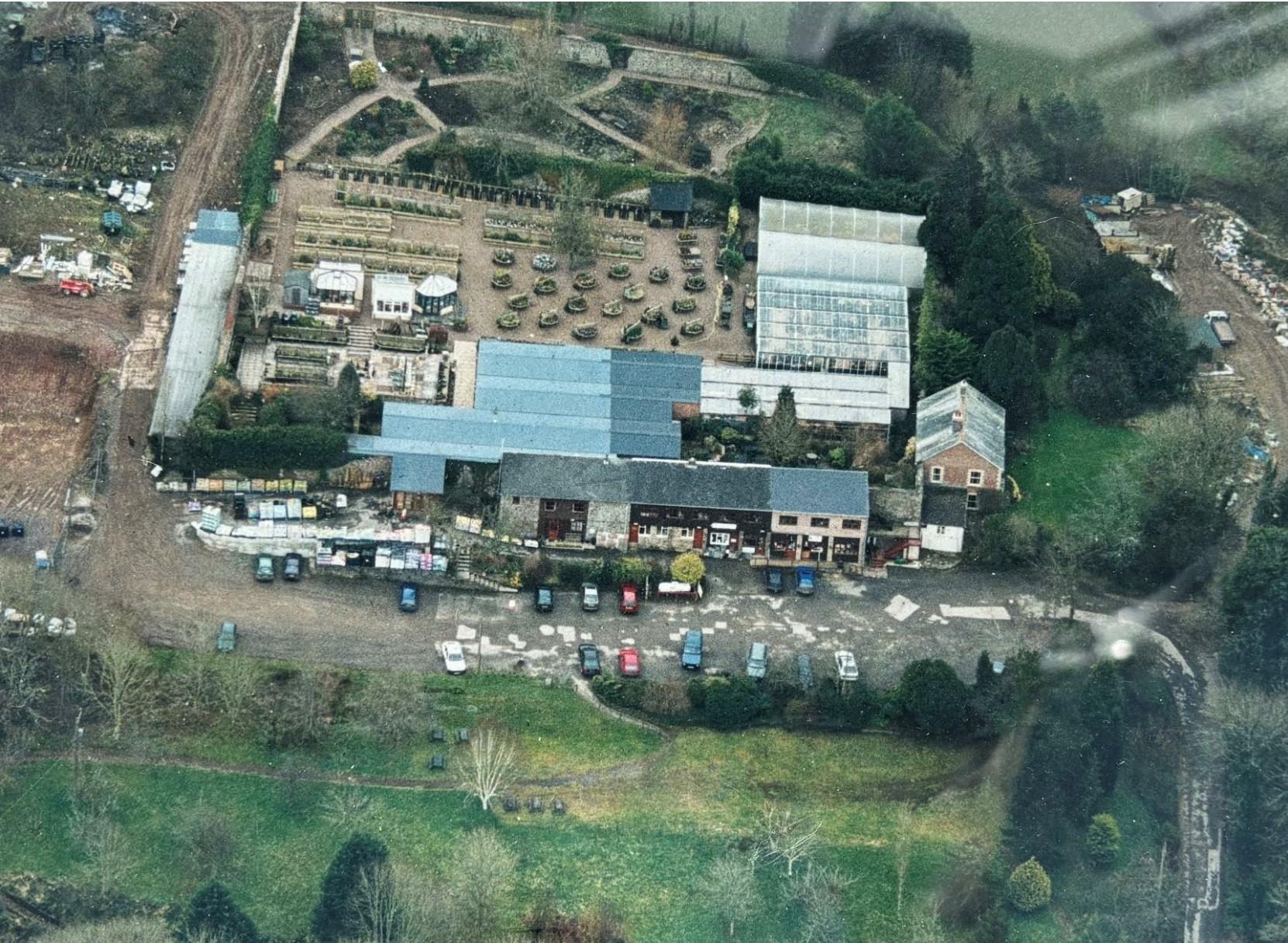
A bid to breathe new life into the long-vacant Eggesford Garden and Country Centre has been submitted to Mid Devon District Council, with proposals to demolish large sections of the existing complex and replace them with cloisters, a new toilet block and a temporary restaurant/café.
The application, submitted on behalf of Jeremey Burks, seeks permission for the demolition of existing garden centre buildings, outbuildings and greenhouses at the site in Eggesford, near Chulmleigh, and their replacement with new structures designed as the first stage of a wider rejuvenation.
According to the Design and Access Statement, the document has been prepared “in support of the application for the demolition of existing garden centre, outbuildings and greenhouses at Eggesford Garden and their replacement with new cloisters and a temporary restaurant building.”
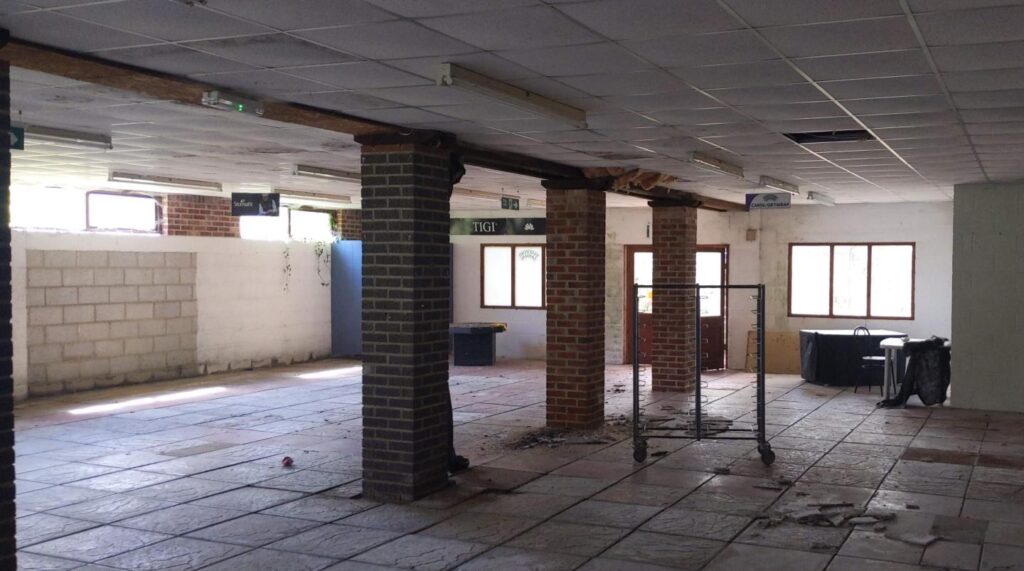
Eggesford Gardens is described as an existing garden centre in Mid Devon, accessible from the A377 and close to Eggesford railway station. The site previously operated as a garden centre between 1981 and 2001 under the applicant’s parents, before ceasing trading in 2018.
Since closure, the statement says the site “has since fallen into disrepair” . It adds that the applicant took ownership in 2018 and has been carrying out maintenance, but that “defunct buildings need to be removed and a temporary cafe introduced so the site can begin generating income while future maintenance and development work takes place.”
In its conclusion, the document states: “This application seeks to reinstate the use of the walled garden, bringing a once much-loved local asset back into productive use for the benefit of the community.”
A significant proportion of the more modern structures within the historic walled garden would be removed.
The statement lists the following for demolition:
- Greenhouses
- Restaurant
- Lean-to outbuildings along the east side of the wall
- Garden centre building and associated structures
Two historic residential properties, referred to as R1 and R2, and a barn to the north-east of the walled garden would be retained.
In total, approximately 1,574 square metres of existing built fabric would be demolished and replaced with 235 square metres of enclosed new space, together with 483.5 square metres of covered walkways and seating areas.
The removal of these buildings is intended, the document says, to “restore and highlight the historic significance of the walled garden.”
To replace the demolished structures, the scheme proposes:
- Cloisters along the north and east sides of the walled garden to provide covered access.
- A new toilet block along the east wall.
- A temporary restaurant/café in the south-east corner of the site .
The café is described as allowing “the site to begin generating income to support future development.”
The restaurant would be largely open, with a small enclosed servery linked to the kitchen, and dining areas covered by lightweight roof structures. Fink trusses salvaged from the demolished garden centre buildings would be reused in the new structures .
The proposed toilet block would provide “initial sanitary facilities for visitors, ahead of the installation of more extensive provisions as the site’s offering expands over time.”
Existing access from the north, via a road off the A377, would be retained. The track along the east side of the walled garden would be upgraded to improve access to the south-east corner, where historic parking areas would be reinstated for staff use and deliveries.
Current car parking, bicycle and motorcycle storage would be maintained, with the informal parking area in the south-east corner formalised into staff parking, providing 12 dedicated spaces and a delivery drop-off area.
The statement acknowledges the challenges posed by the site’s steep gradient, noting that while efforts have been made to improve accessibility through cloisters and staged ramps, “the steep gradient means that some ramps may fall outside standard parameters for fully accessible design.”
The application highlights the reuse of materials, particularly salvaged roof trusses, to reduce waste and embodied carbon . It states that the development “maximises the reuse of materials, reducing waste from demolition and reinforcing the sustainability of the development.”
Foul drainage from the proposed restaurant would be treated via a privately operated package sewage treatment plant previously used by the former restaurant and garden centre, with kitchen wastewater passing through a grease separator installed in accordance with BS EN 1825.
The site is located in Flood Zone 1, described as “an area with a low probability of flooding”, and the statement confirms that a further flood risk assessment is not required.
In ecological terms, the cloisters are said to form part of the mitigation strategy, recreating void roosting sites within roof spaces , and the works are stated to be liable for biodiversity net gain.
The conclusion of the statement argues that the “form, scale, and material palette have been carefully considered to respect the site’s identity” and that the layout and massing will have “minimal visual impact on the surrounding area.”
Describing the proposal as “a significant improvement over the existing vacant site”, the document concludes that it “is therefore considered appropriate for approval.”



Hope this is passed we were only saying how we miss the old garden centre and no garden centres this way
We used to visit there for regular meals, so what a brilliant idea to bring it all back, but even better!