




A prominent cricket ground in Honiton could see 16-metre-high ball stop netting installed along one boundary under new plans submitted to the council, aimed at reducing the risk of cricket balls entering a neighbouring housing development.
Honiton Cricket Club has applied for permission to erect netting at Mountbatten Park Sports and Social Club, Ottery Moor Lane, Honiton EX14 1AR. The proposals relate to land shared with the town’s football club and include a clubhouse, changing rooms and a car park.
According to the Design and Access Statement, Honiton cricket club “is located at Mountbatten Park at Ottery Moor Lane in Honiton. It runs two mens teams along with a number of youth cricket teams” . The club “shares its ground with the towns football club along with the facilities which comprise a clubhouse, changing rooms and a car park” and has “been in this location since the early 1980s.”
The application seeks to erect ball stop netting on the north side of the ground, adjacent to a new residential scheme.
The statement explains: “The club wishes to erect some ball stop netting on the north side of the ground where the new Taylor Wimpey development is being constructed. The netting will reduce the risk of cricket balls being lost in the new residential development and also reduce the risk of them striking, dwellings, residents etc.”
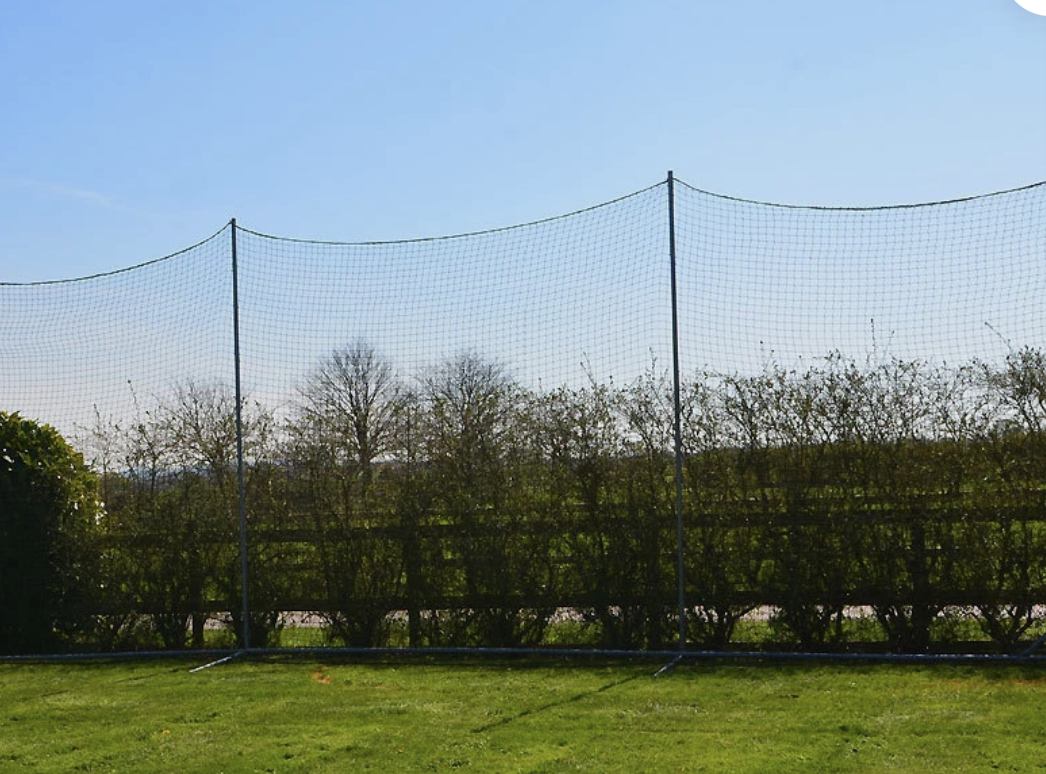
The system would consist of “a net suspended between posts with some primary wires that would allow the see through ball stop netting to be hung” . The applicant says the netting “is see through so would have no adverse impact or shading on the neighbouring properties” and that it “would also be taken down during the winter months outside of the cricket season which is from April until September” .
The scope of the scheme has been informed by a specialist assessment. The statement notes: “The scope and nature of the proposals have been determined by specialists LABOSPORTS who have prepared the attached ball strike report. These proposals mirror those recommendations.”
A detailed Cricket Ball Strike Assessment prepared by Labosport Ltd examines the potential for balls to clear the boundary and recommends mitigation.
In its executive summary, the report states: “This report has been prepared to assess the potential risk of cricket balls surpassing the boundaries of a cricket pitch at Honiton Cricket Club and advise on the height and location of mitigation recommended to provide a suitable level of protection.”
The assessment concludes that for the east orientation, a mitigation height of 16 metres is recommended “based on recreational cricket” . It adds: “This may not stop all shots from landing beyond the site boundary, but it is believed from the assessment of the ball trajectory it will significantly reduce their frequency.”
The report explains that recreational cricket is played on the site and that its modelling is based on that level of play. It states: “For recreational level cricket the basis of the shot velocity is 40 m/s. For recreational level cricket the basis of the ‘late cut’ or ‘late glance’ type shots is 30 m/s. It is on this basis that the recommendations in this report have been made.”
In assessing distances, the study identifies the shortest boundary as the east side, measuring “circa 44.01 m” from the closest stump to the site boundary . Under its mitigation recommendations, the overall height advised at that point is “16 m high” .
The consultants also note that planting cannot be relied upon as a protective measure, stating that trees or hedges “may not be sufficiently dense to stop the ball, nor homogeneous across the length” and may change seasonally or be removed .
The proposals are designed to address safety and amenity concerns arising from the proximity of new housing to the cricket ground, while enabling continued recreational use of the pitches.
The applicant maintains that the netting’s see-through design would avoid adverse visual impact or shading, and that its seasonal removal outside April to September would limit its presence for part of the year .
The Labosport report also makes clear that while mitigation will “significantly reduce” the frequency of balls leaving the site, it “may not stop all shots” , reflecting what it describes as a proportionate approach to risk.