



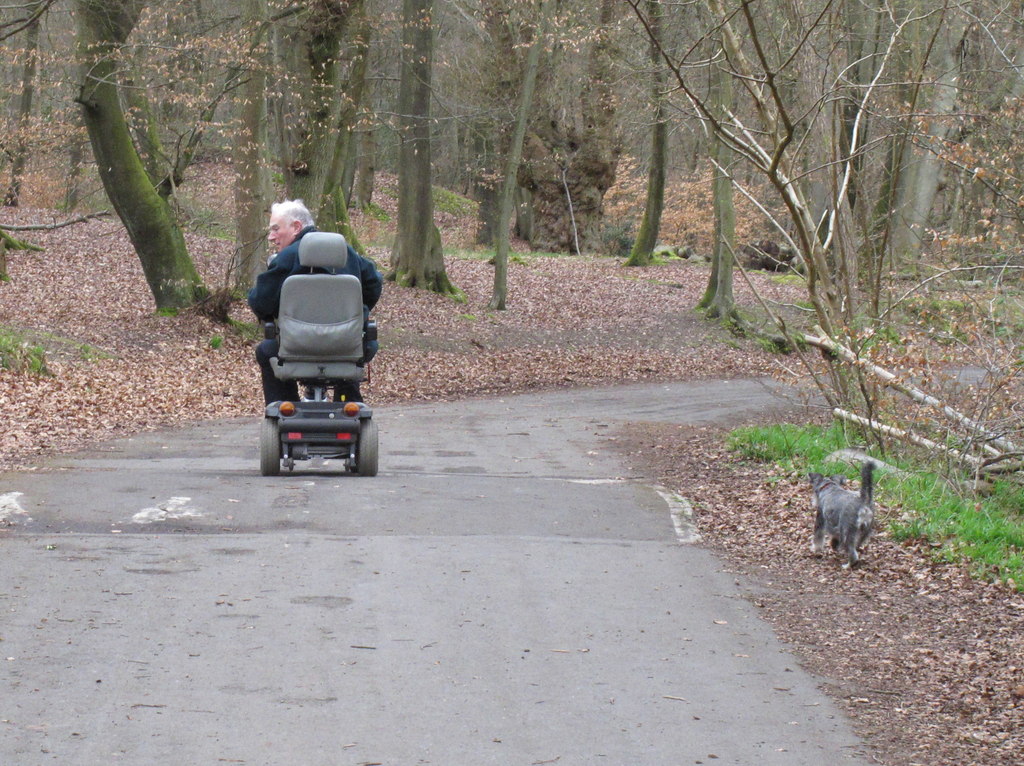
Proposals to overhaul the rules governing mobility scooters and powered wheelchairs could transform how thousands of people travel, but concerns remain over safety and access.
The Department for Transport is reviewing legislation covering powered mobility devices, including where they can be used and how fast they can travel. The consultation, which closes on Tuesday, April 22, has drawn responses from organisations including the Devon Countryside Access Forum.
The forum, responding on behalf of its eighteen members, said it “strongly agree[d]” with all four objectives set out in the review. These include ensuring disabled people can legally use necessary mobility devices, allowing greater choice, and protecting both safety and public confidence.
It added that the objectives “would appear logical and contribute to inclusivity being a key principle”.
Under current rules, Class one, two and three mobility devices can be used on pavements and pedestrian areas at up to four miles per hour. Class three devices can also be used on most roads at speeds of up to eight miles per hour.
However, the consultation is considering whether these devices should also be allowed in cycle lanes and on cycle tracks.
The forum said allowing mobility devices in road cycle lanes “would be logical”, but warned that “cyclists might be more vulnerable in a collision situation”. It also highlighted practical barriers, including a lack of dropped kerbs and poor pavement conditions, which may make cycle lanes a safer option in some cases.
On off-road cycle tracks, the forum supported wider access for mobility devices, including wheelchair power add-ons, but suggested a lower speed limit of four miles per hour to protect other users such as children, dog walkers and horse riders.
It noted that some routes, including the Granite Way, Tarka Trail and Exe Estuary Trail in Devon, would be suitable for such use, while narrower paths in woodland or managed estates may not be accessible.
The response also raised concerns about increasing device speeds and specifications, stating that safety on shared routes must remain a “primary consideration”.
The consultation further explores whether powered mobility devices should be allowed to exceed eight miles per hour in cycle lanes. The forum cautioned that cycle lanes were originally designed to separate motor traffic from more vulnerable users, and introducing larger powered devices could create new risks.
It also backed proposals to classify wheelchair power add-ons under existing mobility device rules, particularly for use on off-road cycle tracks.
In its final comments, the forum described the consultation as “difficult to deal with”, adding that many questions were “too open-ended” and dependent on variables not clearly defined.
The Department for Transport said feedback from the consultation will help determine whether and how current laws should be updated.