



There are roads that simply take people from one place to another – and then there are roads that hold communities together.
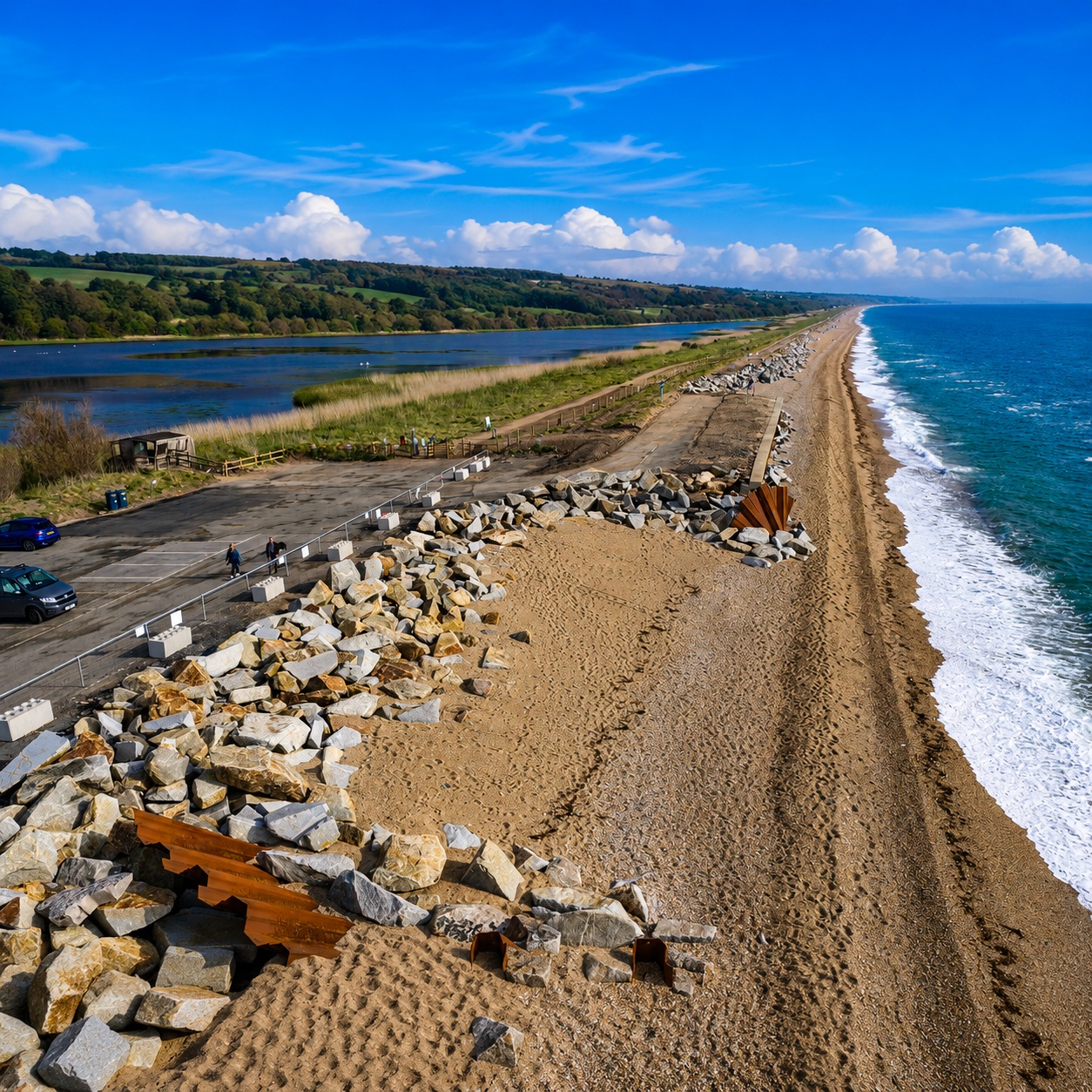
For generations, the A379 traced the edge of the South Devon coastline like a ribbon between sea and land, carrying commuters, delivery vans, tourists, schoolchildren and emergency services through villages perched along one of the most fragile stretches of coast in the country. Then, after violent winter weather tore through Slapton Sands at the end of January, part of the road disappeared into the sea.
Months later, the physical scar remains visible. But for many living nearby, the deeper damage has been felt in livelihoods, isolation and uncertainty.
Now, with frustration mounting and businesses warning of lasting consequences, residents are taking their campaign directly to Westminster – one step at a time.
More than 400 people joined a demonstration walk along the damaged stretch of coastline at Slapton Sands on Bank Holiday Monday, demanding the reinstatement of the route and calling for long-term investment in the area’s transport links.
Among them were business owners, pensioners, families and campaigners who say the closure has transformed daily life across the South Hams.
The loss of the A379 has forced drivers onto smaller inland roads never designed to handle sustained traffic volumes. Journeys that once took minutes now stretch considerably longer, while local firms say visitor numbers and trade have been badly affected.
For many residents, the concern is not simply inconvenience — it is survival.
Campaigners argue that temporary adjustments to surrounding roads will never replace what the A379 provided: a reliable “A” class coastal route capable of supporting the area’s economy and communities for decades to come.
The march itself became a visible show of frustration, but also solidarity. Walkers gathered against a backdrop of broken tarmac, shifting shingle and crashing surf – a stark reminder of the power of the sea along this exposed section of coastline.
Councillor Julian Brazil, leader of Devon County Council, said the authority had already submitted plans to government costing more than £20 million in an effort to secure funding for a rebuild.
Julian said: “The county council has submitted plans costing more than £20 million, and I hope that government will see this and understand the strength and feeling there is here.
“We will be positive about our attempts to try and get the funding.
“It is a shame that we do not have the kind of funding that was needed, but there we are.
“We have put in detailed costing plans to the Department for Transport about replacing the road, so we wait to see what happens there.”
While local leaders continue pressing for support, the government has pointed to wider transport spending already allocated across the region.
A government spokesperson said nearly £450 million was being provided for road maintenance in the area over the next four years.
For campaigners, however, the issue extends beyond maintenance budgets. Many believe the destruction of the A379 has exposed broader questions about how vulnerable coastal communities are protected in the face of increasingly severe weather events.
Slapton Sands has long been one of Britain’s most dynamic coastal environments, shaped constantly by tides, storms and erosion. Engineers and environmental specialists have wrestled for decades with how best to defend infrastructure along the narrow strip separating the sea from Slapton Ley.
But for residents, the debate is no longer theoretical.
Behind every diversion sign is a missed delivery, a delayed ambulance route, a struggling café or a parent facing another extended school run.
The road may have collapsed in a storm, but locals say what happens next will determine whether their communities can continue to thrive.
And as walkers crossed the damaged coastline together, the message was unmistakable: this is about far more than asphalt.
It is about connection, identity and whether rural coastal communities still have a future worth investing in.



as a long time visitor to Dartmouth ,and slapton sands and the slapton ley over the last 16 years our visit was never complete with several walks and food there,so please add our support to get it restored, and on a very political view,! so called mp for Clacton could donate his 5 ml maybe, good luck with it and seeing results later year when next we visit Roland &Denise wood woody@rolwood.co.uk