



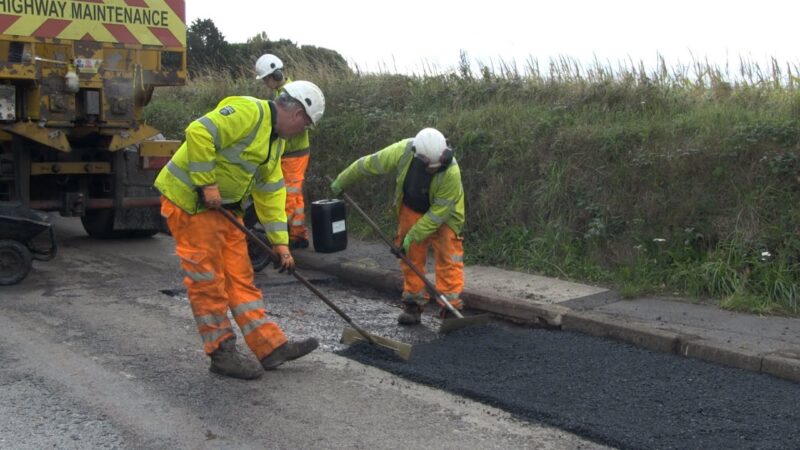
Devon’s Liberal Democrat-run County Council is providing an additional £4 million for highways maintenance teams following a rigorous review of spending that has enabled the authority to redirect savings into frontline services.
The investment, confirmed at today’s Cabinet meeting as part of the council’s year-end financial outturn, comes on top of additional funding agreed in March to tackle the immediate impact of one of the harshest winters in recent years. Between November and mid-February, Devon’s roads endured 15 freeze-thaw cycles, accelerating deterioration across the network.
The investment marks a significant shift in the council’s approach, moving from a strategy of ‘managing and mitigating decline’ to one of ‘stabilising and strengthening’ the network.
The extra funding forms part of a wider commitment to the county’s road network – the longest maintained by any local authority in England at over 8,000 miles, and growing. This year alone, 43 miles of new roads have been adopted, adding to the council’s maintenance responsibilities.
The Climate Change, Environment and Transport budget for 2026/27 stands at £96.9 million, with £36 million previously allocated specifically for highways maintenance – an increase of £6 million on 2025/26 – supported by £15 million in additional capital investment.
Over the next five years, the Liberal Democrat administration will invest £546.1 million in total in highways. This includes an extra £55 million over five years for preventative maintenance – work designed to extend the life of roads and reduce the need for more costly repairs.
Devon’s increased commitment comes against a backdrop of chronic national underfunding. According to the Annual Local Authority Road Maintenance (ALARM) survey, the backlog of repairs on local roads across England now stands at £18.62 billion – a funding gap that has left councils struggling to keep pace with deterioration.
Councillor Dan Thomas, Cabinet Member for Highways, said: “Last year we set out to manage and mitigate the decline of our road network in an exceptionally challenging environment. We prioritised safety, slowed deterioration and protected future investment. That strategy was delivered as intended.
“But managing decline was never our ambition – it was a necessity. This additional investment means we can now move to stabilising and strengthening Devon’s roads.
“We recognise that long-term sustainability requires more than just funding. It requires innovation, continuous learning and a culture where new ideas are encouraged and lessons are learned. That’s the approach we’re embedding across the service, and it’s how we’ll build resilience for the future.”